Fascia tray signs are shallow, box-style panels that fit over a shopfront or building fascia and carry your name, logos and brand colour. Whether ACM or folded aluminium suits you depends on sign size, finish, illumination, fixing surface and budget, so there is no single right answer for every building.
Because fascia signage is one of the most highly visible parts of many business premises, the right tray can help potential customers identify your business and create a positive first impression. A made-to-measure tray can also cover superficial imperfections on an existing fascia, although the structure behind it must still be suitable for secure fixing.
Let Manchester Signs Centre help you choose between aluminium and ACM fascia tray signs. If you want a more detailed overview first, read our complete guide to fascia tray signs.
Why Should You Consider Fascia Tray signs?
Fascia signs can increase foot traffic by up to 60%. They include company logos and contact information and help you in both the branding and promotion.
For companies branding business units across multiple sites, fascia trays can be manufactured to a controlled specification covering colour, dimensions, logo positioning, lettering and finish. This helps create consistent branding even where individual business premises have different fascia sizes or fixing conditions.
A multi site rebrand can use the same RAL colours, acrylic or metal lettering styles and graphic specifications while adapting each custom sign to the specific requirements of the building. This is particularly useful for retailers, offices, hospitality groups and other businesses that want their premises to stand out while keeping their signage consistent across every location.
Key Differences Between ACM and Aluminium Fascia Trays
ACM (aluminium composite) is a sandwich of two thin aluminium skins around a polyethylene core. The panel is routed and folded to form the tray, so ACM trays are light and stay flat across large spans.
A folded aluminium tray is made from a single sheet of solid aluminium, cut and bent into a tray with returns. Our guide to aluminium tray signs covers the format in more detail.
Construction, Rigidity, Finish and Suitability
- ACM: lightweight, very flat face, wide colour range, well suited to long shop sign runs.
- Aluminium: stiffer in thicker gauges, powder coated finish, good where impact resistance matters.
ACM vs Aluminium Fascia Signage Comparison
| Factor | ACM Trays | Aluminium Sign Trays |
|---|---|---|
| Construction | Routed and folded composite | Folded or welded solid sheet |
| Weight | Light | Heavier in thick gauges |
| Finish | Pre-finished skins, vinyl or paint | Powder coated or painted |
| Best for | Large, flat, lightweight fascias | Exposed or high-contact locations |
What About Stainless Steel Sign Trays?
For most projects, the main decision will be between ACM and aluminium, but stainless steel may be considered where exceptional durability or a premium metal finish is required. Grade 316 stainless steel is particularly corrosion-resistant and can suit coastal or marine environments where salt exposure is a concern.
It is heavier and generally more expensive, so it is not the perfect solution for every business. Stainless steel is also commonly used selectively for flat cut letters, logos, stand-off fixings and other architectural details on aluminium fascia trays.
How Are ACM and Aluminium Sign Trays Fabricated?
Both aluminium and ACM fascia sign trays start as flat panels cut to size by CNC router or saw. Accurate measurements from a site survey matter for fabrication, because a few millimetres of error shows up as a gap at the corners.
At Manchester Signs Centre, our Salford workshop handles cutting, folding and finishing in-house, so one team controls the quality of every fold.
Routing ACM vs Folding Aluminium
ACM is routed along a V-groove through one skin and the core, then folded by hand. Aluminium is folded on a press brake to a set radius. The different fabrication methods affect how precisely corners, returns and tray depths can be formed, so the manufacturing process should match the size and intended use of the sign.
Forming Returns, Corners and Edges
The folded edges on sign trays create the return depth that gives the panel greater rigidity and a more substantial appearance than a flat board. ACM corners are normally bonded or mechanically fixed, while solid aluminium trays can also use welded joints where a stronger, seamless construction is required for heavy-duty applications.
Folded sign trays can also sit neatly over an existing fascia and conceal minor cosmetic imperfections, provided the underlying surface and fixing points are structurally sound.
Finishing and Branding
Solid aluminium sign trays can be powder-coated to virtually any specified RAL colour, with matt, satin or gloss finishes available to create consistent branding. ACM also provides a broad choice of pre-finished surfaces, vinyl graphics and printed finishes.
Both materials can support company logos, contact information and flat cut letters made from acrylic, aluminium or stainless steel. Acrylic lettering provides a clean raised finish, while stainless steel can create a more premium architectural appearance.
Each fascia is normally produced as a custom sign around the dimensions and specific requirements of the premises rather than selected from a fixed standard range. Send print-ready artwork where available, or use our artwork upload option to drop files such as PDF, JPG or PNG for our team to review before production.
How Do Thickness, Folds and Return Depth Affect a Fascia Tray?
Panel thickness is the gauge of the material. Tray depth is how far the returns project from the face, and the two are specified separately.
How ACM and Aluminium Thicknesses Differ
ACM is commonly supplied in 3mm or 4mm sheets, while solid aluminium is specified in gauges such as 1.5mm to 3mm. We do not recommend one universal thickness, as the right choice follows span, wind exposure and fixing method.
Why Return Depth Matters
Return depth affects rigidity, shadow lines and space for LED modules. Deeper returns suit illuminated trays, while shallower ones create a slimmer appearance on the fascia.
The right depth also depends on the overall tray size and whether additional framework, wiring or raised lettering needs to sit behind the face.
When Reinforcement or Framing Is Needed
Long or tall trays often need internal bracing or a rear frame to stop bowing and maintain a flat sign face. Reinforcement becomes particularly important on exposed elevations where wind loading may place additional pressure on the tray. We confirm the appropriate support during our free site visit before anything is made.
How Are ACM and Aluminium Fascia Trays Installed?
Fixing Methods for Each Material
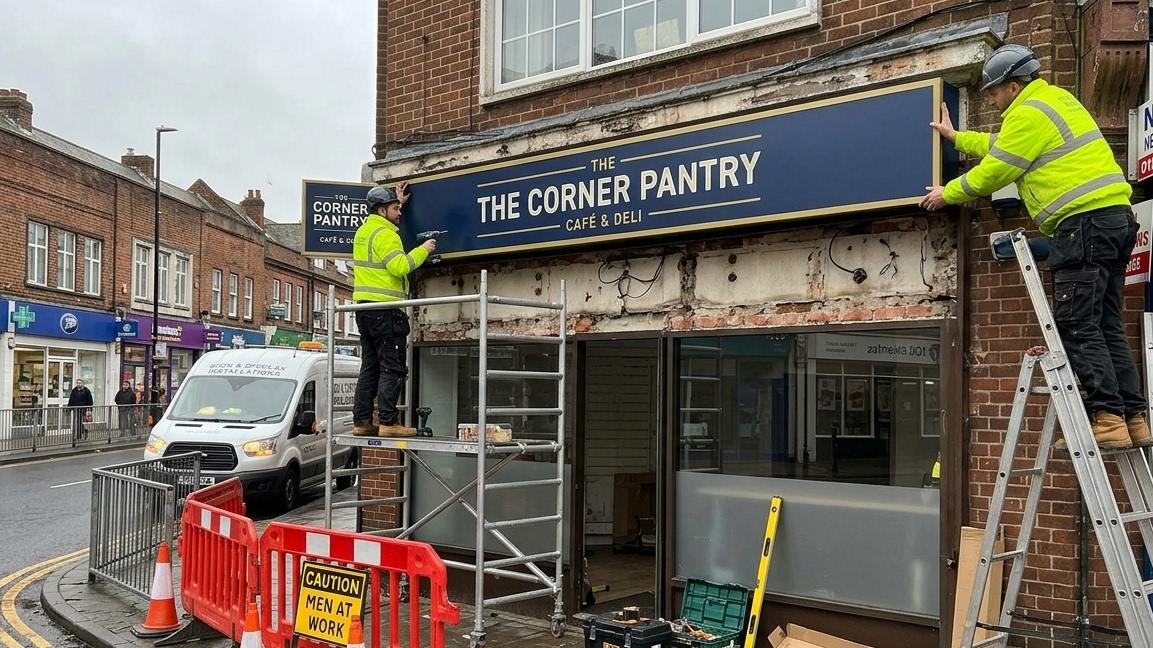
Fixings depend on sign weight, size, substrate and wind exposure. Typical options are masonry anchors, through-fixings, rails and concealed brackets.
Direct Fixing vs Rails or Frameworks
- Direct fixing: quicker, suited to smaller, lighter trays on sound surfaces.
- Rails or frameworks: better for large spans, uneven walls and heavier aluminium trays.
The final method should provide secure fixing while keeping visible screws, brackets and other hardware to a minimum.
Installing on Brick, Cladding or Existing Fascias
Brick needs suitable anchors, while cladding may need a sub-frame to reach solid structure. Over an existing fascia, we check what sits behind it first.
Access, Weatherproofing and Site Conditions
High fascias need scaffolding or a platform, and joints are sealed for outdoor use. Check consent too: the Planning Portal guidance on adverts and signs explains the rules, and illuminated signs often need express consent. Our team installs across Manchester and the wider UK.
How Much Do ACM and Aluminium Fascia Tray Signs Cost?
Which Material Is More Cost-Effective?
It varies by project. ACM can be a cost effective solution on large flat fascias, but a thicker aluminium tray may be better value where durability matters. Neither material is always cheaper, so the full specification and installation requirements should be compared.
Material and Fabrication Costs
Costs come from sheet price, routing or folding time, welding and finishing. Complex corners, unusual shapes and additional reinforcement can increase fabrication time on either material. Aluminium trays may also require extra finishing stages where welding or specialist powder coating is specified.
Size, Thickness and Tray Depth
Larger faces, thicker gauges and deeper returns all increase material and fabrication costs. Oversized trays may also require additional joints, reinforcement or framework, which can affect both manufacturing and installation costs.
Graphics, Illumination and Installation
Printed graphics, LED illumination, access equipment and wiring change the final price. Our custom vs standard signs guide shows how specification affects cost.
What Should a Quote Include?
- Material, gauge and tray depth
- Finish, artwork and proofing
- Illumination and electrical connection
- Fixings, access and installation
Can You Illuminate ACM and Aluminium Fascia Trays?
Yes. Both ACM and aluminium fascia tray signs can carry LED illumination, either through the face or via applied lettering. The most suitable approach depends on the desired lighting effect, tray depth, lettering style and access available for future maintenance.
Raised and Halo-Lit Lettering
Built-up letters can be fixed to the tray face and illuminated from the front, rear or both, depending on the desired effect. Halo-lit letters project light backwards onto the tray surface, while face-lit letters provide stronger direct visibility.
See our comparison of 3D letter signs vs traditional flat signs for the trade-offs.
LED Wiring and Maintenance Access
Plan for cable routes, LED drivers and a suitable service hatch so components can be inspected or replaced without removing the whole tray. Keeping electrical components accessible can reduce disruption and make future maintenance more straightforward.
How Illumination Affects Tray Design
Illuminated trays may need greater return depth, ventilation and sealed cable entries to accommodate electrical components safely. Additional depth also provides room for LEDs and helps distribute light more evenly behind lettering or illuminated sections. This usually favours a more rigid tray construction.
How Long Do Fascia Tray Signs Last?
A well-made fascia tray can typically provide around 7 to 15 years of service, although lifespan depends on the material, coating, graphics, weather exposure and maintenance. ACM will generally sit towards the lower end of the range, while properly finished solid aluminium can remain in service for longer.
This makes lifetime value important when comparing prices. A lower initial material cost is not always the better option if the sign will be installed in an exposed location or used as long-term business signage.
ACM or Aluminium Fascia Tray Signs: Which Should You Choose?
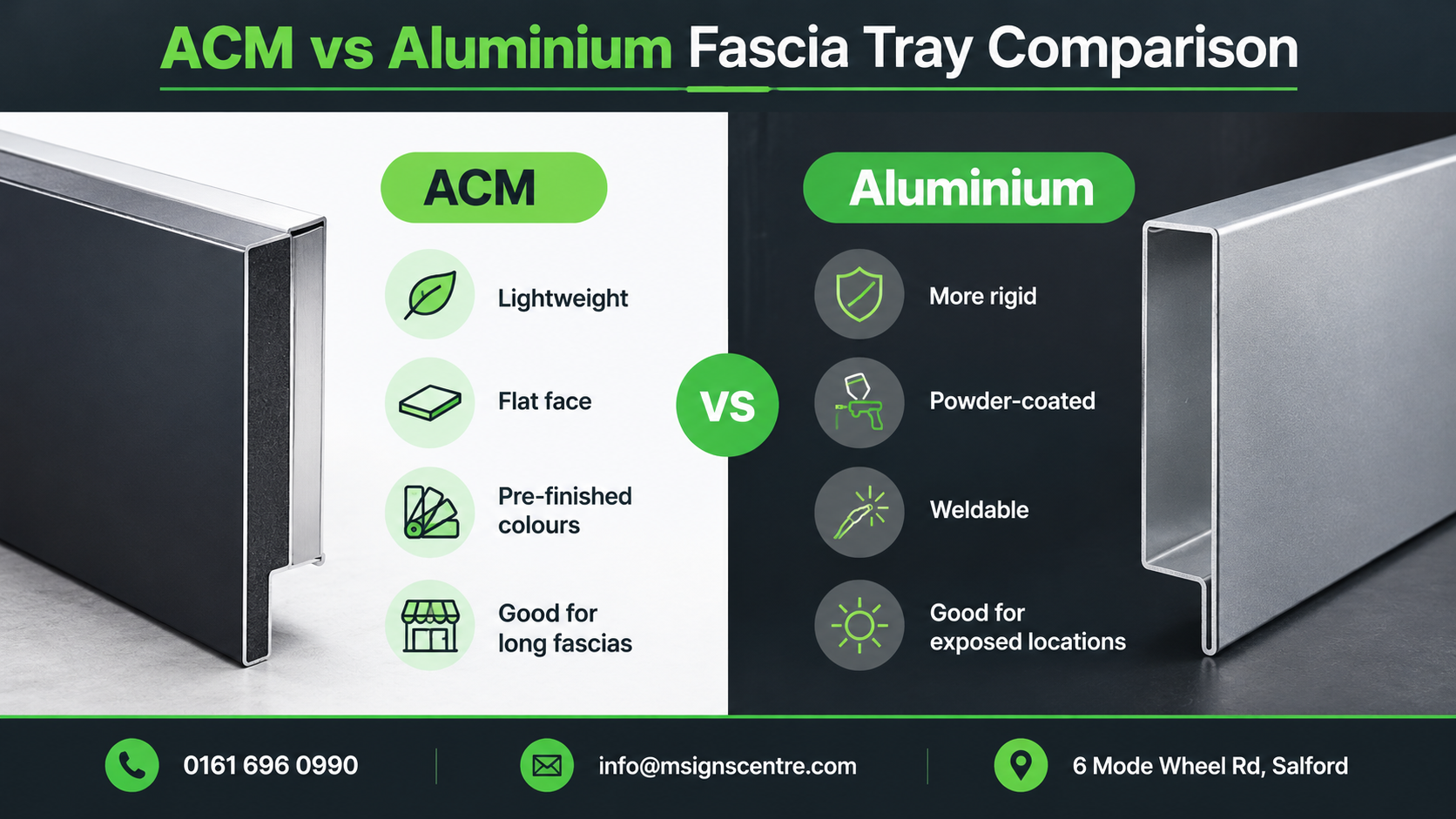
- Sign size: ACM suits long, light runs; thicker aluminium suits heavy-duty spans.
- Finish: ACM gives a flat, uniform face; powder coated aluminium gives a tough surface.
- Building type: retail parades and offices often suit ACM; exposed hospitality or healthcare frontages may suit aluminium.
- Illumination: either works if depth and access are planned.
- Installation: weak walls favour lighter trays or a frame.
- Budget: compare full quotes, not just material price.
- Structure: wind exposure and span decide gauge and bracing.
Choosing and Fitting Fascia Trays With Manchester Signs Centre
Our Salford team at Manchester Signs Centre designs, manufactures and installs trays in-house, with free design and site visits. We offer:
- Shop Front & Fascia Signs: durable ACM and aluminium trays made to your fascia dimensions.
- Light Boxes: an illuminated option when you want strong visibility day and night.
Tell us the approximate dimensions, location and specific requirements of your project, then upload your artwork or drop files through our enquiry form. Because fascia trays are generally made to measure rather than selected from a standard range, we review the specification and provide a tailored quote instead of relying on a generic checkout process.
FAQs
Is ACM or Aluminium Better for Fascia Signs?
Neither is better in every case. ACM suits large, light fascias, while aluminium suits exposed or high-contact sites.
Is ACM Cheaper Than Aluminium Fascia Tray signs?
Not always. Price depends on size, thickness, depth, finish and installation, so compare like-for-like quotes.
What Thickness Should a Fascia Tray Be?
It depends on span, wind exposure and fixing method. We confirm gauge and return depth after a site visit.
How Are Fascia Trays Fixed?
They are fixed with masonry anchors, brackets, rails or a sub-frame. The method depends on weight, substrate and wind exposure.
Can Both Materials Support Illuminated Lettering?
Yes. Both can carry LED-lit lettering if the tray depth, wiring and maintenance access are designed in.
Get Your Fascia Tray Quote From Manchester Signs Centre
Whether you need one fascia sign or professional signage across multiple sites, our expert team can help you create a specification around your building, brand and installation requirements.
For a straightforward replacement, our fascia tray sign service gives you made-to-measure trays with installation across the UK. We offer free design, free site visits and no-obligation quotes. Speak to the Manchester Signs Centre team today via our contact page.