The cost of business signage UK buyers pay can range from under £200 for a simple vinyl graphic to well over £10,000 for a large illuminated or freestanding sign. Where you land depends on size, materials, lighting, design complexity and how and where the sign is fitted.
Signs help customers find you, communicate your brand and often give potential customers their first impression of your business.
This guide explains what drives pricing, gives wide indicative ranges and shows where you can sensibly save money. All figures are broad estimates as per industry trends, you can contact us for exact pricing of your project.
What Is the Cost of Business Signage UK: Quick Overview
Signage pricing is rarely a fixed number. The table below shows broad, indicative ranges for common business signs. Real quotes vary by specification, site and installer, and there is a huge range between the simplest and the most complex options.
|
Sign Type |
Indicative Range |
Main Cost Drivers |
|---|---|---|
|
Window vinyl graphics |
£100 to £1,500 |
Area covered, print or cut vinyl, number of windows |
|
PVC banners |
£50 to £500+ |
Size, finishing, eyelets, wind-resistant mesh |
|
Flat fascia or tray sign (non-illuminated) |
£400 to £3,000 |
Length, aluminium or Dibond panel, print method |
|
Light box |
£600 to £3,500 |
Size, single or double-sided, LED specification |
|
Flat-cut acrylic or aluminium letters |
£400 to £2,500 |
Letter height, thickness, finish |
|
Built-up or halo-lit letters |
£1,200 to £7,000+ |
Metal type, lighting, number of characters |
|
Totem or pylon sign |
£2,500 to £12,000+ |
Height, foundations, illumination, consent |
|
Digital screen signage |
£500 to £10,000+ |
Screen size, brightness, content software, mounting |
Please note that quoted prices may be shown before VAT. Most goods and services are charged at the standard VAT rate of 20%, so commercial signage often attracts it. Ask whether a quote is ex-VAT or inc-VAT so you can compare options fairly.
What Factors Affect the Cost of Business Signage UK?
Every quote reflects a handful of variables that influence production, installation and long-term performance. Understanding these options makes it easier to compare prices like for like, whether you are buying one sign or several business signs for the same site.
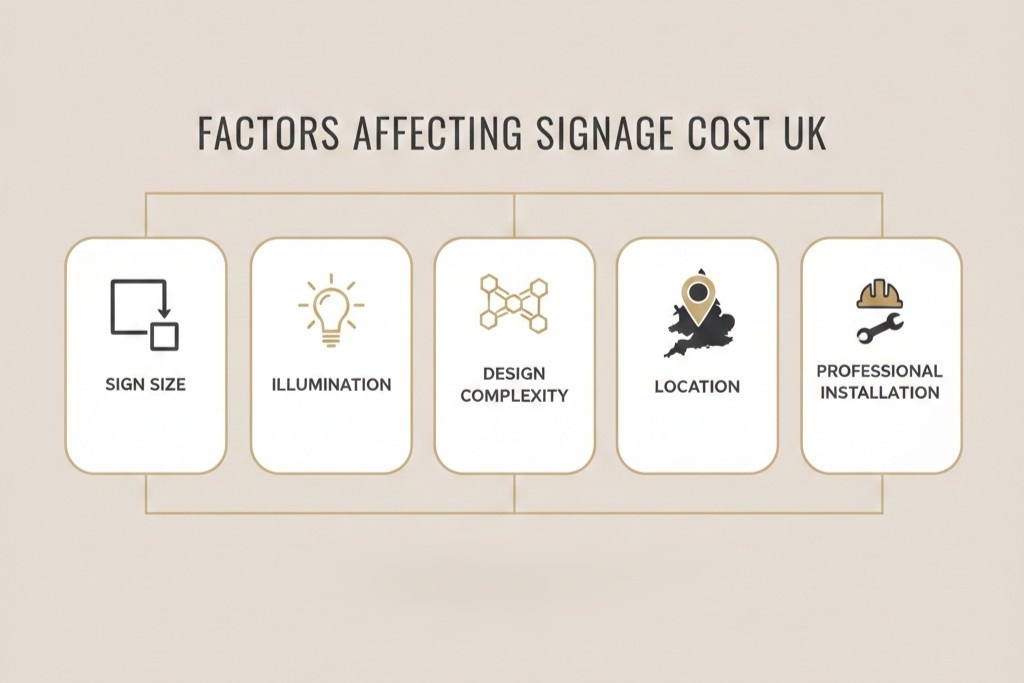
Sign Size
Size is one of the most straightforward drivers of price. Larger signs need more material, more fabrication time and often more complex fitting.
A fascia spanning an entire shopfront will usually cost more than a small window graphic, even when both use the same materials. Viewing distance matters too, as a sign read from across the street needs larger letters than one seen by visitors at the entrance.
Materials and Their Impact
The choice of materials has a strong bearing on price. Standard options such as PVC, acrylic, Foamex and aluminium composite (Dibond) offer good durability at accessible prices.
Plastic and acrylic signs cope well with wind and weather, which makes them a sensible choice for outdoor use. Foam board is a lightweight option, but it suits indoor display space better than long-term exterior use.
Premium materials such as stainless steel, brushed metals or specialist illuminated panels cost more, but they usually improve longevity and visual impact. For a greener choice, see our guide to sustainable signage solutions for eco-conscious UK businesses.
Illumination and Lighting Systems
Illuminated signs are typically more costly than non-illuminated ones. LED systems usually cost more to install than older fluorescent systems, but they tend to be more energy efficient and cheaper to run.
An illuminated sign also needs an electrical supply and a qualified electrician to connect it, which adds to the overall price. For options and fitting advice, read our guide to illuminated outdoor signs.
Design Complexity
The more bespoke the design, the more it affects pricing. Simple layouts using standard fonts, one or two colour choices and a flat logo are quicker to produce, and they keep the message easy to read. The plain background is also lighter on the pocket and looks elegant too.
Custom signs can be designed to match your brand’s personality, but intricate shapes, multiple colour layers or detailed artwork need more design and fabrication hours. At Manchester Signs Centre, free design is part of the process, so you can approve a visual before anything is made. If you already have artwork, send it as a vector PDF so the logo stays sharp at any size.
Location and Planning Considerations for Outdoor Use
Where your sign goes makes a difference. High-street sites, upper-storey fixings or locations with limited access can need extra equipment, and sometimes formal consent from the local authority. Conservation areas have stricter rules, which can add cost and lead time.
Exterior signs also need to cope with weather and wind, so specification matters for any outdoor use. For retail premises such as high-street units, our guide to types of retail signage helps you decide which formats suit your intended location.
Professional Installation
Standard production for signs takes 5-10 working days, and then comes the installation. For many sign types, professional installation is not optional. Size, weight and height all affect how complex the fit-out is, and how much effort will it need.
Larger signs may need scaffolding or a cherry picker, and illuminated signs need qualified electrical work. Difficult access, such as a tall frontage or a narrow pavement, usually adds to the price.
How Much Do Shop Signs Cost?
When comparing quotes, business owners want realistic figures. Shop signs vary widely, and the total should include materials, design, manufacture and fitting. The ranges below are deliberately broad because specification and site conditions change the prices considerably.
Shop signs can be permanent or temporary. A temporary promotional banner costs far less than a permanent fascia, so decide the purpose of the sign before you request prices, and discuss your options with the supplier.
Shop Sign Cost by Size
-
Small (1 to 2 metres): roughly £300 to £2,000, depending on illumination and materials.
-
Medium (3 to 5 metres): roughly £1,000 to £4,500, varying with finishes, lettering style and lighting.
-
Large (5 metres and over): roughly £3,000 to £12,000+, reflecting more complex fabrication, access equipment and fitting.
Large freestanding signs such as pylons or totems can reach five figures once foundations, lighting and consent are included. If you need roadside visibility, our team can advise on totem signs.
Starter Budgets for Small Shops
A basic aluminium or Dibond panel with vinyl lettering can give a clean, professional finish for a modest outlay. Many small shops spend somewhere between £400 and £2,000 including design, manufacture and fitting, though this varies by site.
Window graphics are a lower-cost option for a new shop with a tight budget. They help increase visibility, draw attention from passing visitors and attract new customers without a large upfront spend. A clear logo and business name in a readable colour usually does most of the work.
Bespoke vs Standard Signage
Standard signs are economical but less distinctive. Bespoke options such as 3D built-up backlit letters, halo lighting or specialist finishes raise the price, but they strengthen brand recognition.
If you are weighing up formats, our comparison of 3D signs and 3D illuminated letters sets out the differences clearly.
A tailored fascia tray sign is typically made from aluminium composite panels, with your business name and logo printed or applied in vinyl or acrylic. It is often the most cost-effective way to give a shopfront a fresh, professional look.
High Street Considerations
High-street units often cost more to sign than industrial or retail park units. Reasons include visibility requirements, pavement access, advertisement control rules under the 2007 Regulations and installation logistics.
Across Manchester and the wider UK, a sign on a busy road such as Deansgate or Market Street may need more careful scheduling than one on a trading estate.
For the official guidance, see the permission requirements of planning portal.
What Do Different Business Signs Cost by Style?
The sign type you choose directly affects both visual presence and budget. Different styles need different manufacturing methods, materials and fitting techniques, so it helps to compare options in different formats before you decide.
A digital screen, for example, will typically cost far more than a set of standard metal wayfinding signs. Handling, delivery and mounting also differ by style.
Illuminated Signs (LED Tray, Light Box, Halo, Face-Lit Letters)
Illuminated signs generally cost more because of the electrical components and fitting. They also stay visible after dark, which suits restaurants, bars and evening trade.
-
LED tray sign: roughly £800 to £5,000.
-
Light box: roughly £600 to £3,500.
-
Halo or face-lit letters: roughly £1,200 to £7,000+.
Energy-efficient LEDs help balance upfront and running costs.
3D Letters and Metal Signs
Businesses wanting a premium look often choose custom 3D letters for their depth and shadow. They work well for a logo on an office entrance or reception wall.
-
Flat-cut acrylic or aluminium: roughly £400 to £2,500.
-
Built-up aluminium or stainless steel: higher cost, premium look and long service life.
-
Powder-coated metal: a longer lifespan can offset the initial expense.
Vinyl, Banners and Fabric
These formats are flexible and cost-effective, though generally less durable than rigid signs. Banners are popular for their versatility, and a printed banner typically lasts around 2 to 5 years depending on weather conditions.
-
Vinyl graphics: roughly £100 to £1,500, depending on area and finish.
-
PVC banners: from around £50 to £500+, depending on size and finishing.
-
Fabric tension systems: vary widely with frame and print quality.
-
Vehicle graphics: often start from around £100 for simple lettering and rise for full wraps.
Digital Signage Prices
Digital screens sit at the top of the price range, as you pay for hardware, brightness, mounting and content software. Costs vary by screen size and whether the unit is indoor or weatherproof, and the message can be updated without reprinting.
How Much Does Sign Installation Cost?
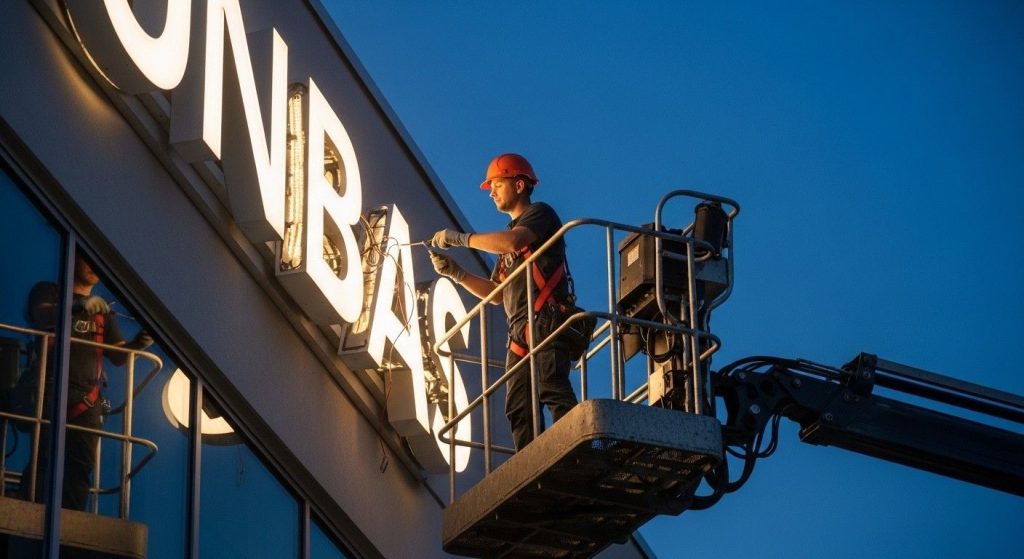
Installation is often underestimated. Fitting can represent a significant share of the total, particularly for large or illuminated signs. Knowing what the process involves, step by step, helps you avoid surprises in your quote.
Installation Cost Components
Professional installation typically covers:
-
Labour for qualified fitters
-
Access equipment such as scaffolding or powered lifts
-
Fixings and structural supports
-
Electrical connection for illuminated signage
-
Health and safety compliance
-
Delivery to site and travel time for fitters
At Manchester Signs Centre, our signs are designed, manufactured and installed in-house by our team. We also offer professional sign installation across the UK, with free site visits that help us scope access needs before quoting. Production time varies by sign type and workload, so ask for a timeline when you receive your quote.
Do Regulations and Permits Change the Cost of Business Signage UK?
Regulatory requirements can influence pricing, so consider them early.
Planning Permission and Advertisement Consent
Many traditional, non-illuminated fascia and hanging signs are likely to have deemed consent, subject to conditions such as size. Illuminated signs, projecting signs and larger boards more often need express advertisement consent from the local council.
In England, the council application fee for an advertisement relating to the business on the premises is £174, though fees are reviewed periodically and the Planning Portal lists a rise to £192 from 8 December 2026. Fees differ in Wales and Scotland, so check before you budget.
Conservation areas and listed buildings usually have stricter controls, and listed buildings may also need Listed Building Consent. Any application fees and extra lead time should be factored into your budget, and you should notice any lease restrictions early.
Location Considerations
Busy high streets may justify a higher specification, while retail parks and industrial estates often allow more flexibility. If you rent, lease terms can also restrict size, design or materials, so check with your landlord before ordering.
What Ongoing Costs Should You Budget For?
Ongoing upkeep also shapes the real cost of business signage UK. The installation is usually the largest single expense, but long-term performance affects overall value.
Routine Maintenance
Most external signs benefit from periodic cleaning to remove dirt and pollution. Illuminated signs should have occasional electrical checks, and an annual inspection is often sufficient. For inside the building, our tips on indoor sign maintenance show how to keep signs looking new.
Running Costs for Illuminated Signs
Modern LED systems are energy efficient. A small to medium illuminated sign may add only a modest amount to monthly electricity bills, depending on operating hours and wattage.
Even so, include energy use when calculating the full cost over several years.
Repairs and Lifespan
Weather exposure can cause fading graphics or component wear. As a rough guide, printed vinyl may last 3 to 7 years outdoors, while aluminium and acrylic signs can last 7 to 10 years or more with sensible care.
Better materials often last longer and need fewer repairs, which can lower the lifetime cost despite a higher upfront price.
What Budget Should Different Types of Business Plan For?
Every project differs, but broad examples can help you plan. These are wide, illustrative ranges for the whole package (design, manufacture and fitting) and are not quotes. Check whether each figure includes VAT.
-
Small retail shop or salon: roughly £500 to £3,500 for a fascia or tray sign, window graphics and a projecting or door sign. Our guide to effective salon signage shows how this can attract walk-in clients.
-
Café, restaurant or bar: roughly £1,500 to £8,000 for an illuminated fascia, window graphics and a menu or neon feature.
-
Offices and reception areas: roughly £400 to £4,000 for an indoor logo sign, door plaques and wayfinding. Reception signs often use acrylic or 3D lettering, which helps visitors find the entrance.
-
Healthcare practice: roughly £800 to £5,000 for a clear entrance sign, internal wayfinding and privacy window film.
-
Larger retail premises or multi-unit site: roughly £4,000 to £20,000+ depending on frontage length, totems and illumination.
How Can You Reduce the Cost of Business Signage UK?
Managing the cost of business signage UK does not mean compromising on visibility or durability. Careful specification keeps spending under control while creating a sign that still reflects your brand.
-
Balance materials: choose aluminium composite or quality acrylic where premium metals are not essential.
-
Simplify the design: limit complex shapes, multiple colour layers and intricate fabrication.
-
Bundle your order: combine fascia boards, window graphics and interior signs with a single company to reduce delivery and fitting visits.
-
Match the sign to the site: adapt material choice and complexity to your setting and brand positioning.
-
Plan early: consulting a sign provider before you finalise artwork avoids costly changes and supports a fast turnaround.
-
Check consent first: confirming whether advertisement consent applies prevents expensive rework later.
-
Compare options: ask for two or three specifications, such as printed vinyl against routed acrylic, and compare prices for each. Ensure each quote lists the same products and finish.
Because our workshop is in Salford and we handle design, manufacture and fitting ourselves, bundling a shopfront order with Manchester Signs Centre can keep the number of site visits down.
Getting Your Shop Signs Right With Manchester Signs Centre
Here are the services most relevant to budgeting for a new or replacement sign.
-
Shop Front and Fascia Signs: durable fascia and tray signs that make a shopfront easy to spot, with options to suit tighter or larger budgets.
-
Light Boxes: illuminated signs that stay visible day and night, useful where evening footfall matters.
-
3D Built-Up Letters: a premium option for brands that want depth and a stronger street presence.
Get a Personalised Quote for Your Business Signs
If you are ready to move from estimates to real figures, our fascia and tray sign service is a sensible starting point for most shopfronts, as it gives you a clear, durable sign at a range of budgets. If you want a premium finish, our 3D built-up letters add depth and impact for your brand.
Manchester Signs Centre offers free design, free site visits and no-obligation quotes, and we are rated 4.8/5 from 90+ Google reviews. Speak to the Manchester Signs Centre team today to discuss your requirements via our contact page.
Please note that the prices in this article are only estimates based on wider UK data, and your actual quote may differ depending on your specification, site and installation needs.
Frequently Asked Questions
How much does a shop sign cost in the UK?
It varies widely, from a few hundred pounds for a simple fascia or vinyl sign to £10,000 or more for large illuminated or freestanding signs. Size, materials, lighting and installation drive most of the difference.
Does an illuminated sign cost much more than a non-illuminated one?
Usually, yes. Lighting adds components, electrical work and sometimes advertisement consent, though LEDs help keep running costs modest.
Is installation included in the price of business signs?
Not always, so check your quote. Installation can include labour, access equipment, fixings and electrical connection, and it can be a significant share of the total.
Do I need permission before putting up a shop sign?
Sometimes. Many standard non-illuminated fascia signs have deemed consent, but illuminated, projecting or larger signs, and those in conservation areas or on listed buildings, may need consent from the local council.
How long do business signs last?
It depends on the materials and exposure. Printed vinyl may last 3 to 7 years outdoors, banners often last 2 to 5 years, and aluminium and acrylic signs often last 7 to 10 years or more.
What is the cheapest way to improve my shop signs?
Window graphics, vinyl lettering and a simple aluminium or Dibond panel are usually the most affordable routes. A tidy, simple design can still look professional.