Fascia tray signs are folded aluminium panels that give a shopfront or office a rigid, clean-edged sign with hidden fixings and room for lighting. They can increase foot traffic by up to 60%. Whether one suits you depends on your building, your branding and whether you want the sign illuminated.
This guide answers the questions we hear most: how sign trays are made, why they are worth choosing, how to customise and light them, how they are fixed and how to look after them.
At MSigns, we design, manufacture and install them from our Salford workshop, so the advice below comes from real fascias across Manchester and the wider UK.
Quick Overview: Features of Fascia Sign Trays
|
Feature |
Typical Specification |
|---|---|
|
Material |
Aluminium composite (ACM), solid aluminium or stainless steel, 2mm to 3mm |
|
Return depth |
25mm to 100mm |
|
Lifespan |
7 to 10 years or more |
|
Illumination |
Internal LED illumination, halo, face-lit or edge-lit |
|
Fixing |
Hidden rails, studs or post mounts |
|
Best for |
Retail, offices, hospitality, healthcare and multi-site rollouts |
How Are Fascia Tray Signs Made?
A sign tray is made by folding a flat sheet of material, usually aluminium or aluminium composite, into a shallow box. The folded edges give the sign strength, crisp lines and a more finished look than flat panels. If you want the short definition first, our guide to the aluminium tray sign covers the basics.
Material Selection
The most common material for fascia sign trays is aluminium composite material (ACM). It has a polyethylene core between two thin aluminium skins, so it is light, rigid, weather-resistant and easy to machine. That makes it a suitable choice for outdoor business signage.
-
Solid aluminium: a premium option, usually folded from 2mm to 3mm sheet and often welded at the corners for durability. Ideal for larger or higher-end installs.
-
Stainless steel: heavier and stronger, with a premium look, though standard steel is prone to rust if the coating is damaged.
-
Acrylic: used for internal trays or feature panels rather than structural bodies.
-
PVC Foamex: light and low cost, but not robust enough for long-term outdoor use.
The Folding Process
The fold turns the panel edges back at 90 degrees to form the tray. This is done with CNC routers and metal folders, so every tray is manufactured to accurate, repeatable dimensions.
-
The panel is cut to size from your artwork or drop files.
-
The edges are V-grooved or scored.
-
The edges are folded and fixed with rivets, welds or adhesive.
-
Fixing rails or return lips are added for mounting and stiffening.
-
Face graphics are applied, such as printed vinyl, flat cut letters, built up letters, fret-cut text or illumination.
Custom Sizes and Shapes of Fascia Signage
Because trays are cut from sheet, they can be made to match the exact dimensions of your premises:
-
Size: from 300mm to over 6m long, with larger trays made in sections and joined on site.
-
Shape: rectangular, circular, oval or fully bespoke.
-
Return depth: usually 25mm to 100mm, depending on visibility, lighting and mounting.
Why Choose a Sign Tray for Your Business?
Fascia signs in tray form do more than look good. They are durable, easy to light and simple to repeat across locations, and a one-off purchase has no recurring costs once installed. That is why this style of fascia signage is so widely used on UK high streets. For a wider view of why this matters, see how fascia signs elevate business identity and visibility.
1. Professional, Polished Appearance
The clean folds of a professional sign tray look far more premium than flat panels. There are no visible fixings on the face unless you want them, and the box form lifts the sign slightly off the wall for depth. A highly visible shop sign helps attract potential customers before they reach the door.
-
Retail fascias on streets such as Market Street and Deansgate
-
Corporate offices and house-style branding for professional services
-
Shopping centres
-
Property development sites
2. Long-Term Durability
Aluminium composite and solid aluminium resist weathering, UV exposure and corrosion. Well-made trays keep their appearance for years with minimal maintenance, even in sun, rain, wind and urban pollution.
3. Versatility in Design
Design flexibility is one of the biggest selling points. You can combine a tray with:
-
Printed graphics and vinyl graphics
-
Fret-cut lettering with illumination behind
-
Raised letters and built up letters
-
Acrylic or metal logo elements
-
Halo lighting or internal LED modules
Powder coating can also be matched to any RAL or Pantone colour, so the finished signage reflects your brand exactly.
4. Hidden Fixings
Trays can be mounted with internal brackets, Z-rails or rear studs rather than screws through the face. That keeps the surface flat and unbroken.
-
No screw heads or caps are visible
-
The face stays perfectly flat
-
Security improves, as the sign is harder to tamper with
5. Cost-Effective Branding
ACM trays strike a good balance between durability and price. For a business that wants strong visual impact without overspending, sign trays usually offer better value than a flat board that needs replacing sooner.
6. Scalable and Repeatable
If you operate multiple sites, trays are easy to replicate. They are CNC-cut to specification, manufactured in matched sets and supplied ready to fit, so you get consistent branding across every unit, which helps when branding business units of different sizes. This suits franchises, estate agencies, restaurant chains and any multi site rebrand. Our guide to company rebranding with professional signage explains how to plan one.
How Can You Customise a Fascia Sign Tray?
A folded tray is a branding tool as well as a structure, and it can be tailored down to the smallest detail. Whether you want minimal and understated or bold and eye-catching, the design concept starts with the tray as a flexible base. If you are weighing bespoke against off-the-shelf, see custom signs vs standard signs.
Face Finishes
The face can be finished in several ways, depending on the effect you want.
Powder Coating
Powder coated finishes are among the most common. They give a smooth, durable, UV-resistant surface in any RAL or Pantone colour, which is ideal for matching your exact brand colour across all your fascia signs.
Digital Print Vinyl
Printed graphics are applied to the tray face. They allow for:
-
Full-colour logos
-
High-resolution images
-
Patterns or gradients
Textured and Speciality Vinyls
Specialist films add a tactile feel or metallic sheen. Common choices include:
-
Brushed aluminium
-
Matte black
-
Carbon fibre
-
Gold or copper effect
Gloss or Matte Laminate
A laminate seals the vinyl graphics for extra protection and sets the tone. High gloss suits sleek retail, while matte suits understated professional settings.
Graphic Techniques
A good tray pairs fabrication with strong lettering and graphics. Here is the range of options we create most often, and our expert team can advise on which suits your premises and specific requirements.
Flat Cut Lettering
Flat cut letters in acrylic or metal are laser-cut and bonded to the face. They add depth and allow colour contrast between the tray and the text. For a deeper comparison, read about fabricated 3D sign letters vs flat signs.
Fret-Cut Detailing
Text or logos are cut out of the tray face, letting light or a contrasting background show through. This works especially well for illuminated signs.
Push-Through Letters
Acrylic letters are pushed through fret-cut apertures and stand proud of the face. This adds depth and suits halo or face-lit illumination.
Raised Logo Elements
Foam, acrylic or aluminium backing lifts logo elements off the tray for a layered effect, and built up lettering takes this further with full-depth characters. If you are considering this route, what 3D sign letters are and why they are popular is a helpful primer.
Edge Detailing and Returns
The sides of the tray, called returns, are visible from an angle, so they matter. Common options include:
-
Contrasting colours for the edges and the face
-
Rounded or sharp corners
-
Vinyl striping for visual breaks
-
Wraparound designs for logos or brand patterns
Mounting Styles
A tray does not have to sit flat to the wall. You can also:
-
Project it from the wall using stand-off brackets
-
Suspend it from ceiling rods indoors
-
Flush-mount it for a clean, floating effect
-
Use it as a back panel for other signage types
What Lighting Options Work for Sign Trays?
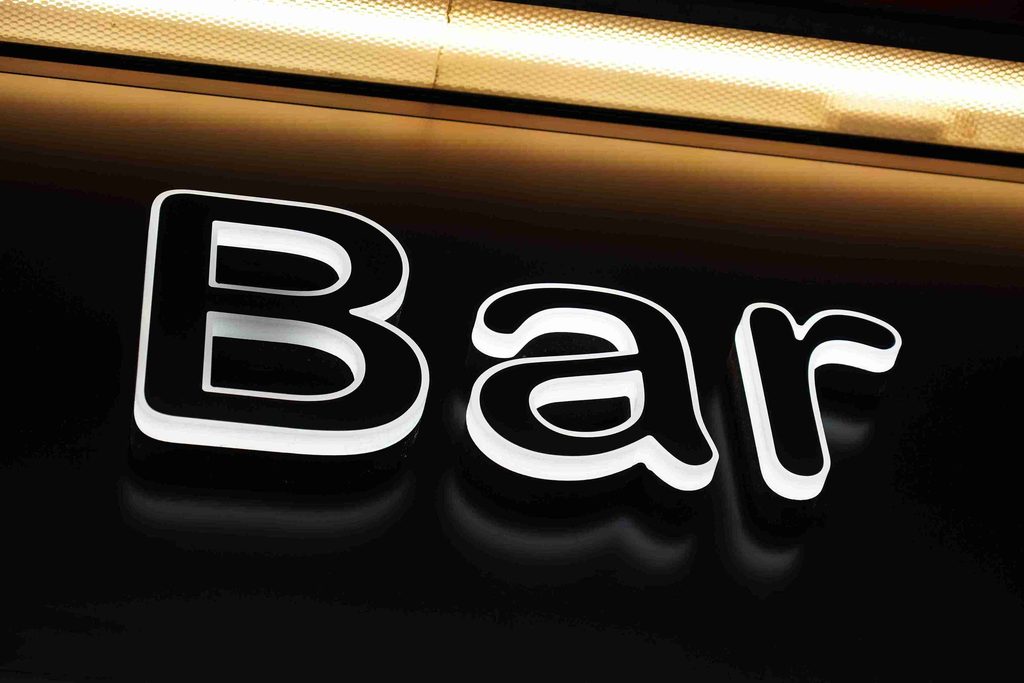
LED illumination turns a tray into an all-day, all-night branding tool. It improves readability, adds depth and keeps your sign working when you are closed, so customers can find you after dark. For a wider comparison of lit options, see illuminated signs for businesses compared.
Note that the Planning Portal says the majority of illuminated signs normally need advertisement consent, so check with your local planning authority early.
1. LED Backlighting
LED modules sit behind fret-cut lettering or logo cut-outs on the tray face. Light shines through the openings, so the text glows against the opaque tray.
-
Best for: high-contrast night visibility in modern retail or corporate settings.
-
Benefits: energy efficient, low maintenance, and a long lifespan (often 30,000+ hours).
2. Halo Lighting (Rear Illumination)
Raised letters or logos are mounted slightly off the tray face. LEDs behind them cast a soft glow around the edges onto the tray surface. Our guide to the backlit logo sign explains the effect in more detail.
-
Best for: offices, salons, law firms and architects wanting a premium, elegant look.
3. Face Illumination
Push-through acrylic letters are lit from behind so the whole face of each letter glows. Opaque borders can be added for clarity and edge contrast.
-
Best for: hospitality, fast food and modern retail brands.
-
Benefits: excellent night readability and strong brand presence.
4. Edge-Lit Trays
LED strips around the perimeter create a glowing border. This is often paired with translucent face vinyl or frosted acrylic to soften the light and prevent glare.
-
Best for: contemporary, minimal branding and tech-oriented styles.
5. External Lighting (If Internal Isn’t Possible)
Where internal lighting is not practical, external downlighters or spotlights can be used. They are less sleek but easier to retrofit.
Illumination Tips for Maximum Impact
-
Colour temperature: cool white for modern or clinical looks, warm white for boutique or heritage brands.
-
Opal acrylic: use it for a softer glow and to avoid hot spots.
-
Test it: a tray should look as good in daylight as it does at night.
-
LED quality: cheap LED modules can fade, flicker or fail, which damages your first impression.
How Are Fascia Tray Signs Mounted and Installed?
Installing a tray involves more than attaching it to a wall. The method affects appearance, structural strength, maintenance access and lighting performance. Our installation team works across the UK, and a site survey is the first stage of the process for every project. Fascia sign trays are delivered to your premises ready to fit, with fixings supplied.
1. Face-Fix with Hidden Rails
This is the most common method. Z-section rails or aluminium angle brackets are fixed to the wall and the rear of the tray.
-
Clean, floating appearance with no visible screws or caps
-
Ideal for illuminated trays, as there is space behind for wiring
-
Rails are levelled and fixed first, then the tray is slotted on and secured from inside
2. Stud Fixing
Metal studs or spacers are mounted to the wall. The tray is drilled at precise points and slotted over them, with the studs chemically bonded or anchored.
-
The sign stands off the wall slightly, improving depth
-
It creates a shadow gap for a stylish look
-
It needs accurate alignment and is not ideal for every substrate
3. Direct Wall Fixing (Screw-Through)
Sometimes used for smaller trays or tight budgets. Screws go through the face and into the wall, often hidden by plastic caps.
-
Visible fixings can spoil the clean design
-
It is less secure
-
There is a risk of water ingress if not sealed properly
4. Post-Mounted Sign Trays
Freestanding trays, such as those outside a business park or petrol station, are mounted on posts. For roadside sites, a guide to outdoor business signs can help you compare formats.
-
Single or double post setups
-
The tray is fixed via rails or a rear frame
-
Ideal for drive-by visibility
5. Ceiling Suspension (Internal Use)
Indoors, trays can be suspended from ceilings using rods, cables or wires.
-
Reception signs
-
Wayfinding or department signage
-
Hanging directional signs in shopping centres
Substrate Considerations
Different walls need different fixings, so the substrate should be checked before anything is ordered.
-
Brick: suits resin-anchored studs or heavy-duty masonry anchors.
-
Concrete: suits mechanical anchors with good pull-out strength.
-
Timber cladding: needs fixings into the supporting frame, not the cladding.
-
Render or insulated panels: need long fixings or stand-offs that reach the structural wall.
Wiring for Illuminated Sign Trays
If your tray is illuminated, plan the power supply early:
-
Ensure access to a mains connection or dedicated circuit
-
Route wiring internally through the wall where possible
-
Use waterproof grommets or cable glands
-
Always comply with UK electrical regulations
How Do You Maintain a Sign Tray and How Long Does It Last?
Even robust signage loses its edge without upkeep. A little regular care extends the life of your fascia signs and avoids early replacement. If you have a question about an existing tray, you can contact our team for advice.
Typical Lifespan
With good materials and installation, a tray can last 7 to 10 years or more. Lifespan depends on:
-
Quality of materials, such as ACM against solid aluminium
-
Type of vinyls or coatings used
-
Exposure to sunlight, wind and coastal air
-
Illumination method and the quality of the LED modules
-
How often it is cleaned and inspected
Cleaning Guidelines
How Often to Clean
-
Every 3 to 6 months for city centre or roadside signs
-
Every 6 to 12 months for sheltered or rural locations
What to Use
-
Soft microfibre cloths or sponges
-
Mild, pH-neutral detergent
-
Warm water, never hot or boiling
What to Avoid
-
Abrasive cleaners or cloths, which scratch finishes
-
Solvents such as acetone or thinners, which damage vinyl and paint
-
Pressure washers at close range
Common Maintenance Tasks
1. Check Fixings
-
Inspect mounting points every 6 to 12 months
-
Tighten loose fixings and replace corroded hardware
2. Inspect Lighting
-
Look for flickering or dim areas
-
Replace failed LED modules as needed
-
Check that waterproof seals are intact
3. Refresh Graphics
-
Printed vinyl may fade after years of UV exposure
-
Logos or text can be updated without replacing the tray
-
Face wraps can be reapplied for a rebrand
4. Check for Panel Warping or Peeling
-
This is usually caused by poor-quality vinyl or extreme heat
-
A properly made tray is rarely at risk in the UK climate
Preventive Measures for Long-Term Performance
-
Specify quality materials from the start, as substandard ACM or cheap LEDs lead to early failure.
-
Choose powder coating over spray paint, as it resists fading and chipping.
-
Keep vegetation and drains clear near wall-mounted trays to avoid water pooling.
When to Replace a Sign Tray
Even with good care, there comes a point to replace. Signs include:
-
Irreversible damage such as dents, corrosion or warped panels
-
Outdated branding or typography
-
Faded graphics beyond reapplication
-
Failed or obsolete lighting systems
What Mistakes Should You Avoid With Sign Trays?

A tray is a simple structure, but getting it wrong can undermine your brand presence. These are the errors we see most often on fascia signs and fascia signage across the UK.
1. Choosing the Wrong Materials
Not all ACM is equal. Cheap panels can warp, fade or delaminate, especially in full sun or wet conditions.
-
Avoid: thin, budget-grade ACM (2mm or less), non-UV-stable vinyls or paint, and low-grade LED modules.
-
Specify: premium 3mm ACM or solid aluminium, outdoor-rated vinyls from established manufacturers, and LED ratings with a supplier warranty.
2. Ignoring Illumination Needs
Lighting added as an afterthought often looks messy and performs badly.
-
Avoid: relying on external lighting when the design needs backlighting, or adding LEDs without ventilation and waterproofing.
-
Do: decide early whether the tray needs internal lighting, and build it with LED modules and power routing in mind.
3. Overcrowded Design
Too much text or ornate fonts make a tray hard to read from a distance.
-
Avoid: small text, low-contrast colour schemes and script fonts for the main message.
-
Do: use one or two fonts at most, high-contrast colours, and put legibility before ornament.
4. Poor Sizing and Positioning
Too-small trays get lost on large façades, while oversized ones look unbalanced. Consider:
-
The viewing distance and angle from nearby roads and pavements
-
The scale of the sign relative to your building
-
Advertisement consent rules, especially in conservation areas or on listed buildings
On consent, signs above 4.6 metres on many buildings normally need advertisement consent, and listed buildings may also need separate listed building consent.
5. DIY or Unqualified Installation
Trays look simple, but poor installation leads to:
-
Crooked alignment
-
Water ingress
-
Damaged façades
-
Safety risks, especially with heavy trays or lighting
6. Not Planning for Future Access
Trays without removable panels make lighting and wiring maintenance a headache later on. Build in access from the start.
Getting Your Fascia Tray Sign Made With MSigns
If you are ready to move from reading to specifying, these services cover the most common tray projects.
-
Shop Front & Fascia Signs: durable fascia and tray signs, designed, manufactured and installed in-house by our Greater Manchester team, with free design and a free site visit.
-
Light Boxes: if you want your tray illuminated for day and night visibility, light boxes are a proven option for shopfronts and offices.
-
3D Built-Up Letters: add raised lettering and logos to a tray for a premium finish with real depth.
Frequently Asked Questions
What is a sign tray?
A sign tray is a folded panel, usually aluminium or aluminium composite, that forms a rigid box-like structure. It is mounted to the building and used as a base for graphics, logos or illuminated signage.
What is the difference between a sign tray and a flat panel sign?
A sign tray has folded edges that add strength and visual depth, while flat panels do not. Trays look more premium, hide fixings and allow built-in lighting, whereas flat signs are cheaper but look less polished.
Do I need planning permission for a fascia tray sign?
Possibly, but it is usually advertisement consent rather than planning permission. Illuminated signs and signs above 4.6 metres normally need it, and listed buildings may also need listed building consent.
How long does a sign tray last?
A well-made tray lasts 7 to 10 years or longer with minimal maintenance. LED components may need replacing after 5 to 8 years, depending on usage.
Can I update the graphics on an existing sign tray?
Yes. The face graphics can be removed and replaced without replacing the tray. If the structure and lighting are intact, this makes a rebrand cost-effective.
How much does a sign tray cost in the UK?
It depends on size, material (ACM or solid aluminium), graphics, illumination and installation location. MSigns offers free site visits and no-obligation quotes, so you can get an exact price for your fascia.
Plan Your Fascia Tray Sign With MSigns
For most shopfronts, the next step is a tray that suits your frontage and brand colour. Our Shop Front & Fascia Signs service covers design, manufacture and installation, so one team handles the whole job. If you want lighting, Light Boxes give you strong day and night visibility.
We offer free design, free site visits and no-obligation quotes, and we install across the UK. Speak to the MSigns team today to discuss your requirements.