Storing exhibition graphics correctly helps businesses protect printed panels, fabric displays and other exhibition assets between events.
The suitable way to store exhibition graphics is flat or rolled in protective sleeves, in a cool, dry, dark space, away from floors and external walls. What works for your printed graphics and stand depends on the material (rigid panel, fabric or rollable graphics) and how soon you need it again.
The best storage method depends on your display materials, available space and how often you plan to reuse them. At Manchester Signs Centre, we help businesses design and produce exhibition signage that supports their branding and future exhibition plans.
This guide explains how to prepare, pack and store different exhibition graphics, from rigid panels to fabric displays. Whether you are preparing for your next trade show or keeping existing graphics for future events, proper exhibition stand storage can extend their useful life, keep them in excellent condition and help avoid unnecessary replacement costs.
Where Should You Keep Exhibition Graphics Between Shows?
Choose a cool, dry and stable storage space, following the manufacturer’s recommended conditions for your particular graphics. Conservation guidance for paper-based materials can provide a useful reference, but vinyl, fabric, acrylic and other display materials may have different storage requirements.
For paper-based collections suggests 13 to 20 degrees Celsius and 35 to 60% relative humidity is suitable, which is a sensible target for printed materials too.
-
Avoid: garages, lofts, damp basements and anywhere near radiators or windows.
-
Keep off the floor: use shelving or pallets, and leave a gap from external walls.
-
Limit light: direct sunlight fades inks and yellows some films.
Keep your exhibition stand storage area clean and well-ventilated to reduce dust, moisture and pest problems. Store boxes and cases on shelves or raised platforms rather than directly on concrete floors, where moisture can affect packaging.
For businesses that require storage over several months, dedicated storage facilities may offer better protection for exhibition assets. However, check the facility’s conditions, security, accessibility and handling arrangements before choosing one. This is particularly important for businesses exhibiting at multiple venues throughout the year.
If you have no suitable room, secure storage at a third-party warehouse is worth considering. Compare flexible storage options by cost per month and access times.
How Do You Pack Exhibition Panels Before Storage?
Clean first, then pack. Wipe each panel with a soft, dry microfibre cloth to remove dust, fingerprints and tape residue, as dirt left on a surface can mark it permanently.
-
Remove any hanging hardware, clips or Velcro that could press into the face of the print.
-
Interleave panels with acid-free tissue or clean paper to stop surfaces rubbing.
-
Wrap protected panels in clean, dry packaging, using a smooth protective layer between the printed surface and any bubble wrap. Follow the supplier’s instructions for delicate finishes.
-
Place wrapped panels in rigid cases or boxes cut to size, with edges protected by foam or card corners.
-
Label each case with the stand name, event and panel positions.
For paper-based graphics, using archival-quality storage materials can help extend their useful life.
Packing Methods for Different Materials
For paper-based graphics, using archival-quality storage materials can help extend their useful life. Store paper prints flat in suitable archival boxes, with acid-free interleaving sheets between surfaces to reduce rubbing and ink transfer.
Different materials should also be separated where prolonged contact could cause staining, adhesive transfer or chemical degradation. This is especially important when storing a range of printed panels, films and paper materials together.
Clearly labelled storage containers are essential for long-term organisation. Labels showing the exhibition name, panel dimensions and contents help prevent unnecessary handling when preparing for another event.
Rigid boards such as Foamex, Dibond and acrylic should be stored on edge or flat in even stacks. Never stack heavy items on top, as panels can bow or dent.
How Should You Store Rollable Graphics and Fabric Displays?
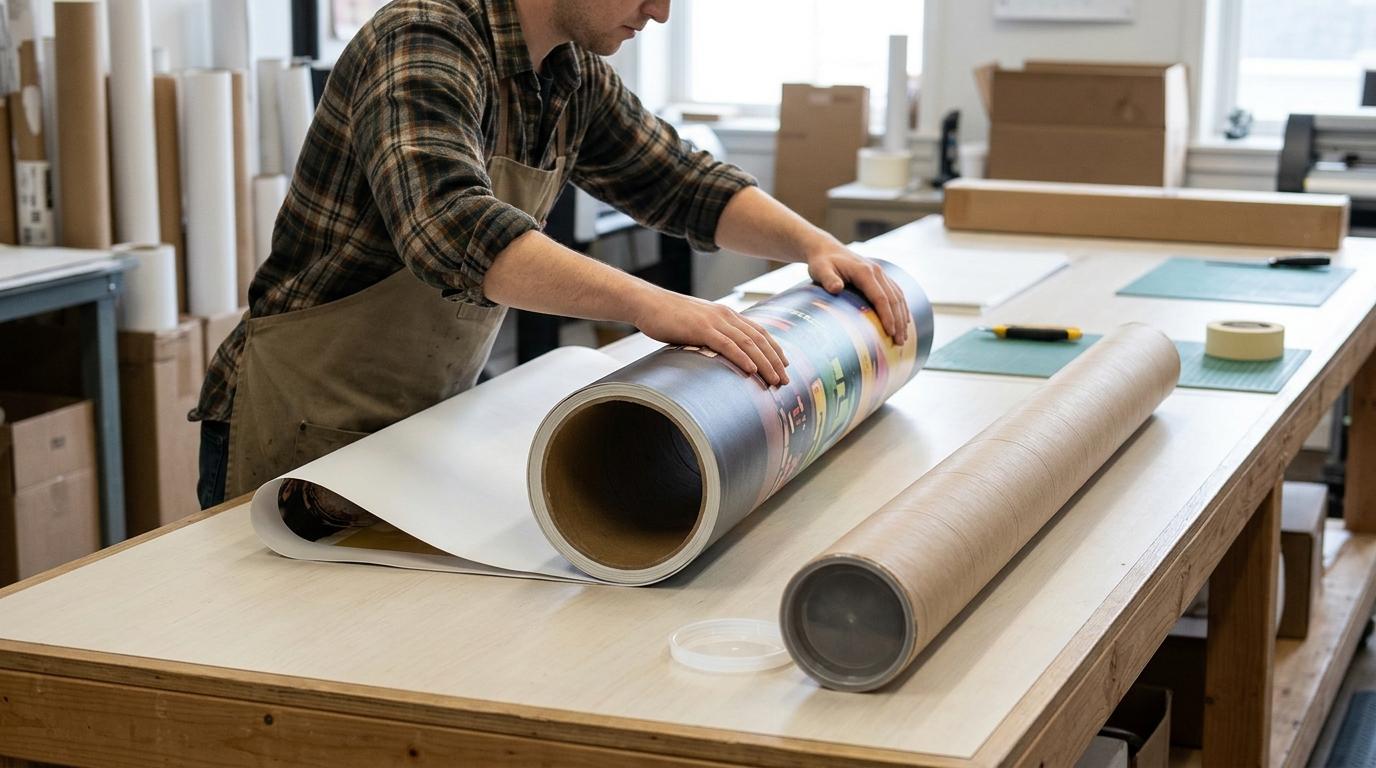
Rollable graphics need a different approach from rigid panels. Roll them loosely with the print facing outwards (unless the supplier advises otherwise) and store them in a tube, never folded.
-
Fabric: fabric tension graphics can usually be folded loosely or rolled, but check care instructions before packing.
-
PVC banners: roll with tissue between layers and avoid tight tape that leaves marks.
-
Pop-up displays: collapse the frame, keep the graphic attached or wrapped separately, and use the supplied carry case.
Dry everything fully before packing. Damp fabric and PVC can develop mould within days in a closed case.
Do Different Types of Exhibition Graphics Need Different Storage?
Not all exhibition graphics have the same storage needs. Their material, shape and intended display system determine how they should be packed between events.
|
Graphic type |
What it is |
Recommended storage |
|---|---|---|
|
Shell Scheme Graphics |
Printed graphics made for compatible exhibition shell scheme systems. |
Store according to the material, keeping dimensions and fitting details with the graphics. |
|
Pop-Up Display Graphics |
Printed replacement panels designed to fit existing pop-up display frames. |
Roll flexible panels as recommended and protect them in suitable tubes or cases. |
|
Hanging Exhibition Displays |
Printed fabric graphics fitted to suspended structures. |
Ensure fabric is completely dry and store it separately from metal hanging components. |
|
Foamex Graphics |
Rigid printed panels used for flat exhibition displays and signage. |
Keep panels flat with even support or upright with suitable protection to prevent bending. |
Check the display system before packing. Graphics designed for one frame or shell scheme may not fit another. Keep measurements, fitting details and photographs with your exhibition records, particularly if you plan to reuse the graphics at different venues.
Artwork templates are available from various print and exhibition display suppliers for different graphic types. Using the correct template helps maintain suitable dimensions and print layouts when replacement graphics are required.
How Do You Protect Exhibition Graphics During Transport?
Most damage happens between the stand and the store. Use hard-shell or flight cases for the entire stand where possible, and pack heavier items at the bottom.
-
Fill gaps with foam or packing paper so nothing shifts in the van.
-
Keep panels upright, not flat under loose equipment.
-
Cover cases if loading in rain, and let them acclimatise before opening to avoid condensation.
-
Keep a spare set of fixings and a small repair kit with each case.
At Manchester Signs Centre, we design, manufacture and install in-house, so we can advise on the right case or carry solution when we produce your exhibition signage.
What Should You Check Before the Next Exhibition?
Inspect your displays as soon as they come back, not the week before the next show. Spotting damage early leaves time to order replacement graphics.
-
Check edges for lifting, creasing and corner damage.
-
Look for fading, scuffs or mould spots.
-
Test that fixings, magnets and lighting still work.
-
Photograph each panel and record its size and position on the exhibition stand.
Keep your print ready artwork filed with that record. If a panel is damaged, you can reorder an exact match quickly instead of rebuilding the design from scratch. Our Salford team can also refresh panels for new displays while keeping your existing frame.
How Do You Store Graphics for a Modular Exhibition Stand?
A modular exhibition stand is easier to store because it breaks into labelled sections. Store frames, graphic panels and accessories in separate cases so you can check each part quickly.
If your stand uses a shell scheme layout, keep a photo of the finished build. It helps whoever sets it up at the next exhibition. For planning the build itself, see our guide to exhibition stand planning.
How Do You Organise Exhibition Stand Storage for Future Events?
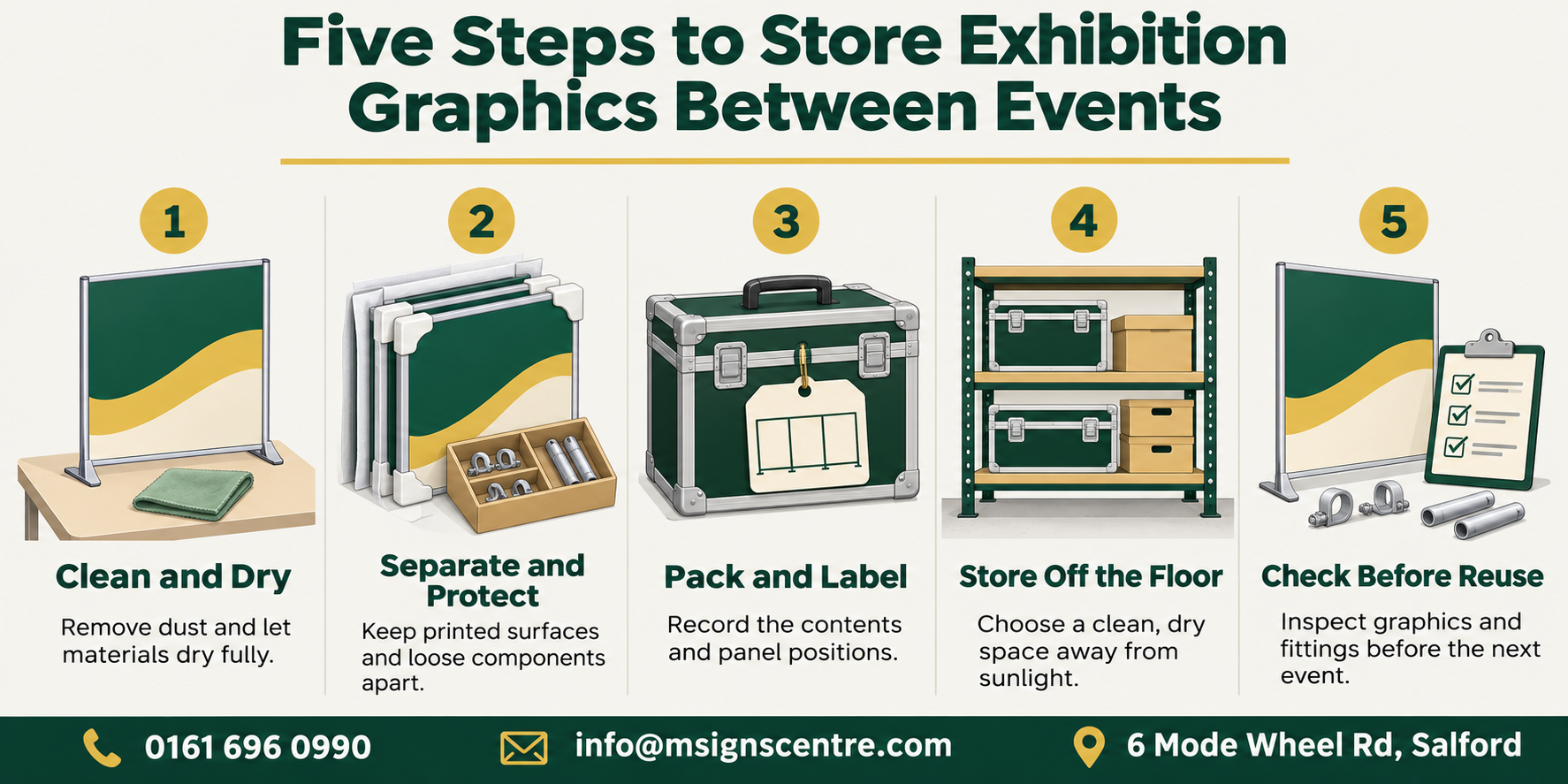
Organised exhibition stand storage saves time when preparing for another show. Instead of placing everything in the same containers, separate your exhibition assets according to their purpose and storage requirements.
A simple storage system can include:
-
Printed graphics: Keep panels, banners and fabric displays in suitable protective cases.
-
Stand components: Store frames, connectors, brackets and fixings in labelled containers.
-
Promotional materials: Keep brochures, leaflets and merchandise in separate boxes to prevent damage to graphics.
-
Display materials: Protect shelves, small display accessories and reusable presentation items.
-
Personal belongings: Remove staff items from exhibition cases before returning equipment to storage.
Create an inventory showing which items require storage, which need replacing and which can be reused at future events.
A simple spreadsheet or checklist can help businesses manage their exhibition assets without repeatedly opening every container. This is particularly useful when several teams share the same exhibition equipment.
Refreshing Exhibition Displays With Manchester Signs Centre
Proper storage protects your existing graphics, but some displays may eventually need updated printing or a different layout. At Manchester Signs Centre, we help businesses plan exhibition signage and displays around their branding and event requirements.
Our related services include:
-
Bespoke Exhibition Stands: Custom exhibition stand design for around your available space, display requirements and branding.
-
Exhibition Signage: Branded signs and printed display elements for new or existing exhibition spaces.
-
Floor Graphics: Printed graphics for exhibition floors and promotional areas, which may need replacing rather than storing for reuse.
Whether you are updating existing graphics or planning a new display, our team can discuss suitable materials, sizes and design options for your project.
FAQ
How long can exhibition graphics be stored?
Well-packed graphics can be stored for months or years if conditions stay cool, dry and dark. Check them every few months for mould, curling or fading.
Should exhibition graphics be stored flat or rolled?
Rigid panels should be stored flat or on edge, while rollable graphics should be rolled loosely in a tube. Never fold PVC or printed film.
Can I store graphics in a garage or loft?
It is best not to. Garages and lofts suffer temperature swings and damp, which cause warping, mould and fading.
How do I stop panels scratching in storage?
Interleave them with acid-free tissue or clean paper, and wrap each set in polythene or bubble wrap. Keep them in rigid cases with edge protection.
Do I need to keep the artwork files?
Yes. Keeping print ready artwork means replacement graphics can be matched exactly and ordered quickly.
When should I inspect graphics before the next show?
Inspect them as soon as they come back from the venue and again about four weeks before the next event. This leaves time to reprint anything damaged.
Need Exhibition Graphics Ready for Your Next Event?
At Manchester Signs Centre, we help businesses create professional exhibition stand design and display graphics for upcoming events. Whether your current panels need refreshing or you are considering a new stand layout, our design team can help you explore suitable options.
Simply share your stand dimensions, existing graphics, artwork and event requirements. We can discuss what may be suitable for your project and provide a tailored quotation for the services we offer.
Get your exhibition display ready for its next event. Contact Manchester Signs Centre or call 0161 696 0990 to discuss your requirements and request a no-obligation quote.