UK businesses from corporate to retail spaces and hospitality venues treat their walls as communication surfaces. When they plan a fit-out or rebrand, they got confused in printed wallpaper vs wall graphics. The answer depends on what you need the wall to do, and for how long.
The short answer: For most commercial interiors where branding changes every one to three years, custom wall graphics deliver faster installation, lower disruption, and easier updates. For reception feature walls, hotel corridors, and boardrooms where a lasting impression and tactile quality matter more than flexibility, printed commercial wallpaper is the stronger choice.
At Msigns, we design, manufacture, and install office wall graphics and we frequently specify a combination of both options. With free design support and a typical 1 to 3 week turnaround from artwork approval, we help clients get the right wall design for every space.
Printed Wallpaper vs Wall Graphics: How They Compare at a Glance
This table gives facilities managers and marketing teams a quick overview of the key differences between the two approaches for commercial spaces.
| Factor | Printed Commercial Wallpaper | Custom Wall Graphics |
| Best for | Full architectural finish; feature walls; entire room coverage | Agile branding; campaigns; modular messaging |
| Typical locations | Receptions, corridors, restaurants, boardrooms | Meeting rooms, breakout spaces, glass partitions, retail environments |
| Installation method | Paste-the-wall or pre-pasted wet application; professional installation required | Dry-apply peel and stick; professional squeegee mount for large formats |
| Average lifespan | 7 to 10+ years | 3 to 7 years |
| Surface requirements | Tolerates slight textures and minor imperfections | Requires smooth surfaces, properly primed flat drywall |
| Update difficulty | Strip and repaper; may require wall repair | Simple peel-and-replace of individual elements |
| Fire rating | High-grade commercial fire certifications (Class 0/1, EN tested) | Standard commercial self-adhesive vinyl ratings; specify carefully |
The core trade-off when weighing printed wallpaper vs wall graphics: wallpaper delivers permanence and tactile depth; graphics deliver flexibility and speed.
What Are Printed Commercial Wallpapers?
Printed commercial wallpaper refers to heavy-duty, digitally printed wall coverings in exact wall size manufactured for non-domestic interiors: offices, hospitality, retail, healthcare, and public-sector buildings.
- Typical materials: fabric-backed vinyls, non woven wallpaper substrates, and textured finishes such as linen embossing. Non woven material is dimensionally stable, meaning it does not expand or shrink when paste is applied, reducing the risk of peeling and mould.
- Common applications: hotel corridors with pattern repeats, corporate boardrooms, meeting suites, shopping mall corridors, and statement walls in restaurants. Printed wallpaper creates a continuous visual effect across walls or rooms and is commonly used in dining rooms and hallways for consistency.
- Wallpaper design scope: photographic scenic landscapes, brand patterns, abstract art, city maps, and subtle repeating design textures. Wallpaper features a repeating pattern across walls, while wall murals consist of a single large-scale image. Both wallpaper and murals can be custom-printed to wall dimensions.
- Expected lifespan: 7 to 10+ years in commercial environments with proper cleaning. Printed wallpaper can last for over 10 years if installed correctly, and quality non-woven wallpaper lasts 10 to 15 years. Wall murals printed on non woven material last 10 to 15 years as well.
Wallpaper is used for full-room coverage and residential feature walls, and it is ideal for consistent visual rhythm across multiple walls.
What Are Custom Wall Graphics?
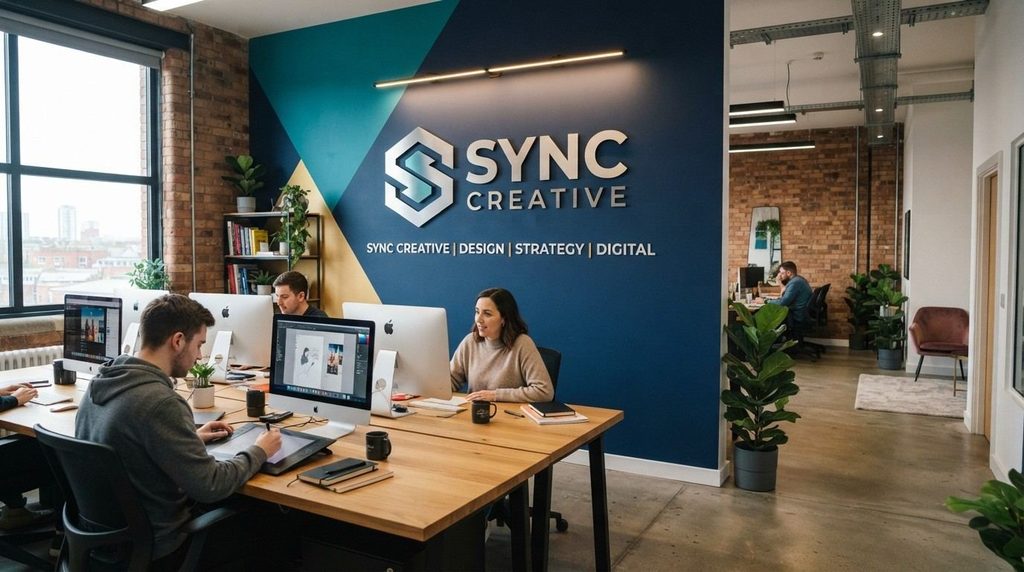
Custom wall graphics are self-adhesive vinyls, decals, cut vinyl lettering, and contour-cut logos applied directly to painted walls or glass. Wall graphics are made from flexible cast or calendared vinyl films with adhesive backing, and they typically use peel and stick adhesive backing for application.
- Types: full-wall vinyl murals, contour-cut logos, typography, wayfinding arrows, glass manifestations, and bespoke wall graphics for department zoning. Wall graphics can feature standalone images or cut-out decals applied directly to walls.
- Typical materials: monomeric and polymeric vinyls finished with matte, satin, or textured protective laminates.
- Common office uses: core values displays, timeline walls, department zoning, agile sprint boards, branded visuals, and meeting room naming. Wall graphics are effective for branding and communication in various environments and are used for corporate branding and retail promotions.
- Lifespan: around 3 to 7 years for indoor office wall graphics, depending on traffic and cleaning regime. Peel-and-stick formats last 5 to 10 years, while peel-and-stick wallpaper typically lasts 1 to 5 years.
Unlike wallpaper, graphics can be replaced in part; a single logo or strapline swaps out without disturbing the rest of the wall.
Factors to Consider While Deciding From Printed Wallpaper VS Wall Graphics
Every commercial interior project has different priorities. Below are the five factors that most often determine the material selection.
Brand Flexibility & Ease of Updating
Printed commercial wallpaper is better suited to stable brand assets and long-lived interiors. Updating usually means stripping and repapering entire walls. Removal of printed wallpaper can be labour-intensive depending on the adhesive used.
Custom wall graphics allow individual elements (logos, straplines, values statements) to be swapped without touching the surrounding wall. Wall graphics can be easily updated and removed with minimal disruption. A retail chain rolling out monthly promotions can replace vinyl window and wall graphics in hours, while keeping the painted wall underneath untouched.
Peel and stick murals are perfect for renters and temporary decor, and wall graphics are typically more cost-effective for temporary displays or promotions.
When planning layouts that anticipate future changes, it helps to design office wall graphics with modular zones from the start so each element can be updated independently.
Visual Impact, Texture & Perceived Quality
Printed wallpaper can mimic concrete, wood, linen, or bespoke patterns. It gives a continuous, architectural finish with hidden joins when professionally installed, and it masks minor imperfections to deliver a luxurious aesthetic.
Printed wallpaper offers a softer, textured, and interior-led feel. Commercial wallpaper enhances ambiance without overwhelming the environment, and it is ideal for consistent visual rhythm across multiple walls or even four walls of a statement room.
Wall graphics deliver crisp edges and solid lettering with bold graphics, which makes them the stronger choice for logo reproduction, typography, and bold prints. The visual interest is more graphic and modern; there is less tactile depth unless you specify speciality textured vinyl laminates.
Surfaces, Durability & Maintenance
Printed wallpaper is thicker and can bridge small cracks, uneven paint, and textured surfaces. Heavy-duty textured vinyl substrates (around 350 g/m², approximately 0.50 mm thick) absorb irregularities that would be visible under thinner materials.
Printed wallpaper consists of paper, fabric, or vinyl-coated cellulose, and commercial-grade versions are often scrub-resistant with antimicrobial finishes. Direct sunlight fades all printed materials over time, but UV-resistant inks extend the lifespan to 7 to 10+ years in corridors, schools, NHS practices, and shopping centres.
Wall graphics need smooth, well-primed walls. On textured surfaces, adhesive film tends to lift at edges and “telegraph” bumps underneath. Bathrooms with poor ventilation can shorten wall covering lifespan for both options. On the positive side, if a single graphic panel gets damaged, you can replace just that element rather than re-covering the entire wall.
Both products must meet UK fire regulations for commercial interiors. Commercial wallpapers are commonly tested to Approved Document B (no-follow) standards, with fire classifications such as BS1-D0 for heavy-duty textured vinyl. Commercial-grade vinyls also need fire ratings, but some lower-cost films lack full certification; always specify EN or Class 0/1 rated materials.
Installation Process, Downtime & Budget
Printed wallpaper requires paste-the-wall technique, skilled installers, furniture protection, and drying time. The installation process involves precise pattern alignment and preparation; paste needed for each drop must set properly before the next stage.
Installation of wallpaper can take 2 to 4 hours for a small wall, and larger schemes are best scheduled over evenings or weekends. Professional installation for wallpaper costs $200 to $500 (approximately £160 to £400). Traditional wallpaper costs $2 to $10 per square foot.
Wall graphics are dry-apply, can be fitted in occupied offices with phased rollouts, and smaller schemes can be completed out of hours in a single night.
Wall mural installation typically takes 2 to 3 hours with two people. Peel-and-stick murals cost $1.50 to $6 per square foot. Murals are easier to install due to pre-numbered panels, and peel-and-stick wallpaper is beginner-friendly for DIY installation, although we recommend professional installation for commercial spaces to avoid bubbles and misalignment.
Wallpaper and wall murals start at similar per-square-foot rates, but cost drivers include complexity, surface preparation, access equipment, and the number of designs across multiple panels or multiple walls. However, their long term value avoids repeated replacement costs.
Creative Scope, Custom Design & Brand Storytelling
Printed commercial wallpaper is ideal for panoramic cityscapes, custom wall murals depicting scenic landscapes, and abstract patterns using brand colours. A timeline or map running the full length of a corridor works because wallpaper creates a continuous visual effect that can completely change an entire room.
Wall graphics are perfect for layering short messages, icons, directional cues, QR codes, and interactive campaign elements over neutral walls or glass. You can use your own photo as a one-wall vinyl mural or apply cut vinyl lettering to transform a single wall into a focal point. Wall graphics provide endless possibilities for modular storytelling where elements rotate seasonally.
A combined scheme works well: wallpaper backdrop in reception plus layered vinyl logos and wayfinding across the rest of the floorplate. For deeper thinking on how to approach office wall branding and cultural storytelling, the starting point is matching the medium to the message.
Printed Wallpaper vs Wall Graphics: Which Should You Choose for Commercial Spaces?
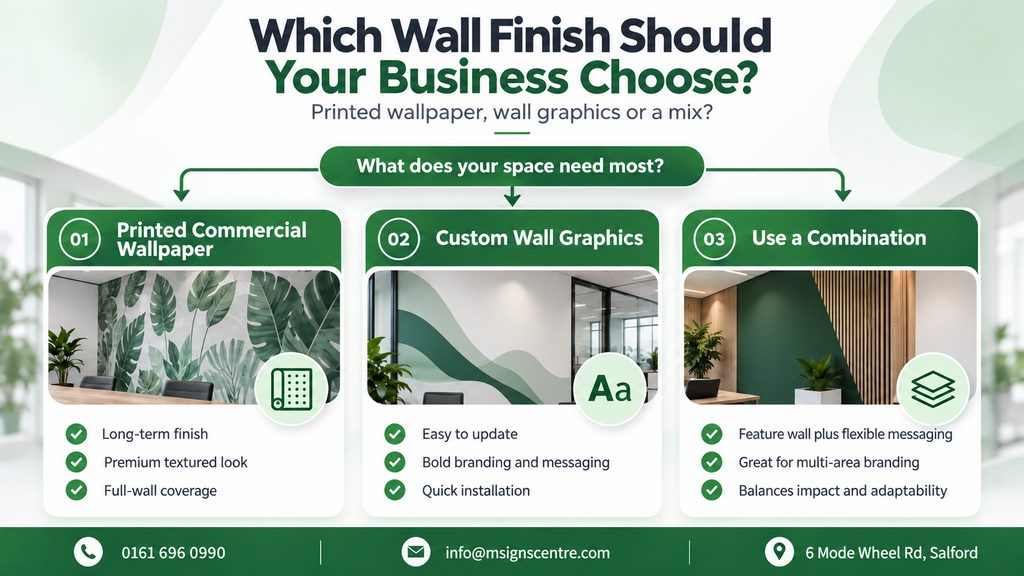
The right material choice depends on your priorities, not on one option being universally better.
- Choose printed commercial wallpaper if you want a long-term, high-end look in receptions, boardrooms, hotel-style lounges, and busy corridors where texture, resilience, and a lasting impression matter most. Traditional wallpaper lasts 10 to 20 years in well-maintained interiors.
- Choose custom wall graphics if you need agile branding, seasonal offers, departmental zoning, and easily updated messages across offices, retail spaces, and education settings. Peel and stick murals can be removed without damaging paint, making a room refresh straightforward.
- Choose a mix of both if you are rolling out a full building rebrand and want immersive backdrops plus flexible messaging overlays. Both wallpaper and murals can be custom-printed to wall dimensions for a cohesive scheme.
When weighing printed wallpaper vs wall graphics, measure carefully the balance between permanence and flexibility for each zone in your building. You can also explore 10 other creative ideas to cover an ugly wall in your commercial space.
Industry-Specific Recommendations for Commercial Interiors
Different sectors lean towards different solutions based on traffic, cleaning requirements, and how often branding changes.
Corporate offices & tech hubs
Use printed wallpaper in reception feature walls and boardrooms to set tone with subtle branding and custom design. Wallpaper is ideal for selecting wallpaper that provides consistent visual rhythm across the executive floor. For breakout spaces, department zoning, agile boards, and meeting room naming on walls and glass, office wall graphics deliver the modularity that fast-moving teams need.
Retail stores & UK shopping malls
Large-scale wall murals for business can define zones (kids, sports, homeware) with bold prints and photographic scenes that stay in place for years. For sales, offers, and product launches that change monthly or seasonally, removable wall graphics swap in and out with minimal disruption. This split keeps the investment efficient across retail environments.
Hospitality, gyms & leisure venues
Durable printed wallpapers anchor themed interiors (industrial, botanical, urban) that must withstand daily cleaning and high moisture. Look for vinyl wallpaper with antimicrobial coatings and fire-rated substrates. Custom wall graphics add class schedules, motivational quotes, directional arrows, and partner branding in spaces where content changes frequently.
How Printed Wallpaper and Wall Graphics Work Together
Many of our most successful commercial schemes use both wallpaper and wall murals, not just one. The combination captures the strengths of each medium.
- Printed wallpaper as a continuous backdrop with floating acrylic or stand-off logos mounted on top, creating depth and visual interest on a single wall.
- Neutral printed texture wallpaper in corridors with department names and icons applied as removable wall graphics, so the backdrop stays while the information layer updates.
- Full-height printed commercial wallpaper in customer-facing areas; bolder, more experimental graphics in staff breakout spaces where existing decor can handle a different tone.
- Custom wall art integrated into schemes where bespoke mural-style designs combine with layered vinyl elements.
Transform Your Commercial Interior with Msigns
At Msigns, we design, manufacture, and install both printed commercial wallpaper and custom wall graphics UK-wide from our Salford, Manchester base. Whether you need a single accent wall or a full building rebrand across multiple sites, we manage the process from survey to sign-off.
- Free design support and material advice for offices, retail, hospitality, and public-sector interiors.
- Fast 1 to 3 week turnaround on most wall graphics projects after artwork approval.
- Dedicated project manager for surveys, RAMS, scheduling, and multi-site rollouts.
Get in touch for a quote from our expert team. The right balance of printed wallpaper vs wall graphics gives you maximum brand impact from every square meter of wall space.
Frequently Asked Questions
Is printed commercial wallpaper harder to install than wall graphics?
Yes. Wallpaper installation requires paste-the-wall hanging, precise edge alignment, and careful trimming. The installation of printed wallpaper requires paste or water-activated backing, and drying time adds hours to the schedule.
Can wall graphics stick to textured walls or old plaster?
Standard wall graphics work best on smooth surfaces: flat, painted, properly primed drywall. If your office walls feature heavy stippling, rough plaster, or brick texture, the vinyl will lift at edges and telegraph bumps underneath.
For textured surfaces, heavier vinyl options or printed commercial wallpaper (which bridges minor imperfections) is the better material choice.
Which lasts longer in busy corridors and stairwells?
Printed commercial wallpaper generally outlasts standard graphics in heavy traffic. A well-specified Type II or III vinyl wallpaper with scrub-resistant finish can serve 7 to 10+ years in corridors, while standard wall graphics typically reach 3 to 7 years before edge lifting or fading becomes noticeable.
Will removing wall graphics or wallpaper damage the walls?
High-quality wall graphics feature removable or low-tack adhesive systems and peel away cleanly from properly primed drywall when heated gently during removal. Peel and stick murals can be removed without damaging paint. Removing printed wallpaper requires stripping, and depending on the adhesive and substrate, some light wall repair or re-skimming may be needed.
How should we prepare our office walls before installation?
Walls must be clean, dry, dust-free, repaired, and primed with high-quality acrylic paint. Newly painted walls must cure for at least 3 to 4 weeks to avoid adhesive failure for both wallpaper paste and vinyl decals. Measure carefully and confirm exact wall dimensions before ordering.