The right reception sign materials depend on your brand style, your wall surface and whether the logo needs to glow. Acrylic, metal and illuminated logos each suit different interiors, and thickness, finish and mounting change how the final sign looks to visitors.
Reception signage is not limited to acrylic and metal. ACM, PVC foam board, self-adhesive vinyl, wood, glass, rigid plastic signs and PET can also suit particular reception applications, from temporary branding to durable information signs. This guide explains where each material works best and how durability, sign size, lighting and fixing methods affect the finished result.
At Manchester Signs Centre, we know the latest trends of sign industry and expert designing methods. Our team can help you choose the right reception sign material for your brand and space.
What Materials Are Used for Reception Signs?
Most reception logos are made from acrylic, metal or an illuminated build that combines both. No single material suits every business, so compare them against your interior.
|
Option |
Look |
Maintenance |
Relative cost |
|---|---|---|---|
|
Acrylic |
Clean, colourful, flexible |
Wipe with a soft cloth |
Low to mid |
|
Metal |
Premium, solid, architectural |
Minimal maintenance |
Mid to high |
|
Illuminated |
Glowing, high visual impact |
Access needed for LED servicing |
Mid to high |
Acrylic Reception Logos
Acrylic is smooth, easy to colour-match and suits detailed logos. It works well in an office, clinic or salon where you want a crisp, modern finish.
Metal Reception Signs
Aluminium and stainless steel give a heavier, more architectural feel. They suit law firms, hotels and corporate lobbies.
Illuminated Reception Logos
LEDs behind or within the letters keep the logo visible in dim lobbies. For a wider comparison, see our guide to illuminated signs for businesses.
Other Reception Sign Materials
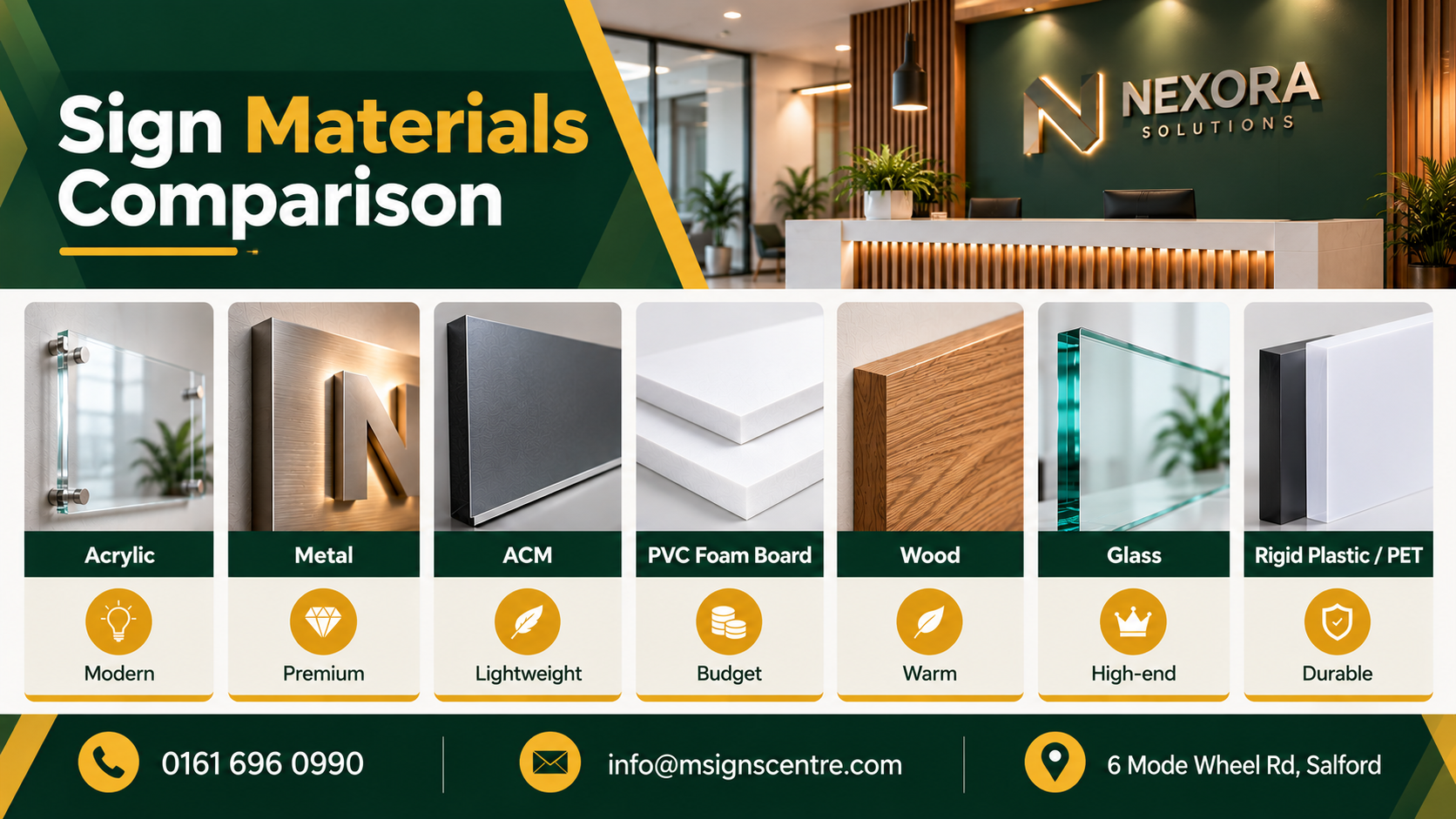
Acrylic, metal and illuminated lettering are common choices for a main reception logo, but other materials can work well where the brief calls for a flat panel, temporary display or different interior finish.
-
Aluminium composite material (ACM): lightweight but rigid, making it useful for flat branded panels and larger reception graphics.
-
Brass: communicates luxury and tradition and can work particularly well in hotels, professional offices and heritage-style interiors.
-
PVC foam board: a budget-friendly option for temporary reception signage, event branding or short-term promotional displays.
-
Self-adhesive vinyl: provides a flat, cost-effective branding solution for suitable smooth walls, panels and glass.
-
Wood: introduces a warmer, more inviting feel and complements natural or hospitality-led interiors.
-
Glass: creates a clean, high-end aesthetic in professional reception areas.
These materials do not necessarily replace acrylic or fabricated metal lettering. Instead, the right choice depends on whether you need dimensional branding, a flat graphic panel, temporary signage or a decorative feature.
When Are Rigid Plastic and PET Suitable?
Rigid plastic signs are generally better suited to flat indoor signage such as visitor information, room identification, directional graphics and supporting notices than to a premium dimensional reception logo.
White PVC is a rigid plastic option that is resistant to weather and many chemicals, while Gloss White PVC has a smooth surface that suits clear printing and can help with enhancing readability. This makes it useful where a reception area needs clear information that can tolerate regular cleaning, moisture, harsh environments and wear and tear.
For applications requiring greater impact resistance, 2 mm PET offers high durability while remaining lightweight. PET is also fully recyclable, making it worth considering where material recovery is part of the specification.
If a particular safety sign is required near the reception area, the priority should remain clear graphics, suitable sign size, good visibility and correct positioning. Effective safety signs should be specified for their actual purpose rather than treated as decorative reception branding.
Acrylic Logo Signs for Reception Walls
Flat-Cut and 3D Acrylic
Flat-cut logos are laser-cut from a single sheet and sit close to the wall. 3D versions are built up in layers for depth. If you are weighing the two, our comparison of 3D letter signs vs traditional flat signs explains the difference.
Finishes, Thickness and Edges
-
Finishes: clear, coloured, frosted and metallic-look acrylic are all available.
-
Thickness: 3 mm to 5 mm suits small flat logos, while 10 mm to 20 mm gives bolder, more dimensional lettering.
-
Edges: polished edges look sharper on clear acrylic, while painted edges suit solid colours.
Metal Reception Signs and Logo Finishes
Metal gives a reception area a more permanent, high-end look, like aluminium and steel. Brass is another option when the brief calls for a more traditional or luxurious appearance. Its warmer tone suits hotels, heritage interiors and professional environments where brushed aluminium or stainless steel may feel too contemporary.
-
Brushed: a soft grain that hides fingerprints and suits contemporary offices.
-
Polished: a mirror finish that reflects light, best for hotels and showrooms.
-
Powder-coated: aluminium in your exact brand colour.
Raised metal letters and fabricated logos are usually cut from stainless steel or aluminium and fixed with studs. Match the finish to your interior, for example brushed steel beside glass and grey tones, or brass-look metal against dark timber.
Illuminated Reception Logos: What Are the Options?
Illumination adds visual impact, but it needs a power supply and planned access.
-
Halo-lit: LEDs behind solid letters create a soft glow on the wall. See our halo lit reception signs for examples.
-
Face-lit: light passes through a diffusing acrylic face, giving a bright, even colour.
-
Backlit panels: our backlit logo sign guide covers this style in more detail.
Check LED colour temperature against your lobby lighting, and make sure a power point is available behind the wall. In a bright, daylight-filled reception, a non-illuminated sign may be the more practical choice.
How Do Thickness, Spacers and Depth Affect the Result?
Letter depth and wall distance change how a sign reads from across the room. Reception signs should be legible from a distance for visibility. Decide on the basis of these factors:
-
Thickness: thicker letters cast stronger shadows and feel more premium.
-
Spacers: small stand-offs, usually 10 mm to 25 mm, lift the logo off the wall for a floating effect.
-
Cleaning: deeper letters and gaps collect dust, so allow for a quick wipe-down in your cleaning routine.
For better readability, ensure crisp printing and write in fonts that are clear and easy to read.
Reception Sign Mounting Methods: Fixings & Self Adhesive Options
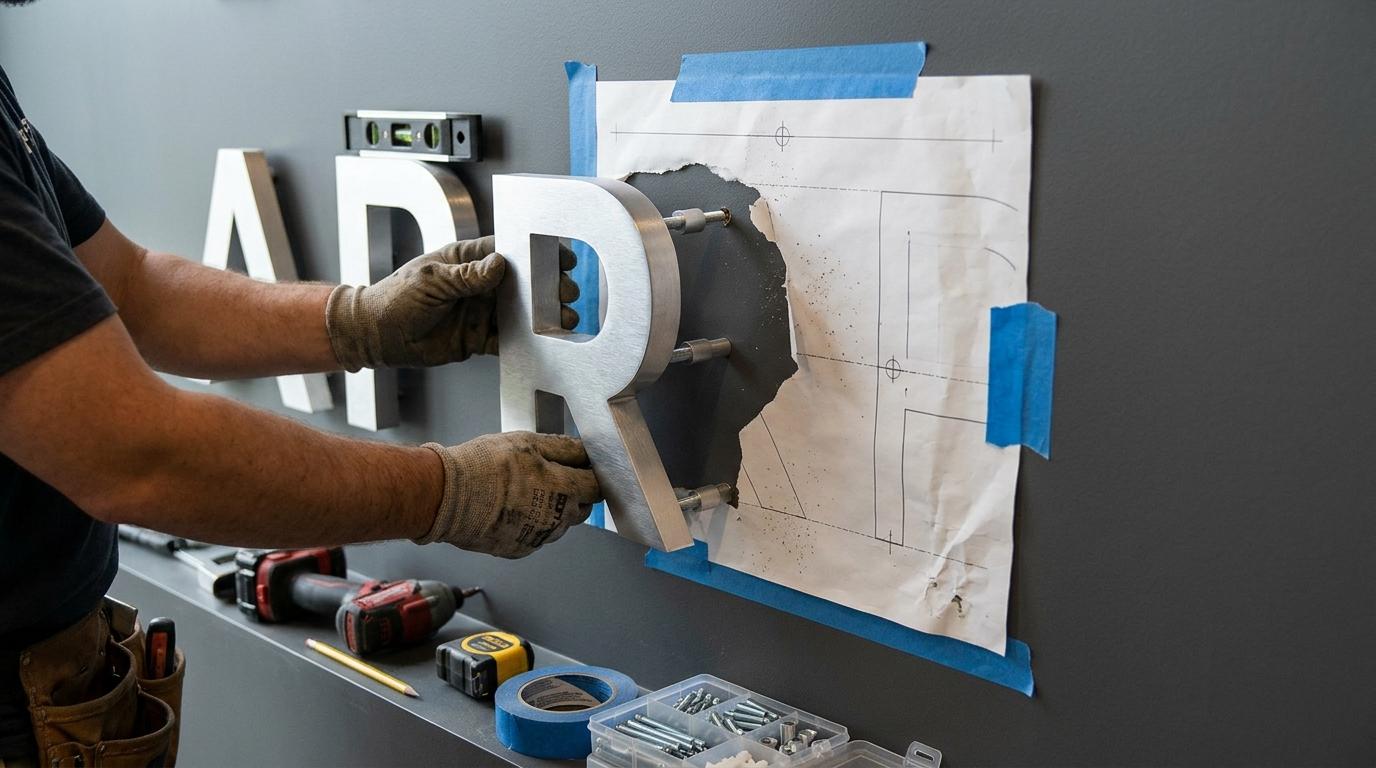
The right fixing depends on the sign’s weight, construction and the wall behind it. Each installation should be specified for the actual wall conditions. Our team will assess your wall type and install the fixings professionally to ensure your reception sign is secure and level.
-
Direct mounting: lightweight flat acrylic can be fixed straight to a smooth wall.
-
Stud and spacer fixing: pins and stand-offs suit heavier or floating letters.
-
Plasterboard and feature panels: heavier signs need fixings into the studs or a backing board, so check what sits behind the surface.
-
High-bond adhesive fixing: lightweight acrylic, rigid plastic and flat panels may sometimes be installed using high bond foam tape or rubber based adhesive on a clean, suitable solid surface. High-tack tapes can bond metals, plastics and other compatible substrates, but their suitability depends on the sign weight and wall finish.
-
Self-adhesive graphics: vinyl can be applied directly to smooth walls, glass or panels where a flat finish is preferred over dimensional lettering.
-
Removable fixing pads: hook-and-loop fastening pads can suit very lightweight, temporary indoor signage where graphics need to be changed regularly.
Adhesive fixing should not automatically replace mechanical fixings. Heavy metal letters, deep fabricated logos and illuminated signs normally require a fixing system specified for their weight and substrate.
For illuminated signs, plan cable routes and access panels so future LED replacement does not mean removing the whole logo.
How Do Reception Sign Materials Perform Over Time?
Although most reception signage is installed indoors, material durability still matters. Signs close to entrances, glazed walls or busy customer areas can be exposed to sunlight, moisture, cleaning chemicals, knocks and general wear.
You can pair them with any other type of signage like sale posters, A boards, etc for maximum impact.
Acrylic, aluminium, rigid plastic, PET and correctly finished metal can all provide durable results when specified for the environment. Where graphics receive strong daylight, UV-resistant inks, laminates or films can help reduce fading. Smooth, moisture-resistant surfaces may also be easier to maintain in frequently cleaned areas.
Choosing a material for the actual environment can mean fewer replacements over the life of the sign. A slightly more durable specification can therefore be a practical investment when the reception area experiences heavy footfall or frequent cleaning.
How Much Do Reception Logo Signs Cost?
Price depends on several factors, so a tailored quote is more reliable than a fixed figure.
-
Material and finish: metal and specialist finishes cost more than standard acrylic.
-
Complexity and size: fine detail, thicker letters and larger widths add fabrication time.
-
Illumination: LEDs, drivers and electrical work increase the total.
-
Installation: wall type, height and site access all affect fitting time.
At Manchester Signs Centre, we offer free design, free site visits and no-obligation quotes, so you can see costs for your own wall before committing.
Which Reception Sign Option Should You Choose?
-
Tighter budget: flat or 3D acrylic.
-
Premium, lasting look: brushed or polished metal.
-
Dim lobby or evening use: halo-lit or face-lit logos.
-
Low maintenance: non-illuminated metal or acrylic.
Before ordering, confirm the logo file, letter thickness, finish, wall type, fixing method and power access. If the sign will be seen from outside, remember that advertisement consent may be needed for illuminated signs on the front of your premises.
Specifying and Fitting Your Reception Logo With Manchester Signs Centre
Our Salford workshop designs, manufactures and installs reception logos in-house, with professional installation across the UK. We offer:
-
Reception Signs: acrylic, metal and illuminated logos made to suit your brand and wall, with free design included.
-
3D Built-Up Letters: dimensional lettering with the depth and spacer options covered above.
-
Light Boxes: an illuminated alternative when you want an evenly lit panel behind your logo.
For more ideas and branding techniques, read how reception signs create a strong first impression.
Frequently Asked Questions
What is the best material for a reception logo sign?
There is no single best material. Acrylic suits colourful, detailed logos, while metal suits a premium, architectural look. Check the provider’s catalogue page for visualising the results.
Are acrylic or metal reception signs better?
It depends on your brand and budget. Acrylic is usually more affordable and flexible, while metal feels heavier and more upmarket.
How thick should a 3D acrylic logo be?
Around 10 mm to 20 mm suits most reception walls. Thicker letters give stronger shadows and a more dimensional look.
Can an acrylic reception logo be illuminated?
Yes. Acrylic can be halo-lit from behind or face-lit through a diffusing front, provided power is available.
How are reception signs fixed to a wall?
Signs are fixed directly or with studs and spacers, depending on weight and wall type. The method should be chosen after checking the substrate.
Should a safety sign be used in reception?
Yes. A safety sign can be positioned within or near a reception area where visitors need clear instructions, such as fire exit, first aid or restricted-access information. It should remain visually distinct from the main reception branding, with suitable sign size, contrast and placement.
Plan Your Reception Logo With Manchester Signs Centre
At Manchester Signs Centre, our reception signs cover acrylic, metal and illuminated options, so you can compare finishes on your own wall and get the best value of your money. Our site visit lets us check the substrate, power access and fixing method before you commit. We are rated 4.8/5 from 90+ Google reviews.
Visit our website for details, check product stock to weigh your options, or speak to our team today for any questions about availability.