Temporary Signage: What to Use for Pop-Ups, Sales & Store Openings
A shop doesn’t always need a permanent fascia to get noticed. When you are launching a pop-up, running a clearance sale or hosting events, temporary signage lets you announce your news quickly, with no long-term commitment.
Temporary signage covers printed banners, A-frames, window graphics, floor graphics and boards that do a short term job, such as announcing a pop-up, a sale or a store opening.
Choose the right materials for the environment. Lightweight board is fine indoors, but outdoor temporary signs need weather-resistant faces and secure fixings. Keep your brand identity consistent, using the same colours, fonts and logo as your permanent shop, so customers recognise the business.
Done well, temporary signs stand out on a busy London high street or in a quiet market town, and they bring customers through the door while your offer is still live.
This complete guide explains which temporary signs suit each job, how to choose the right materials, and where event signs and construction signs fit in. It also covers keeping costs sensible and the rules that apply once signage goes up outdoors. If you want the bigger picture on permanent signage first, our guide to choosing the perfect shop signage in the UK is a useful companion.
Which Temporary Signs Work Best for Pop-Ups, Sales and Store Openings?
A temporary sign has one job: to communicate a short term message to people who will only glance at it. That message might be “Now open”, “Everything half price” or “Pop-up ends Sunday”. In the real-world rush of a high street, shoppers give signage a second or two, so every business should adapt the format to the site, the budget and how long the sign must last.
Temporary signage is ideal for promotions lasting up to three months, after which a refreshed message or a permanent solution usually makes more sense. MSigns designs and manufactures temporary signage in-house, ensuring your message is clear, on-brand and ready to install quickly.
|
Occasion |
Useful temporary signs |
Typical location |
|---|---|---|
|
Pop-up shop |
Banners, A-frames, removable window vinyl |
Above or beside the entrance, and the window |
|
Sale or promotions |
Window posters, floor graphics, hanging signs, shelf-edge tickets |
Windows and shop floor |
|
Store opening |
Large banners, “coming soon” window graphics, directional signs MSigns can supply all three, plus professional installation across the UK, so your store opening announcement reaches customers from every angle. |
Fascia, windows and the approach route |
Pop-Up Shops
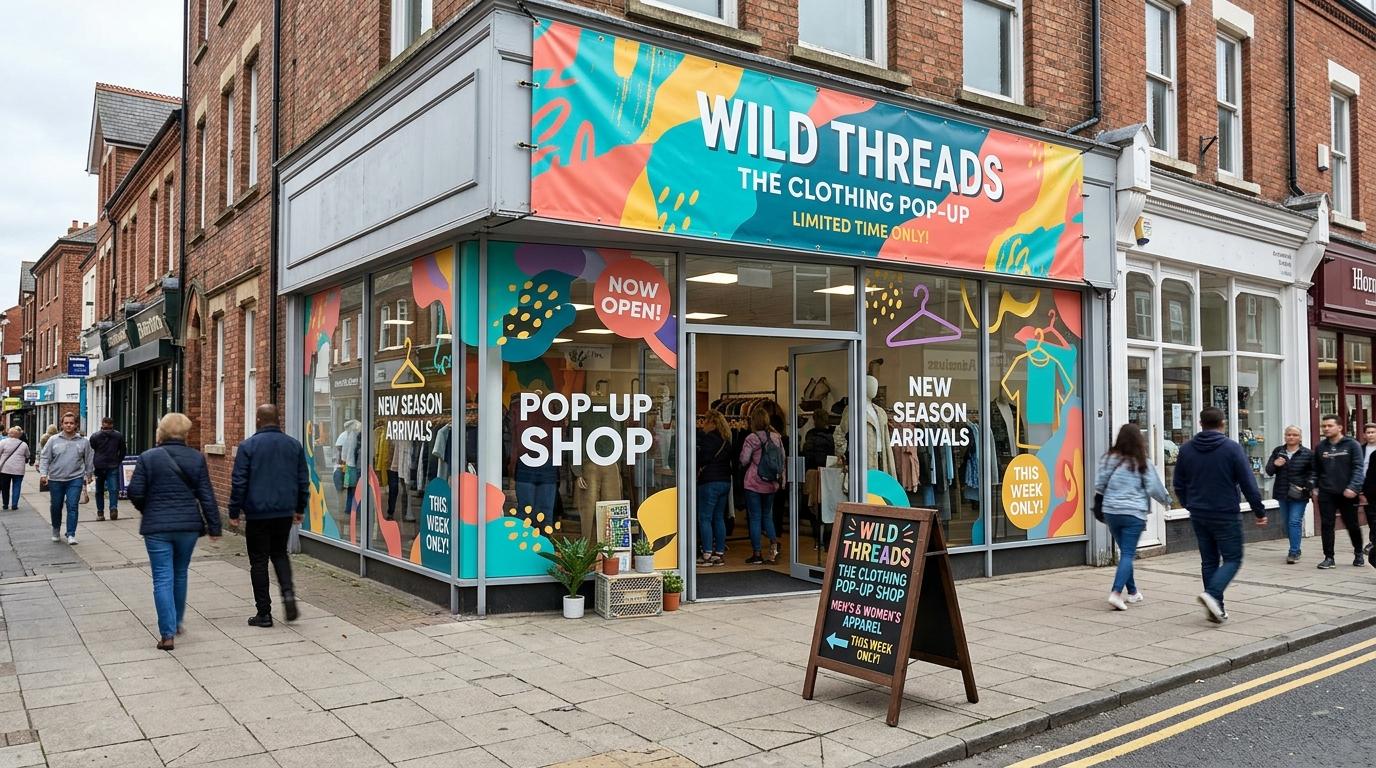
Pop-ups typically occupy a unit for days or weeks, so signage should be quick to install and easy to remove without marking the shopfront. A PVC banner above the unit, printed graphics on the glass and a freestanding A-frame cover most needs. You may be sharing a building or a market hall, so find out what the landlord permits before anything is installed.
A small business with a short lease will also want signs that leave no trace once the pop-up closes.
Sales and Promotions
Promotions are about urgency. Bold colours, large numerals and a snappy slogan will be read far faster than a paragraph of small print. Keep each sign simple: the offer, the dates and one line of detail.
Window posters and floor graphics work well for people already near the shop, while banners above the door catch those further down the street. A-frame signs are a strong choice here: they are portable, double-sided and effective for daily specials and directional guidance, so one board can be seen from both directions along the pavement.
If your sale runs into the evening, think about how the signs look after dark. Our article on night visibility signage and illuminated signs that stand out after dark is a good place to start.
Store Openings
A store opening deserves your strongest display, because it is the first impression a new location makes. Many retailers start with a “coming soon” window graphic to build interest, then add a large banner for opening week and hint at more news to come, with a date and a link to a social media page.
Feather flags are worth considering too: they improve roadside visibility and work well for grand openings and outdoor markets, drawing the eye of drivers and walkers long before they reach the door. Use the same brand identity throughout, so that when the permanent signage is installed, customers recognise the shop at once.
Consistent branding matters, as temporary signage can improve brand recognition by around 35%. For a complete opening, add directions from the nearest car park or station, so first-time visitors can find you without effort.
For the official guidance, see Planning permission – Adverts and signs – Planning Portal.
How Do You Choose the Right Materials for Temporary Signage?
The right materials depend on three things: where the sign will be, how long it must last and how much wind and rain it will face. A sign for a sheltered window is a very different job from a banner on an exposed fascia.
Permanent signs are usually made from robust materials such as metal, whereas temporary signage deliberately uses lighter, lower cost materials, which keeps manufacturing costs down and helps a modest budget go further. A wide range of materials is available for temporary signage, and these are the most common choices:
-
PVC banners: flexible and durable, and they hold vivid printed colours well. They suit outdoor use and can be fitted with eyelets for fixing.
-
Correx and other corrugated plastic boards: lightweight, durable and water-resistant, which makes Correx a dependable material for outdoor signs. Yard signs made of corrugated plastic are a favourite for real estate and local service promotions, and for post mounted and stake-mounted signs generally.
-
Foam board and card: low cost and crisp-looking, and light enough to hang using tape. Best kept indoors, as damp will soon spoil them, though foam board signs can last up to two years with proper care.
-
Self-adhesive vinyl: ideal for windows and floors. Ask for a removable adhesive if the sign must come off cleanly.
-
Rigid PVC or aluminium composite panels: a more durable option for temporary signs that must last several months outdoors.
Fixings matter as much as the sign face. Cable ties are a quick, adjustable way to attach banners to railings or fencing, but use one at every eyelet and trim the ends so they don’t snag passers-by. Note that a solid banner acts like a sail in strong wind, so a mesh banner, or one with small wind slits, is often the safer choice.
For post mounted boards, make sure the post is firmly set and the sign sits clear of paths and driveways. Once a sign is installed, give it a quick tug test to confirm every fixing is secure.
Sustainability is worth weighing up when you choose materials. Correx is fully recyclable and is accepted in kerbside collection programmes in many areas, so using recyclable materials allows for environmentally sustainable disposal once the campaign ends. Check with your local council which plastics and boards it accepts before you bin a finished sign.
Practical advice from the team that will supply your signs is valuable here. Describe where the sign will go and how long it will be up, then ask which materials suit the job and the weather. A supplier’s expertise can save you from buying a board that buckles in the first shower.
If you are weighing up outdoor options, our guide to the best materials for outdoor weatherproof signage compares what holds up in British weather. Even short-lived signage benefits from a quick daily check, because a sagging corner or a faded panel undermines the professionalism of your brand. Our advice on outdoor shop sign maintenance is useful for maintaining signs in good order while they are up.
Where Do Event Signs and Construction Signs Fit In?
Event signs tell people that something is happening and how to reach it. Think launch parties, charity days, market weekends and community fairs.
Event Signage
For events like these, providing directions is the main job, so make the signs legible from a distance, with large lettering, strong contrast and clear arrows. Place the first sign where people must decide which way to turn, then repeat it at each junction or entrance. For events that run across several rooms or floors, add indoor wayfinding and safety notices so visitors are never left guessing which way to go.
The format should be suited to the event:
-
A village fete may only need a few boards on stakes to direct visitors.
-
A product launch might call for banners, floor graphics and a branded entrance arch.
-
Estate agent signs are the familiar example: a large, simple board with one clear message and a contact number. The same discipline works for any short-lived shop promotion, and a printed board with a single clear message will always outperform a cluttered one.
-
If your events are held on a regular basis, such as monthly markets, durable boards that can be reused will save money over the season.
Construction Signage
If your new premises are being fitted out, hoardings and banners around construction sites tell passers-by what is coming and keep the frontage looking intentional. Many shops use construction signs of this kind as a “coming soon” teaser, with the shop name, an opening date and a website address. Because construction sites are busy, keep the artwork bold and simple.
GOV.UK guidance states that large wrap advertisements on buildings under renovation always need express consent from the local planning authority, so check before you order.
Construction signs also include safety messages, such as site entrances, warnings and hard-hat notices. It is crucial to keep these separate from any advertising, because they have their own purpose and standards. Your contractor will normally supply the required construction signs for the working area, so follow their guidelines on placement. Never use a promotional banner to cover a safety notice.
What Are Low Cost, Cost Effective Ways to Create Temporary Signage?
Temporary doesn’t have to mean thrown together. A few decisions keep the cost sensible without making your shop look cheap, and a short term sign is a low cost way to test a new location or offer.
Temporary signs are typically cheap to manufacture, which widens your marketing reach without stretching the budget. Whether you are a single-unit business or a chain opening another branch in London, the same principles apply.
-
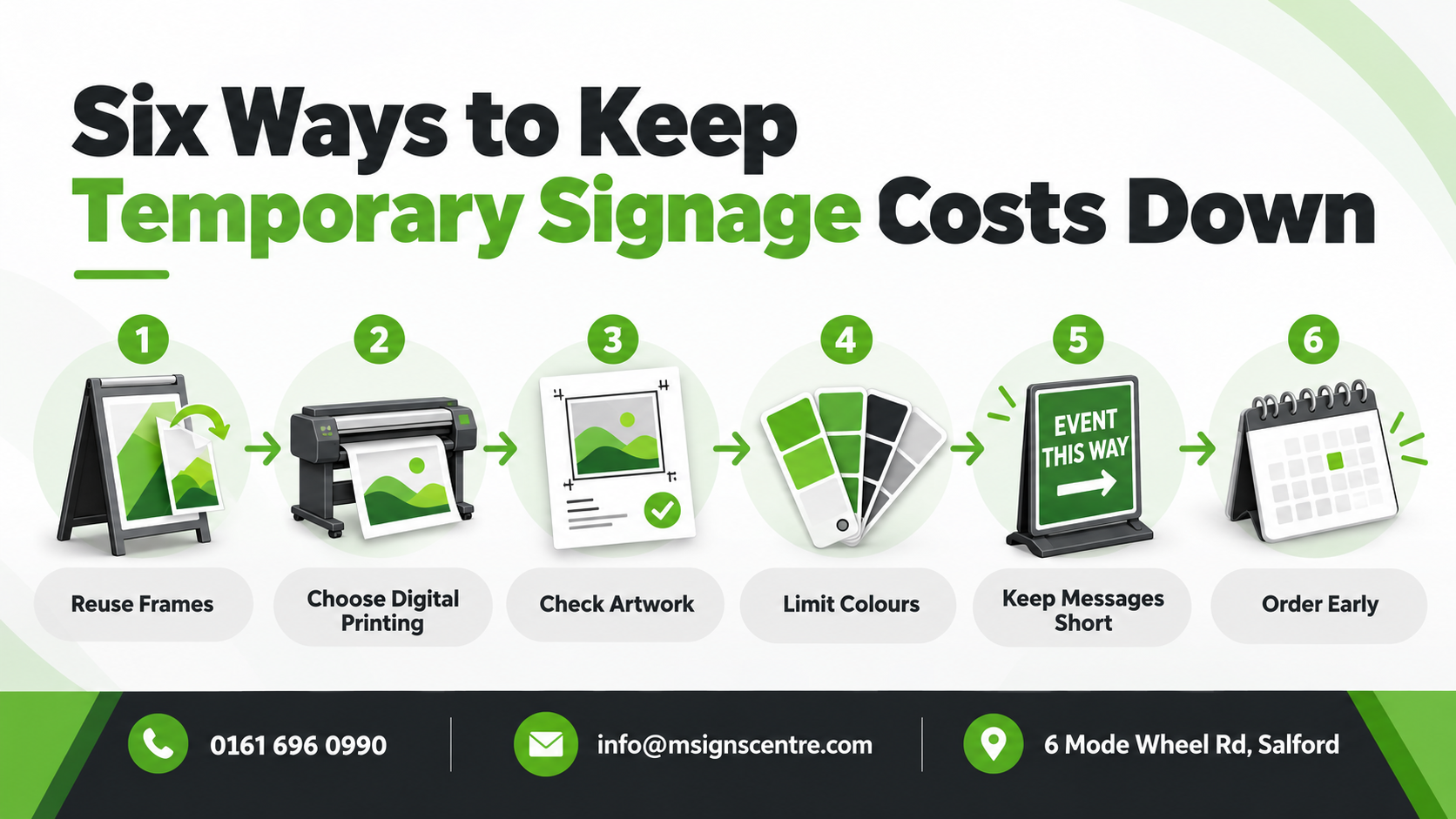
Reuse the structure, change the face. A frame, A-board or banner bracket can carry new graphics for each campaign, which is cost effective over a year of promotions.
-
Choose a digitally printed finish for small runs. Digital printing suits short campaigns, because you can change the design between jobs.
-
Prepare your artwork carefully. If you supply your own artwork, ask your supplier for the exact file size and resolution they need, and request a proof before anything is printed.
-
Limit your colours. Two or three strong colours from your brand palette read better than a crowded design, and they reflect your shop’s personality.
-
Write one snappy slogan. Short, confident wording works harder than long copy, and it helps you communicate the offer in a glance.
-
Allow time for delivery. Rushed orders cost more and leave less room to correct mistakes.
It also helps to understand the difference between ready-made and bespoke options. Our comparison of custom signs and standard signs will help you decide where a tailored design is worth paying for and where a standard size will do.
Before you commit, speak to your supplier about the full range of sizes and finishes on offer, and ask what the service includes, such as proofing and fitting advice. A small change in size can make a big difference to the final price, and a clear brief lets you create exactly what the job needs without paying for extras.
Also ask for a complete quote that covers printing, delivery and installation, so there are no surprises on the final invoice. If you would like to see how each format works for your own business, ask the supplier to talk you through the options on a single page of costed alternatives.
What Do the Rules Say About Temporary Signs?
Temporary signs are still adverts, so the usual rules apply. The Planning Portal explains that outdoor adverts must be kept clean, tidy and safe. They also need the permission of the site owner, including the highway authority if a sign is placed on highway land. The same standard conditions say signs must not hinder the reading of official road signs.
The highway is where shops most often go wrong. Pavement boards and roadside banners can be tempting, but councils take a firm line. For example, Hertfordshire County Council states that unauthorised signs on the highway are illegal, and says it will remove them if it thinks they distract or obstruct.
Local policies differ, so look at your council’s signs page and contact your highway authority and local planning authority before you put anything on a pavement or verge. Please note that a rule which applies in one borough may not apply in the next.
Use this simple checklist for any outdoor sign:
-
Confirm who owns the land or building and get their permission in writing.
-
Check whether the location falls under highway land, a conservation area or a listed building.
-
Keep sightlines, doorways and pavements free of obstruction, for the safety of pedestrians and drivers.
-
Secure every sign against wind, using stakes, weights or cable ties as appropriate.
-
Remove signs promptly once the promotion or event has ended.
Indoor temporary signs are far simpler, but they still reward good habits. Hang them straight, replace curling edges and take them down when the offer ends, so the shop floor keeps looking smart.
How MSigns Can Help
Whether you’re launching a pop-up, promoting a sale or opening a new store, MSigns supplies temporary signage designed and installed by our Greater Manchester team.
-
Banner Printing: Eye-catching PVC and mesh banners that grab attention and withstand outdoor weather.
-
Pavement Signs: Portable A-boards that direct foot traffic and promote offers at street level.
-
Window Graphics: Printed and frosted graphics that transform windows into promotional displays fast.
FAQs: Temporary Signage Questions
What is temporary signage?
Temporary signage is any sign designed for a limited period rather than permanent display. Common examples are banners, A-frames, window posters, floor graphics and event signs. It is typically printed on lighter materials than a permanent fascia and is easy to remove.
How long can temporary signs stay up?
It depends on the type of sign, its location and the rules of your local council, so there is no single answer. Ask your local planning authority and, where relevant, your highway authority. As a sensible habit, set a removal date when you order, so signs never linger.
Do I need permission for a pavement A-board or banner?
Often, yes. Anything placed on highway land needs the highway authority’s agreement, and a sign on private property needs the owner’s permission. Check with the council before you put anything outside.
Which materials are best for outdoor temporary signs?
Weather-resistant choices such as PVC banners, corrugated plastic and rigid panels usually perform best outdoors. Foam board and ordinary card are better kept inside, because damp quickly spoils them.
Can temporary signs match my permanent brand?
Yes, and they should. Use the same logo, colours and fonts as your permanent shop, so customers connect the temporary message with your business wherever they see it.
Ready to Launch Your Temporary Signage?
MSigns designs, manufactures and installs temporary signs in-house, with free design, site visits and no-obligation quotes. Whatever your launch, sale or event looks like, the right sign makes the difference between a glance and a visit.
To explore signage for your next opening, get in touch with our Salford team today. Request your free quote and discuss your temporary signage requirements.