Business signs UK are the visual tools that tell people who you are, what you offer and where to find you, so the right choice depends on where the sign will be seen, who needs to read it and what weather it must survive.
For businesses across Manchester and the wider UK, good signage is the foundation of brand visibility and helps a company stand out in a crowded commercial area.
At Manchester Signs Centre, our team designs, manufactures and installs signs in-house from our Salford workshop, so every project is handled from first sketch to final fixing. Let us guide you about the common business sign options with relevant examples to help you choose the best one.
What Types of Business Signs Are Available in the UK?
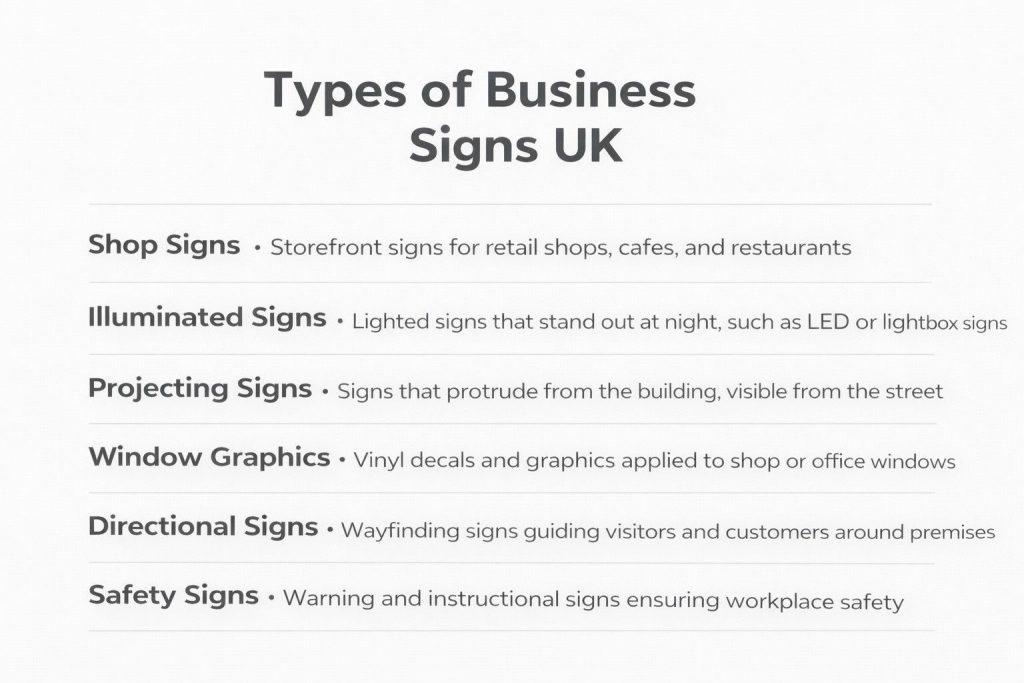
The types of signage vary widely depending on purpose, location and the message a company wants to convey. From shop signs and custom signs to safety signs and directional graphics, there is a wide range of options, and each type has specific benefits and applications.
-
Shop signs: external signs that display the business name, logo and brand colours. Fascia panels in aluminium or Dibond are the usual starting point for shops, and we have a full guide to choosing effective shop signs for UK and Manchester businesses.
-
Illuminated signs: signs with built-in lighting so your premises stay visible in the evening or in low light, such as light boxes, halo-lit letters and LED neon.
-
Projecting signs: fixed perpendicular to the building façade to catch the attention of pedestrians walking along the street.
-
Pavement signs: A-boards that prompt impulse stops and help drive foot traffic from passing pedestrians, which suits cafes, restaurants and shops on side streets.
-
Wayfinding and directional signs: essential for guiding visitors through offices, retail spaces and industrial sites.
-
Safety and compliance signs: these communicate important information about hazards, fire exits and site rules.
-
Digital signage: indoor or outdoor screens that let you update promotions instantly, without reprinting anything.
-
Promotional signs and banners: temporary or permanent signs used for advertising offers, events or new products, usually printed on PVC or mesh.
-
Custom signs: tailored signs designed for a specific purpose, such as trade shows, exhibitions or bespoke branding.
For a retail-specific breakdown, see our complete guide to types of retail signage.
Quick Comparison: Which Business Sign Suits Which Job?
|
Sign type |
Typical materials |
Best for |
Typical lifespan |
|---|---|---|---|
|
Fascia sign |
Aluminium, Dibond, acrylic |
Retail, hospitality |
7 to 10 years |
|
Illuminated light box |
Aluminium frame, acrylic face, LED |
Retail, healthcare, evening trade |
7 to 10 years |
|
3D built-up letters |
Acrylic, brushed metal |
Offices, premium retail |
10 years or more |
|
Vinyl signs and graphics |
UV resistant printed vinyl |
Windows, vehicles, walls |
Up to 10 years |
|
Pavement sign |
Metal or plastic A-board |
Cafes, restaurants, shops on side streets |
3 to 5 years |
|
PVC banner |
Printed PVC or mesh |
Promotions, events, construction |
1 to 3 years |
|
Wayfinding sign |
Acrylic, aluminium, Foamex |
Offices, healthcare, large sites |
5 to 10 years |
How Do Business Signs Help Brand Visibility?
Business signage makes a company visible, memorable and credible. Business signs UK are not merely decorative: they communicate your brand’s identity, values and key messages to potential customers. When well placed and well designed, signage can increase footfall, strengthen brand recognition and leave a lasting impression on visitors.
A useful test is the 3-second rule: your message should be understood within about three seconds, so keep the logo and one clear line of text front and centre.
Signage also keeps your brand consistent across every touchpoint. From indoor signage in reception areas to custom signs at trade shows or on a shop front, the same logo, colours and typeface should appear every time. This is especially valuable for small businesses, where one eye catching sign often does the work of a much larger advertising budget.
For ideas on getting your business noticed, see our guide to business signage ideas that improve visibility and brand recall.
Indoor vs Outdoor Signs: Which Does Your Business Need?
Choosing between indoor and outdoor signage depends on where the sign will be used, the audience it needs to reach and the conditions it will face. Business signs UK fall broadly into indoor signage and outdoor signs, each needing different materials and design approaches.
Indoor signage is ideal for engaging customers and visitors once they are inside your premises, whereas outdoor business signs draw people in from the street.
A shop may need both: a fascia to attract attention, then window graphics, price displays and directional signs once customers are through the door. Walls, entrances and counters are all useful places for displaying brand messages and offers.
|
Factor |
Indoor signs |
Outdoor signs |
|---|---|---|
|
Main job |
Guide, inform, reinforce brand |
Attract, identify, advertise |
|
Typical materials |
Clear acrylic, Foamex, vinyl, brushed metal |
Aluminium, Dibond, UV resistant acrylic, PVC |
|
Weather exposure |
None |
Rain, wind, frost, sunlight |
|
Installation |
Standoffs, adhesive, wall fixings |
Brackets, ground anchors, secure structural fixings |
|
Consent |
Usually none |
May need Advertisement Consent |
Outdoor Signs for Business and Aluminium Signage
For businesses looking to make a strong impression, outdoor signs are essential. In the UK, where weather conditions can be unpredictable, you need durable materials and designs that withstand rain, wind and UV exposure. Outdoor signage is often the first point of contact with potential customers, so it must be highly visible, informative and aligned with your brand identity.
Aluminium signs are a popular choice for outdoor use thanks to their strength, durability and light weight. They resist rust and corrosion, which makes them suitable for both city streets such as Deansgate and exposed coastal locations. Additional benefits include:
-
Long-lasting performance in harsh weather conditions
-
Lightweight and easy to install, which reduces labour costs
-
A professional appearance that complements your logo and brand colours
-
Compatibility with a range of finishes, including vinyl graphics, digital printing and protective coatings
Some people also choose stainless steel to get resistance to weather conditions.
Outdoor Signs for High-Traffic Locations
Some exterior signs perform better where you need to attract attention quickly, such as busy high streets like Market Street. Options include:
-
Fascia signs: mounted above shop entrances for immediate visibility
-
Projecting signs: fixed perpendicular to buildings to catch pedestrian and vehicle attention
-
Illuminated signs: provide visibility in low light and evening hours (see our comparison of light boxes, neon and LED signs)
-
Totem and pylon signs: freestanding structures suited to business parks, retail complexes or roadside promotion
-
Large format banners and flags: flexible solutions for events or seasonal promotions
Durable Outdoor Signage Recommendations
When choosing custom signs for outdoor use, durability is key. Your signs must resist rain, wind and strong sunlight while keeping their appearance. We recommend:
-
Selecting high quality materials such as aluminium, acrylic or weather-resistant composites, rather than cheaper other materials that fade or warp
-
Using UV resistant coatings and laminates to stop brand colours and printed graphics fading. Vinyl is UV resistant too, and can last up to 10 years
-
Opting for professional installation so signs stay stable on walls, poles or freestanding structures
-
Carrying out regular maintenance checks to clean, inspect and repair signs for long-term performance
Which Custom Signs Suit Different Types of Business?
Unlike stock designs, custom business signs give you the flexibility to communicate unique messages, reinforce brand identity and adapt signage to a specific location or event. Free design is part of our service, so you can see the result before anything is made, and several design options are usually offered for colours, finishes and lighting. If you are weighing the two approaches, our comparison of custom signs vs standard signs sets out when each makes sense.
Retail Storefronts
For shops, custom signs can have a real impact on visibility and sales. They help potential customers spot you from the street and make the business instantly recognisable. Options for business signs UK for retail include:
-
Dimensional lettering that highlights the logo and business name
-
Illuminated fascia signs for visibility during evening hours
-
Window graphics and vinyl displays that promote offers, new products or seasonal campaigns
-
Custom banners or flags to create dynamic and engaging storefronts
Restaurants and cafes often add a pavement sign or a neon feature wall to draw in passing trade, and a well-placed menu board helps customers decide before they step inside.
Events and Exhibitions
Businesses attending trade shows, corporate events or exhibitions can use bespoke custom signage to stand out. Effective options include:
-
Pop-up displays and exhibition stands that combine graphics with company branding
-
Banners, flags and posters that communicate promotional messages clearly
-
Interactive or digital signs to engage visitors and showcase products
-
Directional signage that guides attendees through the venue efficiently
If you need matching banners for several events or branches, bulk orders are usually more cost-effective per item than one-off printing.
Bespoke Wayfinding Signs
Wayfinding and directional signage are essential for offices, retail complexes and large venues. Thoughtful workplace signage improves how these spaces function and feel for staff and visitors alike. Custom signs in this category guide people efficiently while keeping a consistent brand identity. Key benefits include:
-
Clear navigation that reduces confusion and helps improve customer experience
-
Brand colours and logos that reinforce corporate identity
-
Durable materials suitable for indoor and outdoor environments
-
Space for safety information or other important information needed for compliance
Accessibility matters here too. The Equality and Human Rights Commission lists signs among the physical features service providers must consider under the Equality Act 2010, so use clear lettering and strong contrast so disabled visitors can find their way.
What Makes a Business Sign Design Work?
Creating a custom sign involves more than printing a name or logo. You also need to consider materials, branding and regulations. To make an impact, the design must combine readability, brand identity and durability without pushing the price out of reach.
Layout Principles for Legibility
A clear, structured layout helps your business signs UK be understood at a glance. Consider the following:
-
Hierarchy of information: place the most important details, such as the business name or logo, at the top or centre.
-
Simplicity: avoid cluttering the sign with too much text, because concise messaging helps visitors grasp the purpose quickly.
-
Balanced spacing: adequate space between elements improves legibility and overall appearance.
Colour Contrast for Quick Readability
Colour choice is critical for visibility and brand consistency. High-contrast colours help your message stand out on business signs UK. Best practice includes:
-
Pairing dark text on a light background, or light text on a dark background
-
Using your brand colours consistently across all signs
-
Avoiding excessive colour combinations that distract or confuse viewers
Typography Sizes for Viewing Distances
Text size must suit the viewing distance and the purpose of the sign. Effective typography for business signs UK should follow these principles:
-
Large lettering on fascia signs and outdoor signage so it is visible from roads and footpaths
-
Medium-sized text for indoor signs such as directional or office graphics
-
Smaller, clear text for point-of-sale signs read at close range
-
Clean, professional fonts that complement your brand style and keep the message legible
How Are Business Signs Installed and Maintained?
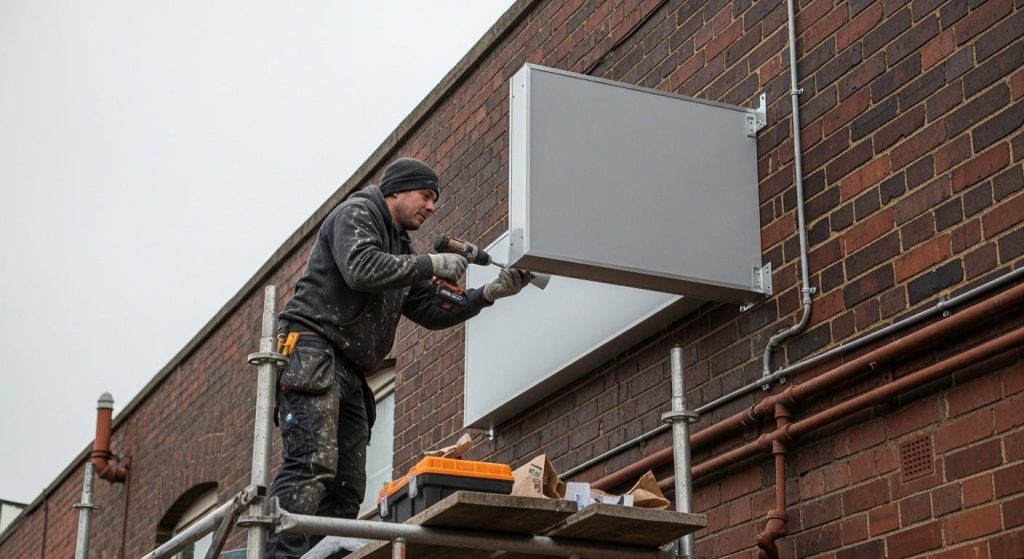
A well-designed business sign is only effective if it is installed correctly and maintained over time. Proper installation ensures safety, longevity and a professional finish, while regular maintenance keeps the sign looking sharp. This matters just as much for indoor business signs and office signage that staff and visitors see every day.
Common Fixings for Different Mounting Surfaces
The fixing depends on the sign’s material, weight and mounting surface. Popular options include:
-
Wall mounts: screws or brackets for aluminium, acrylic or PVC signs on brick, concrete or timber walls
-
Standoffs: used for indoor office signage, giving a sleek, modern look with the sign slightly raised from the wall
-
Freestanding supports: totem and pylon signs installed with secure ground anchors, ideal for outdoor use in car parks and business parks
-
Hanging systems: chains or rods for projecting shop signs or suspended banners in covered areas
Professional Installation Options
Smaller signs can sometimes be fitted in-house, but professional installation is recommended for most business signage, especially outdoor signs and large custom signs. The benefits include:
-
Correct positioning for maximum visibility and impact
-
Compliance with UK health and safety requirements
-
Protection against damage from poor mounting or adverse weather
-
Expert handling of heavy or complex signs, including aluminium signs and large format printed products
Where employers need safety signs, HSE guidance on the Health and Safety (Safety Signs and Signals) Regulations 1996 explains when they are required and that they must be clear and legible. Keep them clean and in good repair.
At Manchester Signs Centre, we offer professional sign installation across the UK, with the same team that made your sign carrying out the fit. Our process runs from free site visit and design to manufacture and fitting, and we will advise on the standard lead time for your project once the artwork is approved.
Why Does Quality Matter for Business Signs UK?
With business signs UK, quality is more than a detail: it reflects your company’s values and professionalism. High-quality business signage made from durable, popular materials such as aluminium or acrylic keeps your message clear through the unpredictable UK weather. Custom signs made from robust materials stay vibrant and eye catching after years of outdoor exposure.
Effective signage sets the tone for the customer experience and leaves a lasting impression on potential customers. As a guide, well-made aluminium and acrylic signs commonly last 7 to 10 years outdoors, while cheaper materials may need replacing far sooner. Price usually reflects size, materials, lighting and installation, so a lower quote can mean higher costs later. For more on pricing, see what affects the cost of business signage in the UK, or our breakdown of business signage cost in the UK.
Do You Need Permission for Business Signs in the UK?
Before installing any outdoor business signs or illuminated signage, check the local rules. The Planning Portal explains that you may need advertisement consent for an advert bigger than 0.3 square metres, or of any size if illuminated, on the front of or outside business premises.
In England, all outdoor adverts must also meet five standard conditions covering owner permission, safety, upkeep and careful removal. Under the Town and Country Planning (Control of Advertisements) (England) Regulations 2007, no advertisement may be displayed without the permission of the site owner or another person entitled to grant it.
Rules can vary by location, and councils may set extra guidance on size, placement and materials, especially in conservation areas or near listed buildings. Wales, Scotland and Northern Ireland have their own regimes, so check with your local planning authority before you order.
Choosing and Fitting the Right Signs With Manchester Signs Centre
Whatever type of sign you need, these services cover the most common requirements for UK businesses.
-
Shop Front & Fascia Signs: durable fascia and tray signs that make your shopfront easy to spot from the street, in materials chosen for UK weather.
-
Light Boxes: illuminated signs that keep your business visible day and night, ideal for evening trade.
-
Wayfinding Signs: clear directional signs that guide visitors through offices, healthcare sites and larger buildings.
Plan Your Signage Project With a Free Site Visit
Your next step is to match the right sign to your premises and budget.
Our outdoor signs are made for UK weather and installed by our own team, while our shop front and fascia signs give your entrance a clear, professional look. We offer free design, free site visits and no-obligation quotes, with a 4.8/5 rating from 90+ Google reviews.
Speak to the Manchester Signs Centre team today via our contact page.
Note: This article provides general information about signage options available across the UK. Manchester Signs Centre may not supply every product, material or signage type mentioned. If you have a project in mind, please contact our team to discuss your requirements and find out how we can help.
Frequently Asked Question
What are the different types of business signs?
Common types include fascia and shopfront signs, projecting signs, illuminated or 3D lettering, window graphics, wayfinding signs, safety signs, banners, A-boards and digital screens. Illuminated signs suit businesses needing visibility after dark, while banners are a flexible option for promotions and events.
What should be on a business sign?
Your business name or logo and a short message that can be read quickly. Contact details or a website address can be added where space allows, but simple wording works best for signs seen by passing traffic.
What are the rules for sign design?
Use legible fonts, suitable letter sizes, strong contrast and an uncluttered layout. In England, outdoor adverts must also meet the standard conditions in the 2007 Regulations, and some signs need advertisement consent from the local planning authority.
Do I need permission for a business sign in the UK?
Often yes, if the sign is illuminated or larger than 0.3 square metres. Many traditional, non-illuminated fascia signs have deemed consent, but you should check with your council first, and listed buildings need extra consent.
How long do outdoor business signs last?
Well-made aluminium and acrylic outdoor signs typically last 7 to 10 years, and UV resistant vinyl can last up to 10 years. Printed PVC banners are shorter-term, usually 1 to 3 years, depending on weather conditions and exposure.
What are the 7 elements of a good business logo?
Simplicity, relevance, distinctiveness, memorability, versatility, timelessness and scalability. These qualities keep your logo recognisable from small printed items to large custom signs, including illuminated signage.