Good exhibition stand lighting puts the brightest light on the things you want visitors to read, touch and remember, and keeps everything else calmer. What you light, and how, depends on your graphics, your stand layout and the power the venue allows.
A trade show hall is often lit with flat, general light that leaves printed graphics dull and products in shadow. Planning your lights properly fixes that, and it is usually one of the most cost effective upgrades you can make.
The right lighting can make exhibition graphics, products and banners pop while helping visitors understand where to look first. From ambient light and focused spotlights to illuminated graphics, the best exhibition lighting solutions use a combination of techniques to support the stand design, visitor experience and practical needs of the event.
What Needs Lighting on an Exhibition Stand?
Not everything on your stand needs the same level of brightness. Decide your priorities first, then choose the lights.
-
Main graphics: your headline wall, logo and fascia are what visitors read from the aisle.
-
Products and samples: these need focused light so shape, finish and colours look accurate.
-
Counters and meeting areas: soft, comfortable light creates an inviting atmosphere for conversations.
-
Entrance and walkways: clear, even illumination helps visitors step in confidently.
-
Screens and demos: avoid strong light falling directly on them, as glare makes content hard to see.
A simple rule works well: make the focal point the brightest area, then step brightness down across the rest of the stand.
Why Does Lighting Matter in an Exhibition Hall?
Visitors scan dozens of stands in minutes. Lighting is what makes yours register from a distance and draws potential customers closer.
-
Visibility: a glowing graphic wall stands out against the hall’s general lighting.
-
Hierarchy: light guides the eye from headline, to product, to your team.
-
Accuracy: good colour rendering keeps brand colours and product finishes true.
-
Atmosphere: warm or cool tones set the mood of your brand.
For a wider look at how lighting fits with layout, see our guide to exhibition display stands, types and engagement strategies.
LED Lights vs Halogen Lights for Exhibition Stands
For almost every stand, LED exhibition lights are now the sensible choice. Halogen lights still turn up on older shell scheme kits, but they have clear drawbacks.
|
Feature |
LED lights |
Halogen lights |
|---|---|---|
|
Heat |
Low, safer near fabric and graphics |
High, needs guarding and distance |
|
Power use |
Low, energy efficient |
High, uses more of your power allocation |
|
Lifespan |
Long, little maintenance |
Short, bulbs often fail mid-show |
|
Colour options |
Warm, cool white and daylight tones |
Mostly warm only |
That difference in energy use can matter at events where lighting and electrical connections add to the overall stand cost. LEDs can use around 80% less electricity than equivalent halogen lighting and can last up to 20 times longer, reducing replacement needs over their working life.
Some specialist exhibition LED systems are also promoted as reducing exhibition lighting costs by up to 60%, although the actual saving depends on the lights used, socket requirements, venue charges and the size of the project.
LEDs also suit an environmentally friendly approach, because they draw less power and need fewer replacements. Many venues restrict hot lamps near combustible materials, so check your exhibitor manual before packing any halogen fittings.
Which Lighting Method Suits Each Part of Your Stand?
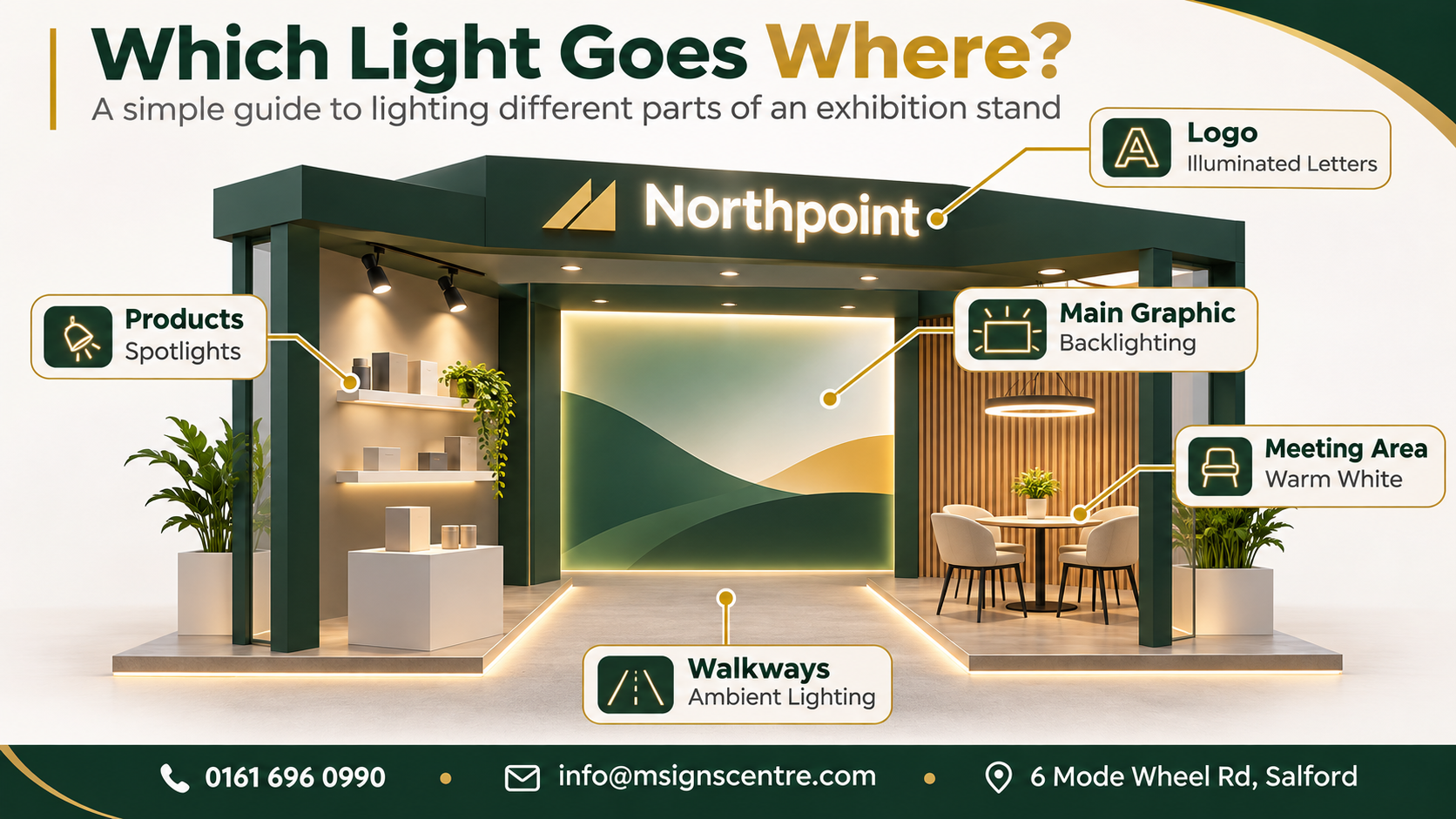
You can use a range of lighting options for your stand. Common ideas used by UK businesses include:
1. Ambient Lighting for General Illumination
Ambient lighting provides the baseline illumination across an exhibition stand. Its job is not to make one product or graphic the brightest element, but to keep the overall space comfortable and prevent dark corners.
Use a soft, even level of light around walkways, counters and meeting areas, then pair it with stronger accent lighting on important products, graphics or messages. This combination creates a clearer visual hierarchy without making the whole stand equally bright.
2. Spotlights for Products and Specific Areas
Spotlights give a tight, directional beam, so they are ideal for highlighting products, shelves and specific areas. Mount them on arms or overhead trusses and angle them to avoid shadows on faces and glare on glossy surfaces.
3. Floodlights for Wider Wash
Floodlights spread a broad, softer beam across a wall or canopy. They work well on larger stands where you need an even base level of brightness before adding accents.
4. LED Strip Lighting for Graphics and Edges
LED strip lighting is a thin, low-profile LED strip that can run along frames, shelves, counters and plinths. It creates a clean finish and a soft glow, and it is easy to hide inside profiles.
5. Backlit Lightboxes and Fabric Display Stands
Backlit frames place LED lights behind a stretched fabric display, so the whole graphic glows evenly. This suits fabric display stands and large hero walls, where printed graphics need to look bright and crisp from the aisle. If you are weighing this up, our guide to selecting display light boxes covers the options in more detail.
6. Edge-Lit Acrylic Graphics and Displays
Edge-lit acrylic uses LEDs around the edge of a clear or engraved acrylic panel. The light travels through the material and catches the printed or engraved elements, creating a floating graphic illusion.
This can work well for logos, product information, directional graphics and smaller feature displays where you want something to pop without using a full backlit wall. It can also be connected with other lighting elements as part of a wider exhibition stand lighting scheme.
7. Illuminated Letters and Logos
Illuminated lettering gives your name a premium glow, either front-lit or halo-lit. Our overview of 3D illuminated letters, materials, lighting options and costs explains the choices.
How Should Lighting Work With Graphics and Stand Design?
Lighting is part of the design, not an add-on. Plan it alongside your graphics so the two support each other.
-
Backlit graphics: use even illumination with LED strips spaced evenly behind the fabric or panel, to avoid hotspots and dark bands.
-
Front-lit graphics: place lights above and slightly forward, so the beam does not reflect straight into visitors’ eyes.
-
Colour temperature: cool white (around 4000K to 5000K) suits tech and clinical brands, while warmer tones suit hospitality and lifestyle products.
-
Gloss and laminate: glossy finishes reflect lights, so a matt finish can help on spotlit walls.
-
Consistency: use the same colour temperature across the stand, so graphics and products do not clash.
-
Colour temperature: warm white light around 2,700K to 3,000K creates a softer, more inviting feel and can work well around hospitality, lifestyle and meeting areas. Cooler white light can suit technology, healthcare and more contemporary displays.
-
Colour rendering: look at the CRI as well as brightness. Exhibition LEDs with a CRI of 85+ can provide good colour accuracy, while CRI 90+ is preferable for product lighting, detailed graphics and displays where accurate brand or product colours matter.
At Manchester Signs Centre, our team designs, manufactures and installs signage in-house, so lighting positions, graphics and structure are planned together rather than fixed after the build. If you are still shaping the overall layout, our page on exhibition stand planning is a good starting point.
What Practical Checks Do Power, Cables and Safety Need?
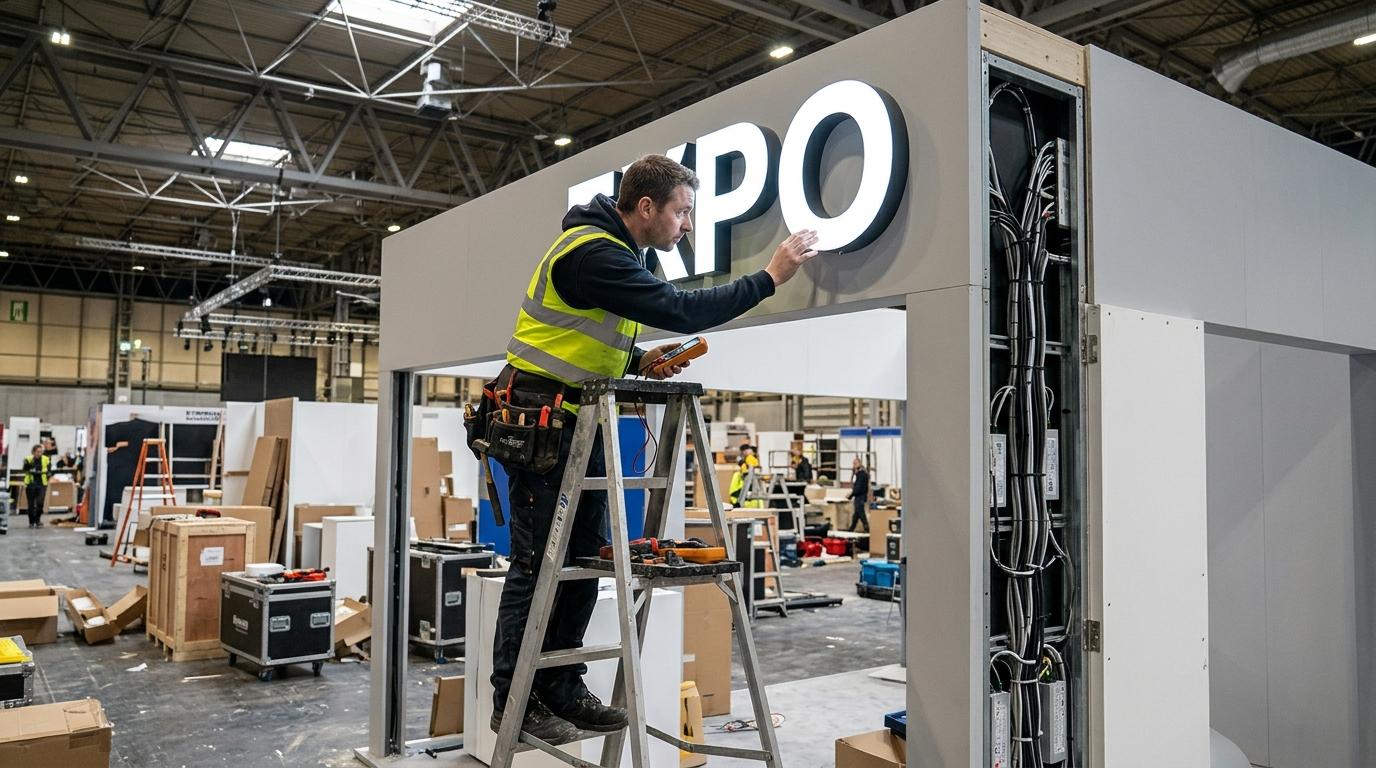
The best lighting options still fail if the power plan is wrong. Check these points well before show day.
-
Circuit limits: Exhibition Venues Association regulations state that lighting circuits serving more than one fitting must not carry more than 1200 VA, so add up your total load.
-
Cables: keep cables tidy, fixed and out of walkways. Plan routes behind panels or under raised floor sections.
-
Heat and fabric: keep fittings clear of fabric and combustible materials, and fix them securely, especially overhead.
-
Testing: many venues ask for electrical equipment to be tested before connection. The HSE explains that PAT testing is not a legal requirement in itself, but organisers can set their own rules, so confirm with yours.
-
Power order: order enough sockets, and consider 24-hour power if lights or screens must stay on.
-
Dry run: switch everything on before the show, check brightness from the aisle and photograph the stand to spot glare and shadows.
What Is the Best Lighting by Stand Type?
-
Shell scheme or small booth: pair clip-on LED spotlights with a backlit header graphic or banners. This is a practical option for smaller events where you need portable lighting without using too much of the venue’s power allowance.
-
Pop-up and stock display systems: lightweight LED spotlights can be connected to reusable pop-up stands and portable display hardware. Explore the available range carefully so the fittings suit the stand system and do not interfere with the graphics.
-
Modular or fabric display stands: integrated LED strips behind tension fabric create an even glow and help large printed graphics pop.
-
Larger stands: combine floodlights for general wash, spotlights for products and illuminated logos for stronger brand presence.
-
Bespoke builds: hidden strip lighting, feature lettering and zoned lighting can all be planned as part of the wider exhibition project.
If you are comparing ready-made and custom routes, see our pages on standard exhibition stand building and bespoke exhibition stand display. At Manchester Signs Centre, we can advise on which route suits your lighting brief and budget.
Lighting Your Stand With Manchester Signs Centre
These services fit most exhibition lighting briefs, from a single backlit wall to a full lit stand.
-
Light Boxes: illuminated frames that make your main graphic glow evenly, so your message reads clearly across the exhibition hall.
-
Exhibition Stands: bespoke stands and displays, designed and installed with lighting built into the structure.
-
3D Built-Up Letters: dimensional lettering and logos that can be illuminated for a premium focal point.
Frequently Asked Questions
What is the best lighting for an exhibition stand?
LED lights are usually the best choice. Combine spotlights for products, backlit LED strip for graphics and a soft wash for general areas.
How many lights do I need for an exhibition stand?
It depends on stand size, ceiling height and what you are lighting. As a guide, plan one light per key product or graphic zone, then add ambient light and check the total against your power order.
Can I use my own lights at an exhibition?
Usually yes, if they are safe and meet the organiser’s rules. Check the exhibitor manual for testing, fixing and power requirements first.
Are LED lights better than halogen for exhibition stands?
Yes. LEDs run cooler, use less power and last longer, which makes them safer and easier to manage on a stand.
What colour temperature should I choose?
Choose cool white for tech and clinical brands and warmer tones for hospitality and lifestyle products. Keep one colour temperature across the stand for a consistent look.
How do I avoid glare on my exhibition stand?
Angle spotlights away from eye level and glossy surfaces, and use diffused or backlit lighting on graphics. Test the stand from the aisle before the show opens.
Plan Your Exhibition Stand Lighting With Us
If your main graphic is the priority, our light boxes give you an evenly lit, high-impact backdrop. If you need lighting built into a full stand, our exhibition stands service designs and installs it as one complete package, with professional installation across the UK from our Salford workshop.
We offer free design, free site visits and no-obligation quotes, and we are rated 4.8/5 from 90+ Google reviews. Speak to the Manchester Signs Centre team today through our contact page.
Note: Manchester Signs Centre does not supply every material and lighting option mentioned in this article. The information is general guidance only, and availability, specifications and venue rules vary. Contact us for a custom quote tailored to your stand and exhibition.