If you have taken over the unit next door, you can run one continuous fascia across both shopfronts or keep two separate signs.
That is an important consideration as a well-designed fascia sign can be seen by thousands daily and is a powerful marketing tool. The right choice depends on your brand identity, the architecture of the building and whether each unit keeps its own entrance.
At Manchester Sign Centre, we have designed and installed several fascias and other storefront signs. This guide covers signage for adjoining shop units so you can decide before you commit to a design.
Quick Comparison: Continuous vs Separate Fascia Signs
Let’s compare the options of fascia signs across two shops side-by-side.
|
Factor |
One Continuous Sign |
Separate Signs |
|---|---|---|
|
Brand impact |
Strong, reads as one large shop |
Moderate, depends on consistency |
|
Best for |
One trader using both units |
Two trades or a split entrance |
|
Architectural fit |
Needs matching fascia heights |
Works with piers, pilasters and level changes |
|
Landlord and planning risk |
Higher if it hides building features |
Lower, follows existing divisions |
|
Flexibility later |
Harder to split back |
Easy to re-let or rebrand one unit |
One Continuous or Two Separate Commercial Signs: Which Suits Your Units?
Start with how customers will use the space. If both units trade as one shop under one roof, with an opening knocked through, a single message across the commercial unit pair usually works best for your business signage.
If each unit keeps its own door and function, separate signs can be clearer. A potential customer who walks past needs to know instantly which door to use, and good fascia signage acts as a silent salesperson for each entrance. Different dimensions between the two shopfronts also tend to favour two signs.
-
One business, one shop floor: a continuous design helps build brand recognition quickly and captures passing trade.
-
One business, two entrances: a continuous fascia with clear entrance signage above each door.
-
Two different trades: separate fascia signs for adjoining shops, kept visually related if you share an owner.
-
Likely to sublet later: separate signs, so one unit can change without affecting the other.
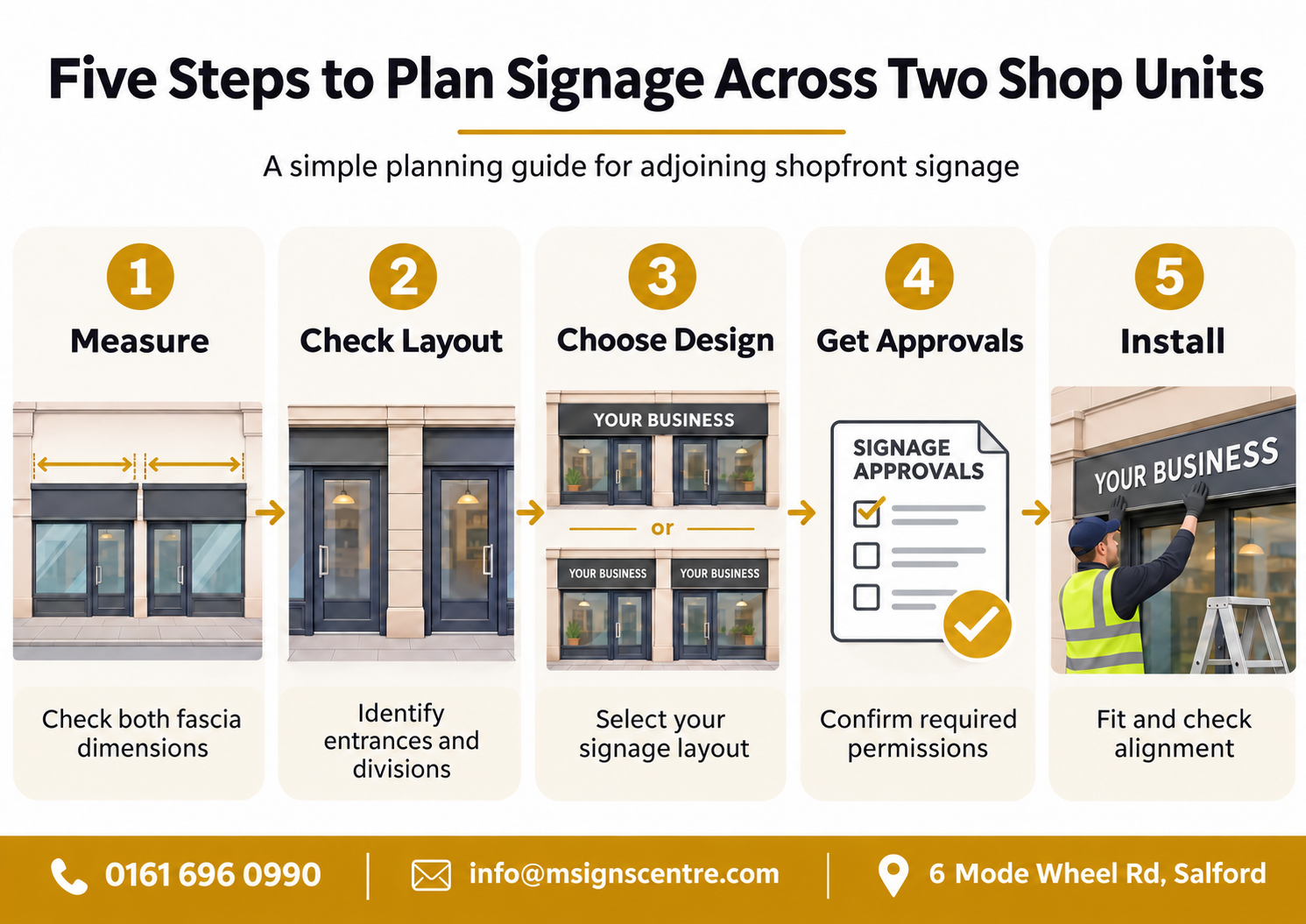
When Does a Continuous Shopfront Sign Work Best?
Continuous shopfront signage creates a bold, premium presence.
A single long fascia lets your name read from further down the street, which suits town centres and high streets such as Market Street in Manchester or a busy parade in Salford. Visibility from a distance matters most for passing trade, so the location of your building counts. Effective signage on single fascia can increase brand awareness by up to 75%.
It works best when the two fascias sit at the same height and depth. Even small differences in level can make a joined sign look uneven, and sign size should be judged against the full combined width rather than each unit alone.
-
Matching fascia lines: the top and bottom edges should align across both units.
-
Few visual breaks: a dividing pier or pilaster can interrupt the message if lettering runs across it.
-
One brand: consistent branding reads as a single, confident retailer and increases foot traffic recognition.
A combined shopfront sign design can use one long aluminium tray with printed or applied graphics, or individual letters mounted across both fascias. For depth and a premium finish, you can also consider 3D built-up letters spanning the full width. Strong commercial signs like these can also encourage impulse purchases from people who walk past.
When Are Separate Fascia Signs the Better Choice?
Separate signs respect the building. Many older parades have a pier, column or change in brickwork between units, and a sign that stops at that division looks deliberate rather than forced.
Separate fascia signs also help when each shopfront has a different purpose, such as a main shop and a separate service entrance. They let you add clear directional signage at the thresholds and main entrances, where customers make their decisions, without crowding one long panel.
-
Different floor levels: two signs avoid awkward steps in a single fascia.
-
Listed or period frontage: shorter signs are easier to fit around existing detail.
-
Shared buildings: where units sit within a larger block, separate property signs can follow the existing building identification and any shared directory.
-
Future flexibility: you can re-let or rebrand one unit without replacing both. Landlords may also ask tenants to remove signs at lease end, which is simpler with two separate panels.
How to Maintain Brand Identity in Two Commercial Signage Units?
Whichever route you choose, branding adjoining retail units should feel coordinated. Use the same typeface, colour palette and logo proportions on both signs so the frontage reads as one business. High-contrast materials also keep lettering legible in different lighting conditions and improve visibility.
Repeating your brand at multiple touchpoints, from fascia to window graphics to projecting signs, helps reinforce brand recognition. Our guide on planning a fascia sign layout for clear branding covers spacing, lettering height and contrast in more detail.
-
Logo placement: centre it over each entrance, or centre it once across the combined width.
-
Colour: keep background and lettering colours identical on both fascias.
-
Lettering height: match it so neither unit looks like the junior partner.
-
Supporting elements: use matching window graphics, hanging signs and internal signage to tie the frontage together, and to show current promotions.
How Do You Work Around Entrances, Piers and Architectural Divisions?
Walk the frontage before you design anything. Note every pier, downpipe, cornice, shutter box and change in material, because these decide where commercial property signage can start and stop.
A good site survey records fascia height, depth, wall condition and any services behind the panel. At Manchester Signs Centre, we offer free site visits, so we measure the frontage properly before any artwork is produced for the project.
-
Entrance signage: make each door obvious with a small projecting sign, door vinyl or a fascia marker.
-
Divisions: align sign edges with piers, not across them.
-
Services and shutters: allow for roller shutter housings, alarm boxes and cable runs.
-
Wider estate: on a retail park or industrial estates, check whether a shared totem or directory already lists each business, and whether external signs need to match it.
Should Both Adjoining Fascias Be Illuminated?
Illuminated fascia signs enhance visibility at night which matters for retail premises with late opening hours. Illuminated fascia signs can use LED signs behind an opal face, halo-lit letters or discreet trough lights. Many commercial signage schemes now use LED for lower running costs.
The main risk is mismatch. If one unit has warm white lighting and the other has cool white, the join will be obvious, so specify the same LED colour temperature and brightness for both. Illuminated signage may also need electrical work and permits, so plan for this early.
-
Illuminated signs: best on streets with evening trade, such as restaurants, takeaways and convenience store frontages with long operating hours.
-
Non-illuminated: suitable for daytime offices, clinics and some independent retailers.
-
Digital displays: digital signage in the window can suit changing offers, but keep the fascia itself simple.
Our comparison of illuminated and non-illuminated shop signs helps you weigh up running costs against night-time impact.
Consents for Commercial Property Signs Across Two Units
Two units usually mean more sign area, so check the rules early. Advertisements in England are controlled by a separate consent process under the 2007 Regulations, judged on amenity and public safety. Business signs in Greater Manchester must comply with local council rules before installation.
Many fascia signs have deemed consent, but not all. Government guidance says some illuminated signs, and fascia or projecting signs with the top edge above 4.6 metres, need the local planning authority’s consent. You’ll need:
-
Landlord consent: written approval from each landlord, especially if the units have different owners.
-
Listed buildings and conservation areas: extra consents may apply, so speak to your local planning authority first.
-
Planning permission: a full shopfront alteration, such as knocking two units into one, may need planning permission separately from advertisement consent.
For a broader overview of high street design, see our shop front signage ideas for high streets and retail parks.
Which Materials and Installation Method Suit a Long Combined Fascia?
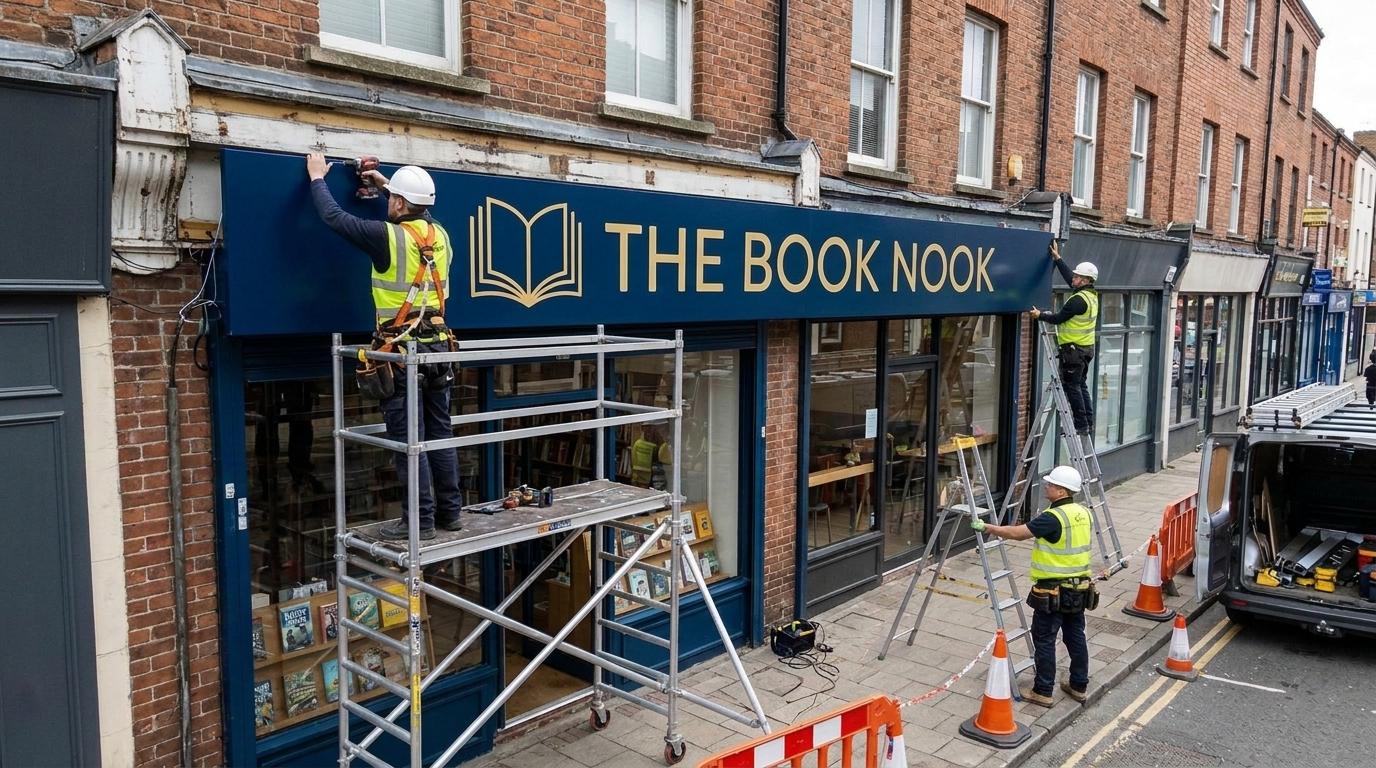
For a long combined fascia, material selection matters. Aluminium trays or composite panels such as Dibond hold their shape and resist weather, while acrylic letters and printed PVC faces suit lighter schemes.
Poor installation is a common reason joined signs fail. Panels that are not levelled and fixed to the same line will show a visible kink, so the installation method matters as much as the design. Because we design, manufacture and install in-house at Manchester Signs Centre, our team measures your frontage and fits the finished panels.
Budget for installation as well as manufacture, since a sign price rarely covers every cost of the project.
-
Typical lifespan: well-made aluminium and acrylic fascia signs last 7 to 10 years or more with basic cleaning.
-
Typical turnaround: most fascia projects take a few weeks from approved artwork to fitting, depending on lighting and consents.
-
Maintenance: regular checks keep both signs matching as they age, as covered in our outdoor shop sign maintenance tips for UK weather.
Which Signage for Adjoining Shop Units Is Best?
-
Retail: a continuous fascia for expanded stores, with window graphics to communicate promotions and prominent signage at the point of sale.
-
Hospitality: illuminated signage over each entrance, with a shared brand across both units.
-
Offices and professional services: separate, understated commercial property signs with clear entrance signage, plus a tenant directory in shared buildings.
-
Healthcare: separate signs for each service door, with simple wording and high contrast.
-
Industrial units and industrial estates: separate external signage for each bay, with a shared directory at the estate entrance.
Whichever sector you trade in, our Salford workshop can mock up both options so you can compare a joined and a separate scheme against your actual frontage.
The right signage solutions for commercial premises help every customer find the correct door, and good signage keeps working around the clock for your business.
Joining Two Frontages With Manchester Signs Centre Fascia Solutions
Our team designs, makes and installs signs in-house, with professional installation across the UK. We provide:
-
Shop Front and Fascia Signs: durable fascia and tray signs, made to run as one panel or as a matched pair across two units.
-
Light Boxes: illuminated signs that keep both entrances visible after dark, with consistent brightness across the frontage.
-
Window Graphics: printed and frosted graphics that tie both shopfronts together and add promotions or privacy.
FAQ
Should I use one sign or two when I take over the next-door unit?
It depends on how you will trade. Use one continuous sign if both units operate as one shop, and two matched signs if each keeps its own entrance or may be sublet later.
Do I need advertisement consent for a longer fascia sign?
Possibly. Some fascia signs have deemed consent, but illuminated signs or signs above 4.6 metres often need approval from your local planning authority, so check before ordering.
Can I run lettering across a dividing pier?
You can, but it often looks awkward. Aligning each sign with the pier or pilaster usually gives a cleaner, more professional appearance.
Do both units need the same lighting?
Yes, ideally. Matching LED colour temperature and brightness stops one side looking warmer or brighter than the other.
Do I need my landlord’s permission?
Yes. You need the site owner’s permission to display any advertisement, and with two units that may mean two landlords.
How long do fascia signs last?
Typically 7 to 10 years for quality aluminium and acrylic signs, longer with regular cleaning and checks.
Plan Your Two-Unit Frontage With Manchester Signs Centre
For a joined or matched frontage, our fascia and tray signs give you a durable, weatherproof panel measured to your exact shopfront.
If you want a brighter presence after dark, our light boxes keep both entrances clear and consistent. We offer free design, free site visits and no-obligation quotes, and our team is rated 4.8/5 from 90+ Google reviews.
Speak to the Manchester Signs Centre team today to discuss your requirements.
Please Note: The signage types, materials and installation methods discussed in this article are provided as general guidance. Manchester Signs Centre may not offer every option mentioned. Please contact our team to discuss your project and find out how we can help.