Shopping mall digital signage transforms traditional shopping malls into dynamic environments where visitors receive live promotions, wayfinding guidance, and safety notices across networked screens.
A well-planned signage network of indoor and outdoor digital displays, video walls, and interactive kiosks captures customer attention and reduces navigation frustration in large retail spaces. Digital displays can increase visitor engagement by up to 400%, and foot traffic jumped 65% on Black Friday in 2016 at centres running coordinated digital campaigns.
Msigns designs, manufactures, and installs complete shopping mall digital signage ecosystems. In this guide, we cover wayfinding, advertising revenue, hardware selection, and how to choose a shopping mall digital signage company suited to UK retail properties.
Key Benefits of Shopping Mall Digital Signage
Why UK shopping malls are replacing static posters with managed digital signage networks:
- Digital signage creates engaging shopping experiences by blending retail with digital content
- Malls can sell screen space as advertising for extra revenue, creating new income streams
- Digital signage enhances mall atmospherics with brand content and seasonal displays
- Interactive screens improve customer navigation, reducing confusion across multi-level centres
- Fewer paper posters mean lower waste; modern commercial screens run 16/7 or 24/7 on low power draw
Dynamic playlists and dayparting let marketing teams promote breakfast café offers early, mid-day fashion campaigns at lunch, and evening cinema listings on the same screens. Content can be scheduled based on time of day or specific events to improve relevance across the entire mall.
Trend of Digital Signage in Modern UK Shopping Malls
Since roughly 2015, UK shopping centres and restaurants have moved from static lightboxes and printed posters toward fully networked shopping mall digital signage with interactive content.
Visitors arriving at Manchester Arndale, Westfield London, or the Trafford Centre now expect live information, digital maps, and promotional content on arrival. Digital signage informs shoppers about current promotions and entertainment events, and updates can happen in seconds.
A shopping mall digital signage ecosystem includes indoor digital displays, outdoor LED totems, video walls, digital posters, and interactive kiosks, all managed from one platform. Explore the latest digital signage trends in our detailed guide.
These projects are typically driven by centre owners, asset managers, or FM teams seeking stronger tenant support and better customer experience. Msigns delivers digital signage solutions for shopping malls, covering everything from indoor digital signage to car park entrance screens.
Understanding Digital Signage Shopping Mall Ecosystems
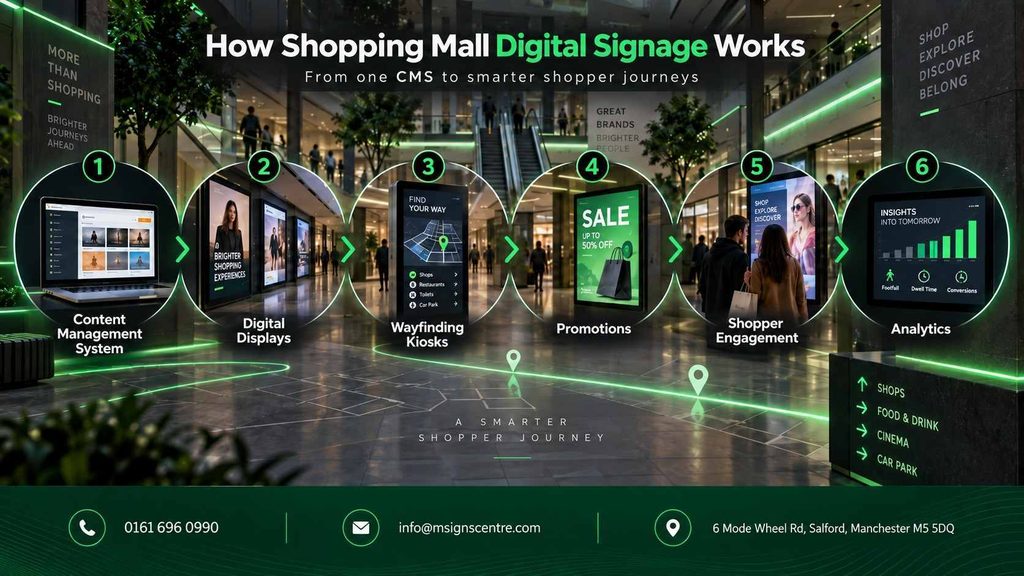
A typical multi-level shopping centre runs dozens of screens: entrance totems, corridor displays, food court screens, and car park signage, all connected via one content management system. Digital signage software underpins this entire signage network, enabling centralised content control across hundreds of displays. Malls can manage multiple screens from a single dashboard, and digital signage updates can occur in seconds.
Key capabilities for shopping malls digital signage:
- Centralised updates: tenant directories, event schedules, and emergency messaging change in real time. Central management can broadcast emergency alerts through digital displays.
- Tenant support: zone-based messaging and tenancy-based playlists update automatically when units open, close, or rebrand. Retailers can change promotions instantly via cloud-based management systems.
- Analytics: digital signage systems track impressions and engagement to optimise content displays. Data-informed content increases relevance and conversion rates for retailers.
Cloud-based platforms support remote management across a national UK portfolio, useful for property groups managing multiple shopping centres. For guidance on when to use static playlists versus touch-enabled technology, explore our comparison of traditional vs interactive digital signage.
Digital Signage Wayfinding Solutions for Shopping Malls
Wayfinding has moved from large vinyl maps to interactive digital signage wayfinding solutions for shopping mall visitors across the UK.
Interactive wayfinding displays help visitors locate stores easily, replacing outdated acrylic directories with smart screens linked to real-time leasing databases. Touchscreen kiosks enhance the wayfinding experience for shoppers by letting them search by store name, category, or facilities such as toilets, lifts, and baby changing.
Dynamic wayfinding devices guides shoppers through malls with arrows and estimated walking times, generating animated routes on a 2D or 3D plan from a clear “You are here” position.
Interactive directory kiosks help visitors locate specific stores and amenities, and interactive directories save shoppers time by offering quick access to locations. Digital signage enhances customer experiences with reduced frustration and improved navigation, and it can provide clear directions even in the largest malls.
Accessibility and inclusivity in signage is essential for serving diverse audiences via:
- larger font options
- high-contrast modes
- audio guidance
- multi-language support
Wayfinding content can be combined with subtle promotions, such as route suggestions that pass featured tenants. For more on spatial user experience, see our guide to wayfinding signage improving customer experience in large buildings.
Commercial Impact: Shopping Mall Digital Signage Advertising
Shopping mall digital signage advertising has become a core revenue stream.
Malls can monetise digital signage by selling advertising space in exciting ways on corridor screens, video walls, and food court displays to tenants and external brands. Digital Out-of-Home advertising generates additional income; JCDecaux UK now operates over 150 large-format digital displays across 26 malls in 13 UK cities.
Promotional video walls showcase high-definition video advertisements and campaigns. Dynamic content can capture shopper attention more effectively than static displays. Digital signage can communicate in real-time to influence buyer behavior; a two-week Reiss campaign at Galleria Mall Hatfield cost roughly £8,500 and delivered approximately £47,300 in revenue, a 556% ROI.
Digital signage for shopping malls allows real-time updates for promotions and events. Dayparting strategies mean family offers run at weekends, commuter-focused ads play on weekday evenings, and school holiday campaigns launch automatically.
However, content scheduling must respect UK advertising standards and mall-specific brand guidelines across all digital displays and storefronts.
Hardware and Layout: Screens, Video Walls and Outdoor Displays
Shopping mall digital signage hardware includes wall-mounted displays, hanging screens, freestanding kiosks, video walls, and outdoor LED totems. High brightness commercial screens for atriums and glass-fronted entrances need 1,500 to 2,500 nits; outdoor or south-facing locations require 4,000 nits or more. Consumer TVs lack the duty rating, brightness, and durability for this environment.
High-quality visuals and interactive touchpoints make trips to the mall more engaging. Video walls in centre courts use tiled LCD or direct-view LED with narrow bezels for large-scale brand campaigns. Robust enclosures for high-traffic areas need tamper-resistant casings, toughened glass, and accessible cable management.
For outdoor digital signs around car parks and approach roads, IP65 or IP66 ratings protect against UK weather. Screens work hardest at decision points: entrances, escalator approaches, food courts, and lifts. For detailed hardware comparisons, visit our guide to indoor vs outdoor digital display screens.
Choosing Digital Signage Software and Content Strategy
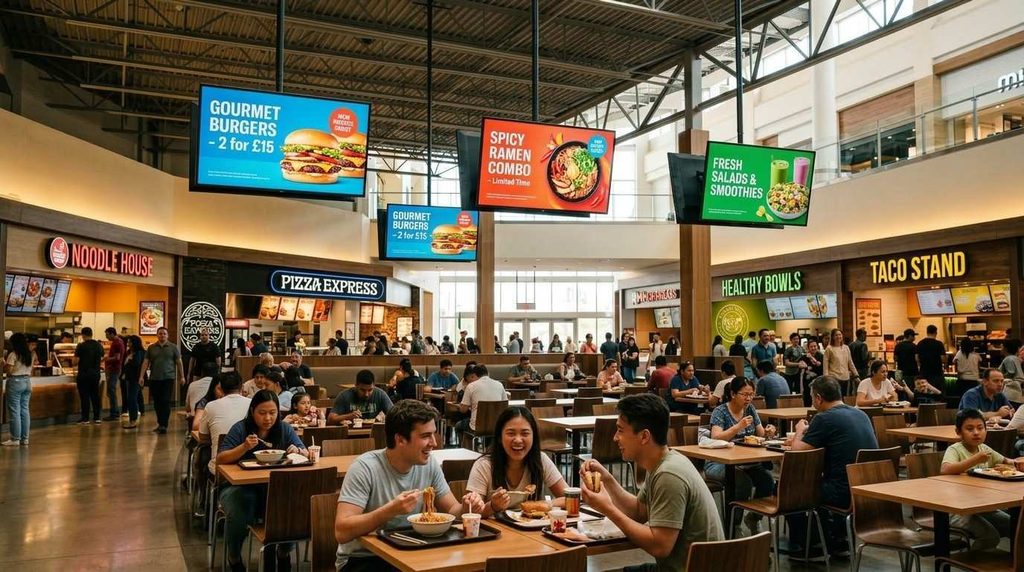
Digital signage software in a shopping mall context handles content scheduling, template management, user permissions, monitoring, and remote updates. Real-time updates prevent customer disappointment during sales events by keeping offers current across every screen. Monitoring and analysing foot traffic can refine the effectiveness of digital signage over time.
Features mall operators and retail businesses should prioritise:
- Multi-screen management with zoning for different mall areas
- Tenant permission roles so partners can upload their own content under approval rules
- Uptime monitoring and alert notifications
- Integration of QR codes to enhance user experience by bridging digital and physical realms
Digital signage creates engagement through videos, interactive kiosks, and dynamic messaging. An effective content mix is typically 40 to 60 percent commercial advertising, with the remainder split between wayfinding, live information (weather, transport, local news), health & safety notices, and seasonal campaigns.
Content design should use bold typography, short headlines, and strong contrast. You can also get advantage from AI powered digital signage to automate the system.
Partnering with Msigns for UK Shopping Mall Digital Signage
We, at Msigns, work with shopping centres, retail parks, and mixed-use developments across the UK.
Our team design, manufacture in our Salford workshop, and install complete shopping mall digital signage ecosystems, from car park entrances to interior wayfinding and tenant promotion screens. Digital signage allows malls to quickly broadcast safety notices and operational updates, and malls can broadcast urgent safety information instantly through our systems.
Our process covers site survey, concept design, content layout, manufacture, professional installation, and ongoing maintenance. A dedicated project manager coordinates every stage.
Contact our digital signage solutions specialists for a consultation and tailored quote.
Frequently Asked Questions
How long does it take to roll out shopping mall digital signage in an existing centre?
Initial consultation and survey typically happen within days. Design, approvals, hardware manufacture, and installation often complete within 1 to 3 weeks for a first phase. Phased rollouts are common, starting with entrances, key wayfinding points, and one video wall before expanding.
Can existing fire and safety systems integrate with digital signage screens?
Many modern CMS platforms receive triggers from building management or fire alarm systems to override normal playlists with evacuation messages. Msigns works alongside mall FM teams and approved fire system contractors to ensure integration meets UK safety regulations.
What budget should we plan for a basic shopping mall digital signage pilot?
Costs vary by screen size, quantity, and enclosure complexity. A small pilot of 3 to 5 indoor screens and one interactive kiosk is a common starting point. Request a tailored quote from Msigns so hardware, software licences, and installation can be costed for your specific site.
How often should we refresh content on shopping mall digital signage?
Core wayfinding content changes only when tenants move or layouts shift. Promotional and brand content should be refreshed weekly or seasonally. Create a content calendar covering sales events, school holidays, Christmas, and Black Friday, then preload campaigns via the CMS scheduler.
Do we need special permissions or planning consent for external digital signs?
Many UK local authorities require Advertisement Consent for external LED screens or large digital totems, particularly on facades or near highways. Msigns can prepare technical drawings and specifications to support planning applications for your centre.