Modern buildings are becoming increasingly complex. Hospitals span multiple wings and floors, universities operate across extensive campuses, corporate headquarters incorporate layered departments, and retail centres house hundreds of outlets. In such environments, intuitive navigation is not a luxury, it is essential. Well-designed wayfinding signs help create a sense of space and orientation for users, making it easier for everyone to find their way. The ability of well-designed signage to improve user experiences is significant, as it enhances navigation confidence and reduces frustration and stress for both employees and visitors.
Poor navigation leads to frustration, missed appointments, delays, and unnecessary pressure on frontline staff. Conversely, well-planned wayfinding signage systems create seamless journeys from the moment a visitor approaches a building to the point they reach their destination.
At Msigns Centre, we understand that signage must be carefully designed, manufactured and installed to suit the specific requirements of each building. As a UK signage specialist providing bespoke interior, exterior and safety signage solutions, we support organisations in delivering clear, compliant and visually consistent navigation systems. Custom wayfinding signs can be tailored to reflect a business’s branding, materials, and design preferences, creating a sense of arrival and a welcoming atmosphere for both visitors and employees. Wayfinding signage also benefits a business by improving productivity, safety, security, and the overall experience within the business premises.
In this guide, we will explore the principles behind effective wayfinding signage, the different types available, design considerations, and performance evaluation methods providing a comprehensive framework for improving customer experience in large buildings.
What is Wayfinding Signage?
Wayfinding signage refers to a coordinated system of visual communication tools designed to help people navigate and orient themselves within a physical space. Its primary purpose is to guide users from one point to another efficiently, safely and with minimal confusion, in large or complex buildings. Comprehensive wayfinding solutions provide clear direction using text, arrows, and universally recognized pictures or icons to streamline navigation for all users.
The effectiveness of wayfinding signage relies on consistency in design, language and placement. Typography, colour coding, symbols and layout must work cohesively to ensure readability and accessibility for all users. In international or multilingual environments, using the local language and/or pictographs is essential to ensure clarity for all users, especially where language barriers may exist. In the UK context, this also means aligning with accessibility standards and inclusive design principles to support people with visual impairments, mobility challenges or cognitive differences.
Wayfinding signage should be designed to be legible for all users, ensuring that every person, including those with disabilities such as blindness or visual impairments, receives clear and accessible information. Wayfinding signs enhances accessibility through features like braille, high-contrast colors, and tactile elements for individuals with disabilities. When designed and implemented correctly, this solution enhances confidence, improves flow and supports a positive overall impression of the organisation behind the environment.
Types of Wayfinding Signs
An effective wayfinding signage system is made up of multiple sign types working together to create a coherent navigation journey. Each category serves a specific purpose within the overall directional signage system, guiding visitors logically from arrival to destination.
Wayfinding signage can be designed as modular or bespoke systems, and can be post, wall, or surface mounted. Options include fingerposts, monoliths, totems, map and information panels, and interpretive signage.
In addition to traditional signage, many organizations now implement a digital wayfinding solution, such as interactive kiosks and smartphone apps, to help visitors and employees navigate complex buildings and locate amenities. Many facilities now use digital wayfinding kiosks and smartphone apps for real-time updates and interactive maps. Digital wayfinding provides interactive maps and directories to help users navigate complex spaces.
Directional Signage
Directional signs are the backbone of any wayfinding signage strategy. Positioned at key decision points such as junctions, corridors, lift lobbies and entrances, these signs provide clear guidance using arrows, text and universally recognised symbols. Clear direction is essential, and incorporating icons and pictographs helps assist diverse user groups, including those in multilingual settings.
In large buildings, directional signage must anticipate visitor movement patterns. Placing directional signs at key decision points helps prevent confusion and streamlines navigation. Signs should be visible from a distance, positioned at eye level, and designed to prevent information overload. In environments such as hospitals or university campuses, directional signage ensures continuous reassurance along the route.
Identification Signage
Identification signs confirm that a visitor has reached their intended location. This form of wayfinding signage includes room numbers, department labels, reception signs and entrance plaques. In high-rise buildings, it is especially important that signage includes clear markings to help identify floor levels and individual flat numbers. This not only improves navigation for visitors but also enhances safety and response efficiency during emergencies, enabling fire-fighters and other responders to quickly locate specific floors and flats even in challenging conditions.
Consistency in typography, colour and material strengthens both navigation and brand identity. Clear identification signage reduces hesitation and reinforces confidence, particularly in multi-storey or departmentalised buildings.
Informational Signage
Informational wayfinding signage helps visitors orient themselves within a wider space. Examples include building directories, floor plans, campus maps and estate boards. Boards can also serve as informational or digital display panels that provide wayfinding, directory, and status information within an office or public space. These signs are typically placed near entrances or central hubs.
Well-designed informational signage supports cognitive mapping — allowing users to visualise their route before proceeding. Increasingly, digital wayfinding displays are used to provide real-time navigation and interactive search functionality. Digital displays, such as touchscreens, serve as a central and accessible interface for users to interact with digital wayfinding solutions. Informational signage provides general information such as maps and operating hours. Orientation signs often include large, centralized maps that feature a ‘You are Here’ marker to help users understand facility layouts.
Why are the Wayfinding Signs Necessary? Key Benefits
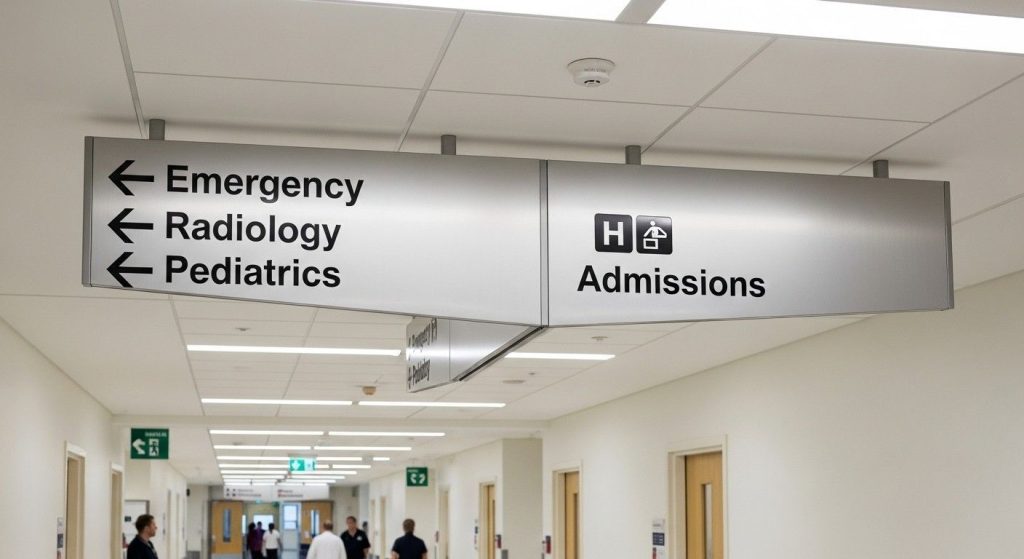
In large buildings, clear navigation directly influences operational efficiency, visitor satisfaction and brand perception. Wayfinding signs also help users track their progress and confirm their position along a route, ensuring they can navigate the premises confidently and efficiently.
Improves Customer Experience
Visitors entering complex environments often experience stress, particularly in healthcare facilities, government buildings or large commercial spaces. Bespoke signage helps clients and visitors navigate the premises easily and efficiently during their visit, while also creating a welcoming atmosphere for both visitors and employees. Clear, consistent signage reassures users at every stage of their journey.
Effective wayfinding signage reduces confusion, prevents missed appointments and creates a smoother visitor flow. When individuals can navigate independently, their overall experience improves significantly.
Increases Operational Efficiency
Poor navigation often results in frequent interruptions to staff. Reception teams and frontline employees regularly spend time providing directions when wayfinding signage is inadequate. A well-designed navigation system reduces these interruptions, allowing staff to focus on core responsibilities.
In large organisations, improved visitor flow also minimises congestion in corridors, lift areas and waiting spaces, supporting more efficient building operations.
Strengthens Brand Perception
Professional wayfinding signs contribute to a coherent and organised environment. Consistent typography, colour schemes and materials reflect brand identity and reinforce credibility.
In commercial settings, navigation systems influence first impressions. A building that is easy to navigate appears well managed and customer-focused, strengthening trust in the organisation.
Enhances Safety and Compliance
In emergency situations, clear wayfinding signage supports safe evacuation and compliance with UK fire safety regulations. Well-designed signage can also assist fire and rescue services in navigating buildings during emergencies, especially in low visibility conditions. Properly positioned exit signs and escape route indicators are critical in protecting occupants. It is essential to implement fire safety measures and maintain security by ensuring clear evacuation routes and signage are in place.
Beyond emergency scenarios, accessible and inclusive signage ensures compliance with the Equality Act 2010 and supports diverse user needs.
Designing a Signage System: Accessibility and Inclusion
Large buildings attract diverse audiences, including individuals with visual impairments, reduced mobility, neurodiverse conditions, and those for whom English is not a first language. A well-planned wayfinding signage system considers these varied needs from the outset. Using the local language, or multiple languages, and tactile elements such as braille and raised lettering, further enhances accessibility for a wide range of user groups.
Clarity and Legibility
Clear typography is essential in accessible wayfinding signs. Sans-serif fonts, appropriate letter spacing and sufficient character height improve readability from a distance. High contrast between text and background enhances visibility, particularly for partially sighted users.
Consistent terminology throughout the building prevents confusion. Departments and facilities should be labelled in simple, universally understood language.
Visual Hierarchy and Colour Coding
Structured information hierarchy is central to inclusive wayfinding signage. Primary information should be immediately distinguishable from secondary details. Colour coding can help users differentiate zones, floors or departments, supporting intuitive navigation.
However, colour should never be the sole method of conveying information. Text and symbols must reinforce meaning for those with colour vision deficiencies.
Tactile and Braille Signage
Incorporating tactile elements and Braille is an important component of accessible wayfinding signs in many public buildings. Raised lettering and tactile symbols enable independent navigation for visually impaired users.
Placement is equally important. Signs must be positioned at consistent heights and accessible locations in accordance with best practice guidance.
Compliance with UK Standards
Inclusive wayfinding signs must align with the Equality Act 2010 and relevant guidance such as BS 8300. Compliance not only reduces legal risk but demonstrates a commitment to inclusivity and responsible design.
By prioritising accessibility, organisations create environments that are easier to navigate for everyone. Thoughtfully designed wayfinding signs enhance dignity, independence and confidence — while reinforcing a professional and socially responsible brand image.
Interior vs Exterior Wayfinding: What’s the Difference?
Internal wayfinding signage is designed for indoor spaces, while external solutions are tailored for outdoor environments, highlighting the versatility required for effective directional branding. Understanding this distinction is essential when planning a cohesive navigation strategy for large buildings.
Exterior Wayfinding Signage
Exterior wayfinding signage is responsible for guiding visitors from the surrounding environment to the building entrance. This includes site entrance signs, directional road signs, car park signage, pedestrian guidance and freestanding totems.
At this stage of the journey, clarity and visibility are critical. Signs must be readable from greater distances and at varying speeds, particularly where vehicles are involved. Effective signage and lighting solutions are essential for safety and navigation at night, ensuring visibility and guidance after dark. Exterior wayfinding signage must also withstand weather exposure, UV radiation and temperature fluctuations typical of the UK climate. When selecting materials for exterior signage, it is important to choose weather resistant options to ensure durability and longevity in all conditions.
Consistent branding at the exterior level establishes the first impression. Well-designed external signage reassures visitors that they are in the correct location before they even enter the building.
Interior Wayfinding Signage
Internal wayfinding signage is specifically designed for indoor environments, supporting navigation through corridors, stairwells, and departmental zones. Examples include suspended directional signs, wall-mounted indicators, floor directories and room identification plaques.
Inside the building, signs are typically viewed at closer range, allowing for more detailed information. However, clarity and hierarchy remain essential. Interior wayfinding signs should guide users progressively, offering reassurance at every decision point.
Wayfinding Signage Considerations
Designing an effective wayfinding signage system requires more than attractive graphics. It demands careful planning, spatial awareness, and a clear understanding of user behaviour within the building environment. Proper lighting is essential to enhance the visibility and readability of wayfinding signs, ensuring users can navigate safely and efficiently in all conditions.
Materials
Common materials used in wayfinding signs include acrylic, aluminium, stainless steel, timber, vitreous enamel, and high-quality vinyl. Each has unique advantages:
- Acrylic offers a sleek, modern appearance and can be easily cut into precise shapes.
- Aluminium is lightweight, durable and suitable for both indoor and outdoor applications.
- Stainless steel provides a premium look and high corrosion resistance, ideal for high-traffic areas.
- Timber adds a natural aesthetic and can be treated for outdoor use.
- Vitreous enamel is highly durable and resistant to fading, making it suitable for harsh environments.
- Vinyl is versatile for floor graphics, temporary signage, or digital overlays.
Selecting materials should also consider environmental factors, particularly for exterior signage exposed to rain, wind, and UV light. Using weather resistant materials such as aluminium, stainless steel, timber, and vitreous enamel ensures durability and longevity in various weather conditions.
Building Layout and Traffic Flow
The physical layout of a building significantly influences how wayfinding signs should be structured. High-traffic areas, junctions, lift lobbies and stairwells represent critical decision points where clear guidance is essential.
Observing how people naturally move through a space allows signage to be positioned strategically. Effective wayfinding signs anticipate confusion before it occurs, reducing hesitation and unnecessary backtracking.
Information Hierarchy
Clarity depends on hierarchy. Not all information should be presented at once. Instead, wayfinding signage should follow a progressive disclosure model — delivering only the information required at each stage of the journey.
Primary destinations should be prioritised, while secondary details can be introduced as visitors move closer to their target location. This structured approach prevents visual clutter and cognitive overload.
Consistency and Branding
Consistency is fundamental to successful wayfinding signage. Uniform typography, colour schemes and materials reinforce recognition and build trust. Inconsistent messaging or visual variation can create doubt and disrupt the user experience.
Brand integration is also important. While navigation must remain clear and functional, it should align with corporate identity guidelines to create a cohesive environment. Wayfinding signs and lighting can be designed reflecting a company’s branding elements, such as colors and logos, to reinforce brand identity and enhance the overall aesthetic.
Future-Proofing and Flexibility
Large buildings often evolve over time. Departments relocate, new facilities are introduced and branding may be updated. Modular wayfinding signage systems allow for cost-effective updates without complete replacement.
Fire Safety and Regulatory Compliance
In England, it is a legal requirement for all high-rise residential buildings to implement wayfinding signs as of January 23, 2023, and for all new multi occupied residential buildings above 11 metres. Clear signage can save lives during emergencies, while ensuring organisations meet legal obligations under UK law.
All public and commercial buildings in the UK must comply with fire safety regulations, including the Regulatory Reform (Fire Safety) Order 2005. This requires that escape routes and exits are clearly marked and illuminated. In high-rise buildings, wayfinding signs must include clear markings identifying floor and individual flat numbers, especially on each stairwell landing, to assist residents and emergency responders. Signage should be visible in both normal and low lighting or smoky conditions to ensure effective evacuation and response. There is also an ongoing duty to implement and maintain indoor wayfinding signs throughout the life of the building, as required by the Fire Safety Order.
Signs must meet British Standards, such as BS 5499, which outline specifications for size, colour, legibility, and placement. Photoluminescent signs are often used to provide visibility in low-light conditions or during power outages.
Evaluation and Performance Metrics
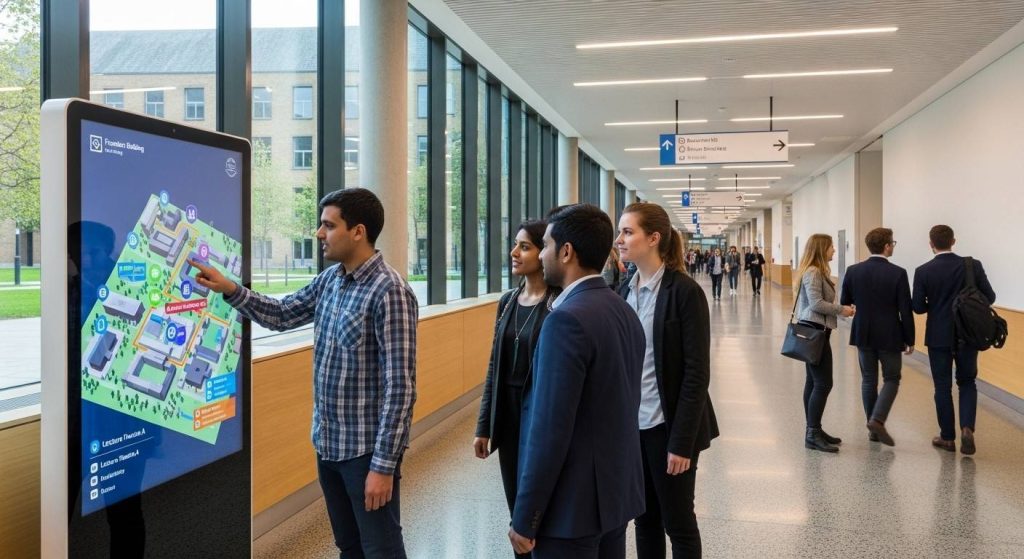
Evaluation provides insight into navigation success, identifies areas for improvement, and justifies investment in professional signage systems. Part of the evaluation process is to ensure that signage continues to provide information clearly and effectively to all users. Additionally, a variety of resources, such as evaluation tools and reference materials, are available to support ongoing assessment of wayfinding signage effectiveness.
Navigation Success Metrics
One way to assess wayfinding signage is through navigation success metrics. These measure how efficiently visitors reach their destinations, tracking indicators such as:
- The number of wrong turns or backtracking events
- Time taken to reach specific locations
- Frequency of staff assistance requests
High navigation success indicates that signage is clear, strategically placed, and user-friendly.
User Wayfinding Tests
Practical testing with real users provides invaluable feedback. Observational studies, journey mapping, and scenario-based trials help evaluate whether signs are intuitive and visible. Small adjustments in placement, font size, or colour coding can significantly enhance overall effectiveness.
Post-Installation Feedback
Collecting feedback after installation ensures continuous improvement. Visitor surveys, staff input, and comment logs highlight areas where wayfinding signs may need refinement. Regular review cycles help maintain performance as building layouts or usage patterns change.
Enhance Visitor Experience with Msigns
At Msigns, we specialise in designing, manufacturing, and installing bespoke wayfinding solutions tailored to the needs of clients and visitors for large buildings — from hospitals and universities to corporate offices and retail centres.
Our expert team works closely with you to create a seamless navigation system that reflects your brand, supports accessibility, and guides visitors intuitively. Whether you need interior, exterior, or digital wayfinding solutions, Msigns provides end-to-end project management to deliver professional, durable, and compliant signage.
Contact Msigns today to discuss your wayfinding signage requirements and discover how our solutions enhance the experience for all who visit your premises, helping clients and visitors navigate confidently, safely, and efficiently.