Every business relies on signs to communicate. Whether it is a shopfront display, event signage, or indoor branding, the right choice can influence how prospective customers perceive your brand. Yet many small businesses in the UK struggle to decide between custom signs and standard signs.
The difference goes beyond design. It affects visibility, branding, cost, and long-term value. A poorly chosen sign can fail to communicate your message, while a well-designed one can create a strong impression and attract customers.
Custom signs are tailored to your business. They reflect your brand colours, logo, and overall identity. Standard signs, on the other hand, are ready-made solutions often used for safety or temporary signage. Both have their place, but choosing the right option depends on your goals, budget, and location.
Custom signs can be made from a variety of materials including acrylic, wood, and metal, allowing for a wide range of applications from indoor to outdoor use. This flexibility makes them suitable for businesses that want to stand out in a competitive environment.
In this guide, we will explore the pros and cons of each option and help you decide when to use them. At Msigns, our aim is simple: to help your business communicate clearly, look professional, and make the most of your signage investment.
What Are Custom Signs?
Custom signs are designed and produced specifically for your business. They are not taken from a template. Instead, every detail is created to match your branding, message, and environment.
Businesses often choose custom signs when they want full control over how they present themselves. From sign design to material selection, everything can be customised. You can create custom signs using acrylic signs, metal surfaces, foam boards, or other high quality materials depending on your needs.
Custom signs can be personalised by selecting materials, colours, shapes, and adding text or graphics, allowing for a unique design tailored to individual needs. This means your signage becomes part of your brand identity rather than just a functional display.
For example, shop signs are one of the most common types of custom signage. They are designed to reflect brand colours, fonts, and logo placement. A well-designed outdoor business sign can improve visibility and attract foot traffic, especially in busy locations.
Types of Custom Signs for Business
1. Custom Wall signs:
Custom wall signs are a cost-effective way to enhance brand visibility and make a strong first impression in commercial spaces. They are often used indoors but can also be adapted for outdoor use. Wall signs can serve multiple purposes, including promotional, instructional, and directional, making them versatile tools for communication in any business environment.
Strategically placed wall signs in high-traffic areas, such as reception and main entrances, can significantly enhance the visitor experience and guide them effectively through a space.
2. Custom Banners:
Banners are one of the most popular and versatile types of custom signs, typically lasting between 2 to 5 years depending on environmental conditions. They are often used for promotional purposes due to their flexibility and cost-effectiveness.
3. Illuminated signs:
Illuminated signs provide 24/7 visibility, making them an excellent choice for businesses that operate in the evening or want to maintain a strong presence at all times.
4. Custom Outdoor Signs:
Outdoor signs must withstand weather conditions such as rain, wind, and sun exposure. Outdoor signs should be UV-resistant and may feature anti-graffiti coatings. Coastal areas require the use of corrosion-resistant materials for signs due to environmental factors.
Considerations while Creating Custom Signs Design
When designing custom signs, it is recommended to keep messages simple and concise, as large signs are not suitable for long, complex information. Signs with seven words or fewer are often most effective. Using high-contrast designs and bold fonts can enhance the visibility and readability of custom signs, making them more effective in conveying messages.
Materials also play a key role in personalised signs. Acrylic provides a premium look and is commonly used for indoor branding or illuminated signs. Aluminium is durable and rust-resistant, making it ideal for long-term outdoor use. Aluminium Composite Material (ACM/Dibond) is popular for its durability and weather resistance in outdoor signs.
Custom signage gives businesses the ability to create their own signs aligned with their brand. Companies looking to build long-term visibility and credibility invest in personalised signs.
What Are Standard Business Signs?
Standard signs are pre-designed signage products that are ready to purchase and use with minimal or no changes. They are often produced in bulk and follow common formats, making them a practical choice for businesses that need quick and cost-effective solutions.
These signs are widely used across different industries for safety, compliance, and basic communication. Common examples include safety signs, directional signs, instructional signs, and simple open or closed displays. Instructional signs are a specific type of custom sign designed to convey important information, such as rules or guidelines, in a clear and concise manner, but they are often available in standard formats to meet regulations.
In terms of materials, standard signs are usually made from common options such as vinyl, plastic, or lightweight boards. Foamex is suitable for temporary signs and is among the options for outdoor materials. These materials are practical for short-term use but may not offer the same durability as more premium alternatives.
Outdoor and Indoor Uses
For outdoor use, standard signs still need to meet certain requirements. Outdoor signs must withstand weather conditions such as rain, wind, and sun exposure. However, they are often less durable than fully customised solutions and may need to be replaced more frequently.
Standard signs are also used in indoor signage where branding is less important. For example, back-of-house areas, storage spaces, or staff-only zones often rely on simple, functional signs rather than personalised designs.
While they may lack the visual impact of custom signs, standard signs serve a clear purpose. They are reliable, accessible, and effective for straightforward communication. Businesses that need quick, compliant, and low-cost signage often find them to be the right choice.
Pros and Cons of Custom Signs
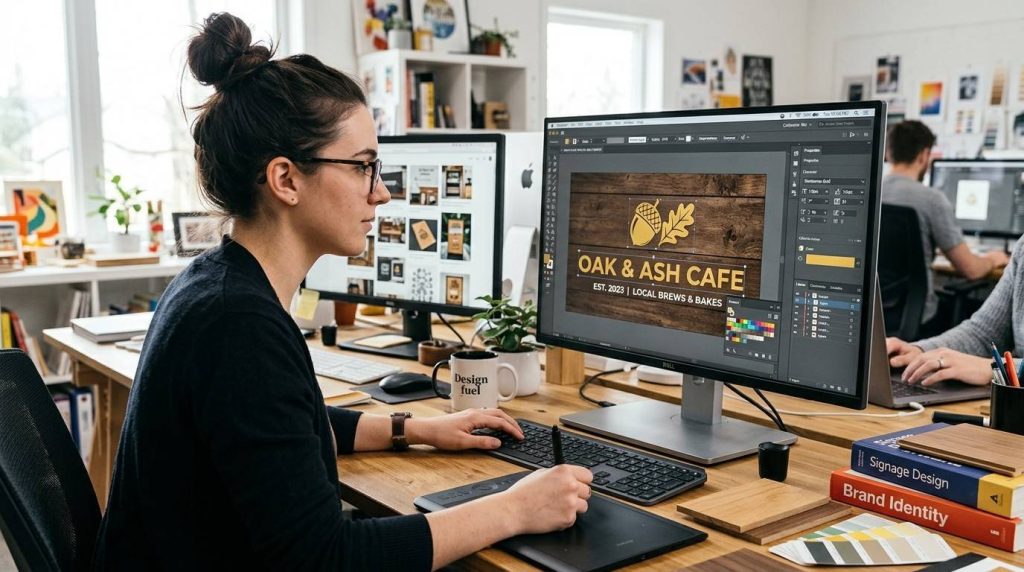
Custom signs offer flexibility and creative control, but they also require more planning and investment. Understanding both sides helps you decide whether they are the right fit for your business.
Advantages of Custom Signs
Custom signage allows the businesses to communicate a clear identity through colour, fonts, and layout. When your signage reflects your logo and brand colours, it creates consistency across your shop, website, and promotional materials. This consistency builds trust with customers and helps your business stand out.
Versatility
Custom signs UK can be designed for indoor signage or outdoor use, depending on your requirements. Whether you need shop signs, wall signs, or event signage, you can tailor every detail to suit your location and audience. This flexibility is especially useful for businesses in competitive areas where first impressions matter. Thoughtful business signage ideas that improve visibility and brand recall can make a measurable difference.
Durability & Choice of Material
Custom signs can be produced using high quality materials such as acrylic, aluminium, and composite panels. Common outdoor sign materials include Aluminium, Acrylic, Vinyl, and Wood. This wide range allows businesses to choose options that are durable and suitable for their environment.
For example, Aluminium is durable and rust-resistant, making it ideal for long-term outdoor use. Aluminium Composite Material (ACM/Dibond) is popular for its durability and weather resistance in outdoor signs. These materials ensure that your signage remains effective even in harsh conditions.
Better Visibility through Custom Sign Printing
Custom signs also provide better visibility. Using vibrant colours, bold fonts, and high-contrast designs helps your message stand out. This is particularly important for attracting prospective customers in busy locations. Illuminated signs provide 24/7 visibility, which can significantly improve your business presence during evenings and darker months in the UK.
That’s how, custom signs support long-term value. While the upfront cost may be higher, they are often more durable and aligned with your branding strategy. This means fewer replacements and a stronger return on investment over time.
Disadvantages of Custom Signs
Despite their benefits, custom signs do come with some drawbacks. The most noticeable is cost. Creating a fully customised design, selecting premium materials, and producing the final product can require a larger initial investment compared to standard signs.
Time is another factor. Custom signs involve a process that includes design, approval, production, and installation. This means they are not suitable for urgent needs where signage is required immediately.
There is also a need for decision-making. Businesses must consider design elements such as fonts, colour schemes, and layout. Without proper planning, the final result may not communicate the intended message effectively.
Practical considerations should also be taken into account. Signs larger than 0.3 square metres usually require planning permission from local councils. This can add time and complexity to the project, particularly for outdoor signs in busy or regulated areas.
Environmental factors can also influence the outcome. Outdoor signs should be UV-resistant and may feature anti-graffiti coatings. Coastal areas require the use of corrosion-resistant materials for signs due to environmental factors. Choosing the wrong materials can reduce the lifespan of your signage.
Overall, custom signs are best suited for businesses that want to invest in long-term branding and visibility. They require more effort and budget, but they offer a level of quality and impact that standard options cannot match.
Pros and Cons of Standard Signs
Standard signs are widely used across the UK because they are practical, accessible, and easy to deploy. While they may not offer the same level of branding as custom signs, they serve an important role in many business environments.
Advantages of Standard Signs
Standard signs are available in a wide range of formats, including lightweight signs, magnetic signs, and foam boards. Foamex is suitable for temporary signs and is among the options for outdoor materials, making it a practical choice for short-term outdoor use. Common advantages include:
Cost
They are mass-produced, which makes them far more affordable than custom signs. For small businesses or start-ups managing limited budgets, this can be a sensible way to cover essential signage needs without overspending.
Ease of Use
Standard signs are ready to use, which means there is no waiting time for design or production. This is particularly useful for temporary signage, short-term promotions, or urgent requirements such as safety updates or operational changes.
Compliance
Many industries are required to display safety signs that follow specific guidelines. These include fire exits, hazard warnings, and instructional notices. Using pre-approved formats ensures that businesses meet legal requirements without the need for additional design work. Safety compliance for signage must include meeting local codes, following Health and Safety Regulations 1996 (do-follow) especially for electrical signs.
Simplicity
Standard signs are designed to communicate clear messages quickly. This is useful in environments where clarity matters more than branding, such as warehouses, construction sites, or staff-only areas.
Disadvantages of Standard Signs
The main limitation of standard signs is the lack of branding. Unlike custom signs, they do not reflect your business identity. This means they do little to support brand recognition or create a memorable impression for customers.
Standard signs can also appear generic. In competitive retail or hospitality environments, this can make a business look less professional compared to those using custom signage. When multiple shops use similar signage, it becomes harder to stand out.
Durability can be another concern. While some standard signs are suitable for outdoor use, they are often made from lower-cost materials. Outdoor signs must withstand weather conditions such as rain, wind, and sun exposure, but standard options may not last as long as customised alternatives made from premium materials.
There is also limited flexibility. Businesses cannot easily adjust the design, size, or message to suit specific needs. This can be restrictive, especially when trying to communicate unique offers, branding elements, or location-specific information.
In terms of long-term value, standard signs may require more frequent replacement. While the initial purchase cost is low, repeated replacements can increase overall expenses over time. Standard signs are best suited for functional purposes rather than branding. They work well for safety, compliance, and temporary use, but they are not designed to create a strong visual identity.
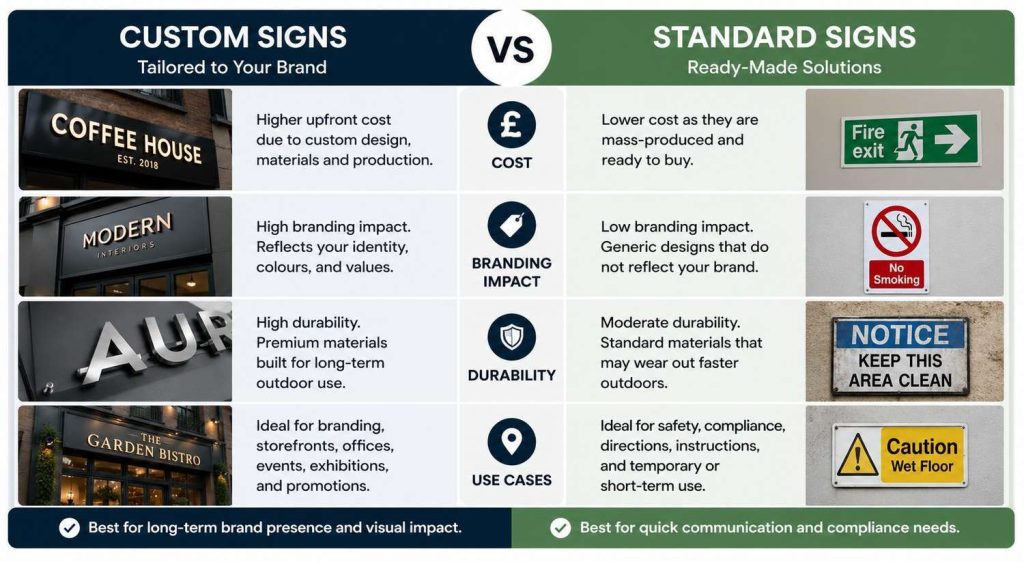
When to Use Custom Signs vs Standard Signs?
Understanding when to use each type of signage is often more important than comparing features. In real business environments, both custom signs and standard signs solve different problems. The right choice depends on purpose, visibility needs, and how much branding matters in that context.
Use Cases for Personalised Signs
Custom signs are best used when branding, visibility, and customer perception are priorities. They are designed to communicate identity as much as information, which makes them suitable for customer-facing environments.
- One of the most common use cases is shop signs. Retail businesses use custom signs to attract prospective customers and create a strong first impression. A well-designed shop sign reinforces brand colours, logo placement, and typography, helping a business stand out on busy high streets.
- Another key use case is indoor signage in offices, reception areas, and commercial spaces. Custom wall signs are a cost-effective way to enhance brand visibility and make a strong first impression in commercial spaces. These are often placed strategically in high-traffic areas such as entrances or waiting areas, where they guide visitors and reinforce professionalism, turning workplaces into powerful branded interiors.
- Custom signs are also widely used in event signage and trade show environments. At exhibitions, businesses rely on large format print products, banners, and display boards to communicate messages quickly. In these settings, visual impact is critical because visitors make decisions in seconds.
- Outdoor branding is another strong use case. Businesses often use weather resistant options
like aluminium, acrylic, or composite materials for long-term installations. Illuminated signs provide 24/7 visibility for roadside businesses or locations that operate in the evening. - Custom signage is also important for promotional campaigns. In store promotions, seasonal displays, and product launches often use customised graphics in bright colours to capture attention. These signs are designed to align with marketing messages and change depending on campaigns.
- Instructional signs can also be customised when businesses need specific communication that goes beyond standard templates. This is useful in environments where clarity and branding must work together.
Overall, custom signs are used when a business needs statement signage and wants the control over messaging, design, and client perception.
Use Cases for Standard Signs
Standard signs are used primarily for function, compliance, and quick communication. They are not designed for branding but for clarity and efficiency, which is why many businesses rely on comprehensive signage services from design to installation to balance functional and branded needs.
- The most common use case is safety signage. Safety signs are essential in workplaces, construction sites, and public buildings. They communicate hazards, fire exits, emergency procedures, and legal requirements. Safety compliance for signage must include meeting local codes, especially for electrical signs, making standard formats the preferred choice.
- Standard signs are also widely used for temporary signage. This includes short-term notices, construction updates, or maintenance alerts. Foamex is suitable for temporary signs and is among the options for outdoor materials, making it practical for short-term outdoor use.
- Directional signage is another important use case. In large buildings such as hospitals, warehouses, or shopping centres, standard signs help guide people efficiently without the need for customised design.
- One of their indoor use is back-of-house communication. Staff-only areas, storage rooms, and operational zones often rely on simple, clear signage rather than branded visuals.
- Standard signs are also used for basic retail communication such as “Open/Closed” signs or simple notices. These signs do not require design flexibility and are meant to deliver quick information.
- Standard signs are used as temporary event signage when businesses need quick signage solutions without design delays. However, they are typically replaced by custom signage for more important or customer-facing displays.
Standard signs are used when businesses need to comply with regulations quickly without investing in design or production time. They ensure legal requirements are met while keeping costs low.
Let Msigns Be Your Trusted Partner for Custom and Standard Signage UK
If you are deciding between custom signs and standard signs, the right choice often comes down to experience, material guidance, and proper execution.
At Msigns, our sign experts help businesses across the UK choose, design, and produce custom business signs and digital signage that actually work in real environments, whether that is a shopfront, office interior, or outdoor installation. With years of experience and thousands of happy customers, we can take your visibility to next level.
From custom signage that strengthens branding to practical safety signs that meet compliance requirements, our signage solutions and customised services combine clarity, durability, and impact. Every project is handled with attention to materials, placement, and visibility so your message is communicated effectively from every angle.
If you are planning your next signage project, whether for branding, promotion, or compliance, Msigns can turn your ideas into life. Get in touch with our team or explore the full range of our signage solutions.