UK Businesses are adopting digital signage rapidly to improve communication, increase customer engagement, and deliver targeted promotions.
However, the results businesses achieve depend on the digital signage companies they choose. Some providers focus only on hardware such as digital screens, while others specialise in digital signage software or cloud platforms. The most effective partners deliver a complete digital signage solution that combines reliable displays, installation service, and ongoing support.
At Msigns, we work with organisations across the UK to design tailored digital signage systems that align with real business needs. From digital menu boards and video walls to interactive kiosks and high brightness displays, our goal is to help clients create engaging communication environments that strengthen customer satisfaction and brand presence.
In this guide, we explain what businesses should know about digital signage companies, including hardware & software capabilities, content strategy, installation services, and long term support before investing in this technology.
Understanding Hardware Options Used By Digital Signage Companies
Hardware is often the first element businesses notice when exploring digital signage.
Screens, video walls, and interactive kiosks are the visible components that communicate with customers and employees every day. Yet selecting the right hardware involves more than choosing attractive digital displays. Businesses must ensure that their system can support reliable content delivery, operate continuously, and scale across multiple locations.
Professional digital signage companies normally provide commercial grade electronic displays designed for heavy use. Unlike standard consumer televisions, these screens are built to operate for extended hours, sometimes twenty four hours a day. This reliability is essential in environments such as retail stores, transportation hubs, and healthcare facilities where digital screens play an important role in communication.
Types of Digital Displays Used in Modern Signage Systems
Different industries require different digital signage displays, and companies usually offer a wide range of hardware options. Choosing the correct type of display helps ensure that messages reach the intended audience effectively.
Common display formats include:
- Commercial LCD and LED screens used in retail environments, offices, and hospitality venues
- Video walls that combine multiple screens to create large visual displays for high-impact communication
- Interactive kiosks and touchscreens that allow customers to interact with content or access services
- Window facing displays designed to attract attention from outside a location
- Digital menu boards commonly used in restaurants and quick service venues
These display types allow businesses to communicate dynamic messages, promotional content, and real time updates across multiple screens. By combining different formats within the same digital signage solution, organisations can create more engaging communication environments.
Choosing the Right Screen Size and Configuration
Screen size is another important consideration when evaluating digital signage companies. The size of the display should always match the viewing distance and location environment.
For example:
- Small displays may work well near checkout areas or meeting rooms
- Medium sized screens are common in retail aisles and reception spaces
- Large digital screens or video walls are often used in public spaces or shopping centres where visibility from a distance is required
When businesses operate across several sites, consistency becomes important. Many digital signage companies recommend standardising screen sizes across locations so that digital signage content appears consistent and easier to manage through a central content management system.
Mounting Options and Physical Installation
The physical placement of digital screens directly affects visibility and engagement. A well planned mounting approach ensures that digital displays integrate naturally with the surrounding environment.
Digital signage companies typically offer several mounting options:
- Wall mounted screens for retail promotions or internal communications
- Ceiling mounted displays in large public areas
- Freestanding kiosks that support interactive features
- Window mounted screens used for advertising and promotions
Installation planning is an important stage of the process. Professional providers usually perform a site survey to analyse viewing angles, power access, network connectivity, and overall placement strategy before installing digital displays.
Media Players and System Connectivity
Behind every digital screen is a media player that connects the display to the digital signage software. This device processes content and ensures that video, images, and live data appear correctly on the screen.
Many digital signage companies use dedicated media players such as those produced by BrightSign, which are widely recognised for reliability in commercial environments. These devices ensure smooth content delivery and support integration with content management systems and third party applications.
Reliable connectivity also enables screens to be updated remotely. Businesses can update digital signage content across multiple displays instantly through a cloud based platform, allowing messages to change quickly when promotions, announcements, or other messages need to be communicated.
Hardware Compatibility with Digital Signage Software
A key factor businesses should evaluate when choosing digital signage companies is compatibility between hardware and software. A modern signage system should allow screens, media players, and the content management system to operate seamlessly together.
Many organisations now prefer hardware agnostic platforms because they allow different display types to work within the same digital signage network. This flexibility enables businesses to expand their system gradually while maintaining centralised control over content delivery.
When hardware and software are designed to work together, businesses gain the ability to update screens instantly, deliver targeted messages, and manage multiple displays across different locations without complex processes.
High Brightness Displays for Outdoor and Window Environments

Not all digital screens perform well in bright environments. Standard indoor displays often struggle when exposed to direct sunlight or strong ambient light, which can make important messages difficult to read. This is why many digital signage companies recommend high brightness displays for shop windows, outdoor signage, and locations with heavy natural light.
Why Brightness Levels Matter
Brightness is measured in nits, and the difference between standard screens and high brightness displays can be significant.
Typical brightness ranges include:
- 300 to 700 nits for standard indoor digital signage displays
- 1000 to 1500 nits for bright indoor environments such as window displays
- 2500 to 4000 nits or higher for outdoor digital signage
When digital signage companies design a signage system, they assess the surrounding lighting conditions before recommending specific displays. Without the correct brightness level, even well designed digital signage content may lose its impact.
Protecting Displays in Outdoor Locations
Outdoor digital signage requires more than just bright screens. Digital signage displays installed outside or in exposed environments must be protected from weather, temperature changes, and potential damage.
Digital signage companies often recommend additional protective solutions such as:
- Weather resistant enclosures to protect screens from rain and dust
- Temperature control systems to prevent overheating or freezing
- Anti vandal housings for public environments
- Protective glass to maintain visibility while safeguarding the display
These protective measures help maintain performance and extend the lifespan of the hardware. Businesses that install outdoor digital displays like billboards without proper protection may face higher maintenance costs and reduced reliability.
Digital Signage Software: The Core of Every System
While screens and hardware attract the most attention, the real power behind modern signage systems comes from the software. Digital signage software controls what appears on digital displays, when it appears, and where it is shown. Without a reliable platform managing content delivery, even the most advanced digital screens cannot perform effectively.
To understand how these platforms work in practice, explore our in-depth guide on digital signage software, covering key features and selection criteria for modern deployments.
Most digital signage companies focus heavily on software development because businesses need flexible tools to stay in digital signage trends and manage content across multiple locations. A well designed digital signage solution allows organisations to update screens instantly, automate campaigns, and deliver targeted messages to different audiences.
Modern platforms also allow businesses to integrate digital signage with existing processes such as marketing campaigns, internal communications, or customer information systems. When digital signage software is implemented correctly, it enables organisations to streamline communication and ensure consistent messaging across multiple screens and sites.
Content Management Systems for Digital Signage
At the centre of most systems is a content management system (CMS). This platform allows users to manage digital signage content from a central dashboard and control what appears across multiple displays.
A centralised CMS provides several important capabilities:
- Scheduling digital signage content for specific times or dates
- Managing content across multiple screens and locations
- Updating screens instantly from a cloud based platform
- Delivering targeted messages based on location or audience
- Integrating multimedia formats including video, images, and live data
The main advantage of a CMS is simplicity. A user friendly platform enables teams to create, schedule, and update digital signage content without advanced technical knowledge. Many digital signage companies design their software so that marketing teams, store managers, or communications staff can manage displays easily.
Centralised control is particularly valuable for businesses operating across many sites. Instead of updating individual screens manually, organisations can manage content delivery across their entire network from one platform.
Cloud Based Platforms and Remote Management
The industry has moved strongly towards cloud based platforms, allowing digital signage systems to be managed from anywhere. Businesses can update screens across different locations using a web interface without needing to be physically present.
Key advantages of cloud based digital signage software include:
- Remote control of digital screens across multiple sites
- Real time content updates for promotions or announcements
- Automatic scheduling and campaign automation
- Centralised management of multiple displays
This approach has made digital signage far more scalable. Businesses can begin with a few screens and expand their network gradually while keeping the same management system.
Many digital signage companies now offer Software as a Service models that provide continuous updates and improvements. These platforms ensure that businesses always have access to the latest features without complex upgrades.
Leading Digital Signage Software Platforms
Several well known platforms illustrate how digital signage software continues to evolve. Many digital signage companies integrate or support these tools depending on the needs of their clients.
Examples often used in the industry include:
- Signagelive, known for scalable enterprise digital signage solutions designed for organisations with complex networks
- NowSignage, recognised for its ease of use and programmatic advertising capabilities in retail environments
- ScreenCloud, which integrates with more than 80 third party applications and turns digital screens into real time dashboards
- PosterBooking, a platform offering a free tier suitable for smaller networks and budget conscious users
In addition to independent platforms, hardware manufacturers also provide software ecosystems. Samsung Electronics, for example, offers SMART Signage displays combined with the MagicINFO content management system built on the Tizen operating system.
Digital signage companies often evaluate several platforms before recommending the best option for a client. The final choice usually depends on the organisation’s business needs, scale, and technical requirements.
Software Integration and Real Time Content
Modern digital signage software goes beyond simple content playback. Many platforms integrate with third party applications, mobile devices, and live data sources. This allows businesses to display real time updates, performance dashboards, and personalised messages.
Common integrations include:
- Social media feeds for live engagement
- Weather and news updates for public information
- Sales dashboards and operational metrics
- Queue management systems in healthcare environments
- POS systems used in retail and restaurant settings
These integrations allow businesses to deliver real time content updates and create more engaging communication experiences. Real time messaging also ensures that digital signage remains relevant throughout the day.
Advanced analytics are another emerging feature. Many digital signage companies now provide reporting tools that measure content performance, audience engagement, and screen activity. These insights help organisations refine their messaging and improve campaign results.
When evaluating digital signage companies, businesses should prioritise software that is intuitive, scalable, and compatible with existing systems. A strong digital signage platform should enable organisations to manage screens easily, integrate with other processes, and deliver dynamic messages that keep audiences engaged.
Digital Signage Content Creation Services
Digital signage content is the foundation of a system’s impact, influencing customer engagement, sales, and brand perception. Many businesses underestimate the effort required to produce professional content that resonates with audiences.
Digital signage content can range from simple static visuals to complex animations and interactive experiences. It must be designed to capture attention, convey information quickly, and reflect the brand identity consistently. Well-crafted content not only improves customer satisfaction but also enhances the effectiveness of the overall digital signage solution.
Template-Based Content Packages
Some businesses benefit from pre-designed content templates, which allow rapid deployment of digital signage campaigns without needing extensive design skills. Digital signage companies often provide template-based packages that include:
- Professionally designed layouts for promotions, menus, and announcements
- Pre-configured content for seasonal campaigns or recurring messaging
- Easy-to-edit placeholders that enable teams to update text, images, and pricing without specialised software knowledge
These packages are ideal for organisations seeking a cost-effective way to manage multiple displays and deliver messages quickly. Even with templates, the content is optimised for multiple screens, ensuring that messaging is visible and impactful across various locations.
Bespoke Creative Content Services
For businesses aiming to stand out, bespoke content creation offers a higher level of visual storytelling. Digital signage companies provide creative services that include:
- Custom graphic design tailored to brand guidelines
- Motion graphics and animated sequences to capture attention
- Video content production for campaigns, product showcases, and tutorials
- Interactive content for kiosks and touchscreens, enhancing engagement
Bespoke content enables organisations to deliver targeted messages and unique experiences that align with audience expectations. For example, retail brands can create promotional animations that respond to real time data from sales or inventory systems, while restaurants can update menu visuals dynamically based on time of day or stock availability.
Real Time Content Updates and Dynamic Messaging
A key advantage of partnering with experienced digital signage companies is the ability to manage real time content updates. This capability ensures that digital displays remain relevant and timely, whether the message is a promotion, important announcement, or live social feed.
Benefits of real time content delivery include:
- Displaying dynamic promotions based on current inventory or sales
- Updating menu boards instantly to reflect new items or pricing
- Sharing important messages or alerts with employees and customers simultaneously
- Integrating live data from third party applications, such as social media, news, or operational dashboards
By enabling dynamic content, businesses can increase customer engagement, influence purchase decisions, and improve brand awareness. Studies show that organisations using real time digital signage content can improve customer retention by up to 25 percent and boost sales by more than 30 percent.
Supporting Multiple Screens and Locations
Content creation services are also vital for businesses operating across multiple sites. A centralised content management system allows creative teams to manage digital signage content consistently across all locations. Digital signage companies ensure that content is optimised for different screen sizes and configurations, from single displays to video walls and interactive kiosks.
This centralised approach ensures that branding, messaging, and promotions remain consistent, while local teams can make minor adjustments for regional relevance. The combination of professional content creation and a robust CMS allows businesses to deliver powerful digital signage campaigns without additional technical expertise at each site.
Enhancing Engagement Through Interactive Features
Digital signage companies provide design services that incorporate interactive touchscreens, kiosks, and engaging animations. These features allow audiences to interact directly with content, improving the customer experience and providing businesses with actionable data about engagement.
The personalisation and automation of content delivery in digital signage are being enhanced by Artificial Intelligence and Machine Learning. The digital signage industry in 2026 focuses on AI-driven content automation, cloud-based management, and the convergence of hardware and software solutions.
Installation, Support, and Maintenance
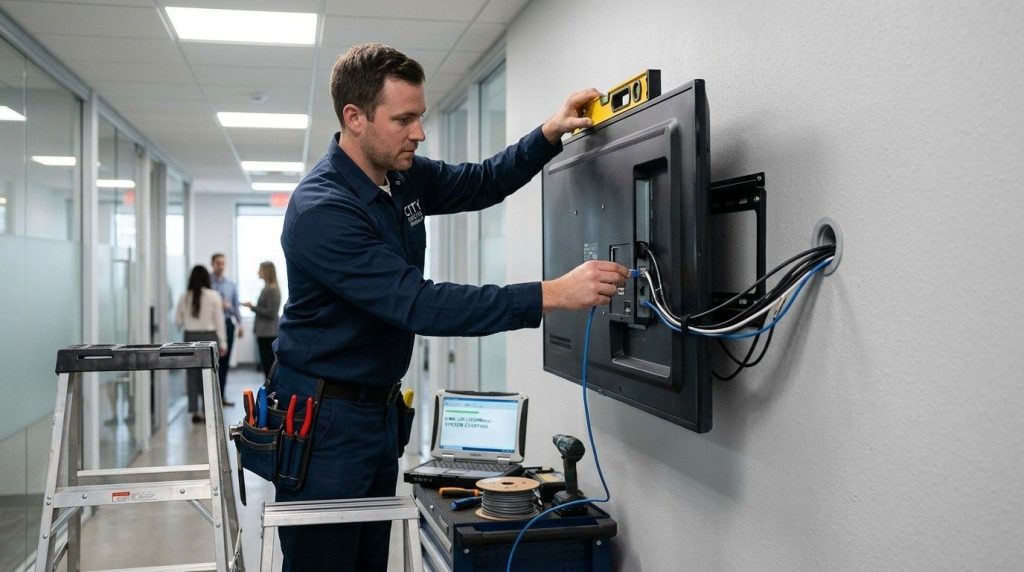
A successful digital signage system relies not only on high-quality hardware and engaging content but also on professional installation and reliable support. Many businesses underestimate the importance of this stage, yet it is essential for ensuring that digital displays operate correctly, remain visible, and deliver consistent content.
Experienced digital signage companies, including Msigns, provide comprehensive installation services and ongoing support to maximise return on investment.
Site Survey and Planning
Before installing any digital signage, a thorough site survey is critical. Digital signage companies typically assess:
- Viewing distances and audience flow to determine the most effective screen placement
- Ambient light and environmental conditions to recommend appropriate displays, including high brightness screens for bright environments
- Power availability and network connectivity to ensure reliable operation
- Physical mounting options, including wall mounts, ceiling mounts, freestanding kiosks, and window-facing installations
A detailed plan created during this stage ensures that displays are installed efficiently and function as intended from day one. Planning also identifies potential challenges and allows the digital signage companies to propose tailored solutions for each location.
Professional Installation Service
Once planning is complete, professional installation teams execute the setup according to the specifications. Services typically include:
- Mounting and securing screens or video walls
- Connecting media players and configuring network settings
- Integrating digital signage software with the content management system
- Calibrating displays for colour, brightness, and image quality
- Testing content playback across all screens to verify consistency
By using trained technicians, businesses can stay compliant with safety regulations and avoid common pitfalls that can compromise the performance of digital signage systems. Professional installation ensures that content is displayed correctly and that the screens remain durable and reliable over time.
Ongoing Maintenance and Service Level Agreements (SLAs)
Even after installation, digital signage requires ongoing maintenance to function optimally. Support for digital signage solutions can include in-house assistance and training for users to effectively manage their systems.
Many digital signage companies provide service agreements that cover:
- Scheduled maintenance visits to inspect hardware and ensure consistent operation
- Remote monitoring of screens to detect and resolve issues quickly
- On-site repair options for hardware failures or environmental damage
- Replacement of spare parts if necessary
SLAs also define response times for technical issues, giving businesses confidence that any problems will be addressed promptly. This is particularly important for high-traffic areas, such as retail stores, public spaces, or healthcare facilities, where downtime can impact both customer satisfaction and operational efficiency.
Unlock the Full Potential of Your Business with Digital Displays
At Msigns, we provide tailored solutions that combine high-quality digital displays, powerful digital signage software, and expert content creation services to meet the unique needs of your business.
Whether you are looking to install digital menu boards in a restaurant, implement video walls in a corporate environment, or deploy interactive kiosks in public spaces, our team ensures seamless integration, professional installation, and ongoing support.
Let us help you deliver the right message at the right time, across multiple screens and locations. Get in touch now and schedule a consultation with our digital signage experts.